
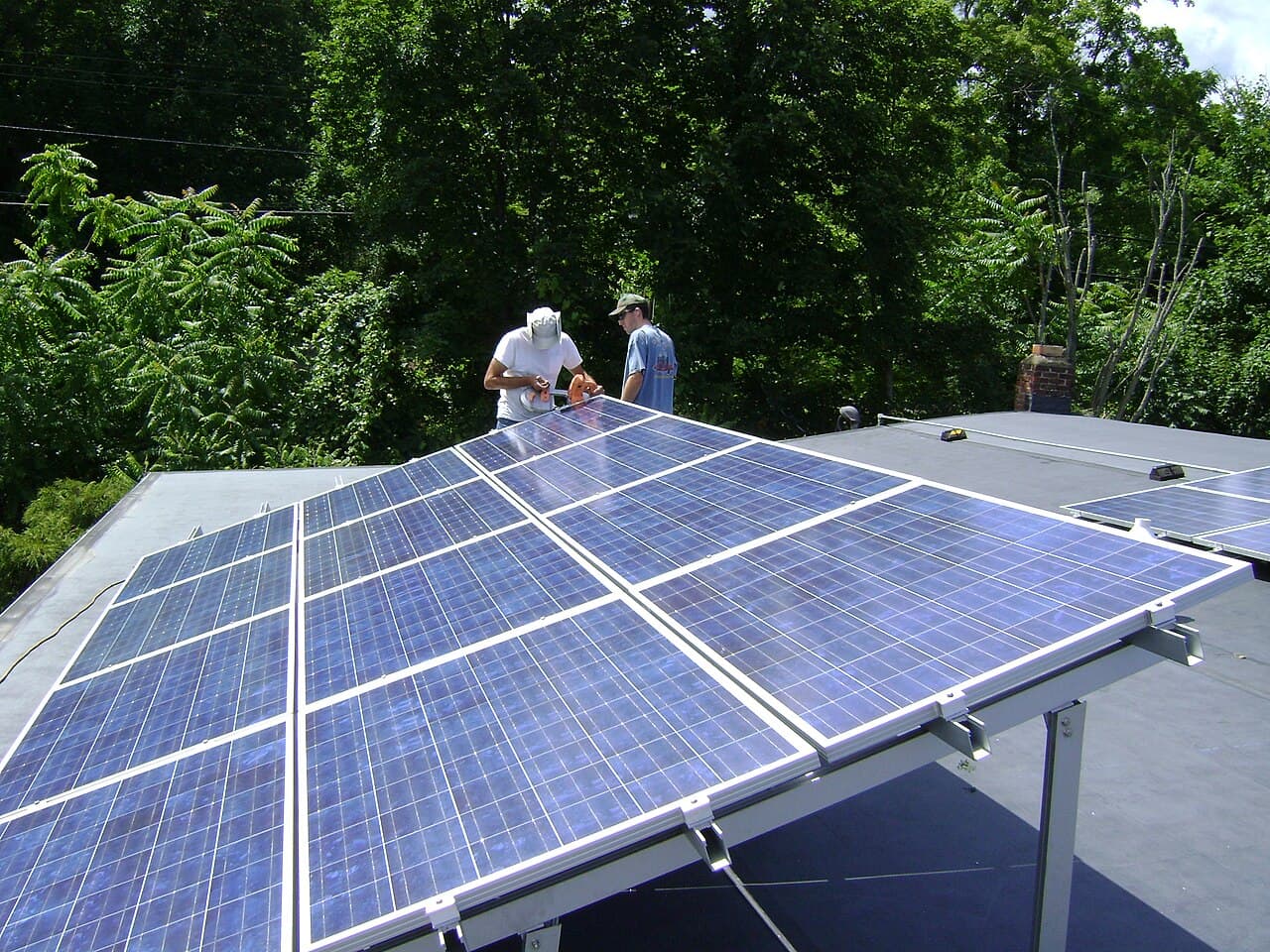
Disclosure
TradeVulcan Dispatch has no reported financial interest in First Solar, Hanwha Qcells, Mission Solar Energy or the foreign producers named in the trade investigations. This article is operating and policy analysis for contractors, not legal, customs, tax or investment advice. Duty exposure is importer-, producer-, entry- and case-specific; contractors should confirm actual landed costs and contract language with suppliers and qualified advisers.
Status — Sept. 12, 2026
The U.S. Department of Commerce announced final affirmative antidumping and countervailing-duty determinations on Sept. 11 covering crystalline silicon photovoltaic cells, whether or not assembled into modules, from India, Indonesia and Laos.
That does not end the case. The U.S. International Trade Commission has scheduled its final injury vote for Oct. 14. Commerce says the ITC is conducting the concurrent injury investigations; Reuters reports that final duty orders are expected in November if the Commission votes affirmatively.
For contractors, that distinction matters. Commerce has finalized its calculations, but the case still has a procedural fork. Procurement decisions made now should be based on actual supplier quotes and import exposure—not on the assumption that every headline percentage becomes a permanent, one-for-one retail price increase.
The largest number in this story is not 173.7%. It is $4.5 billion.
India, Indonesia and Laos supplied about $4.5 billion of U.S. solar imports in 2025—roughly two-thirds of the total, according to government trade data cited by Reuters when Commerce announced its preliminary antidumping findings in April.
The trade case was brought by the Alliance for American Solar Manufacturing and Trade. Commerce identifies Hanwha Q CELLS USA, First Solar and Mission Solar Energy as members of the petitioner group.
That gives the case the characteristics contractors should pay attention to: recognizable manufacturers, a supply pool measured in billions of dollars, final Commerce rates that can exceed 100%, and an Oct. 14 injury vote that can determine whether final orders follow.
The contractor lesson is not to become a trade lawyer. It is to recognize that solar procurement has become a margin-management discipline. A sales team can price a job correctly today and still lose money later if the equipment source, cash-deposit exposure or supplier quote changes before installation.
What contractors should know
- Commerce finalized antidumping margins of 123.04% for India, 94.36% for Indonesia and 65.43% for Laos.
- Final countervailing-duty rates are 126.09% for the named Indian producers/all others, 73.20% to 173.70% in Indonesia and 82.03% to 153.67% in Laos.
- The ITC's final injury vote is scheduled for Oct. 14, 2026. An affirmative vote is the remaining step before Commerce issues final orders; Reuters says those orders are expected in November.
- The three countries represented about $4.5 billion—roughly two-thirds—of U.S. solar imports in 2025, so this is a supply-chain event, not a niche customs dispute.
- Do not add the antidumping and countervailing percentages and call the result a retail module-price increase. Actual duty and cash-deposit exposure is producer- and entry-specific, and market prices reflect inventory, alternative sourcing, contracts and competition.
- Residential installers are already operating under pressure: Wood Mackenzie forecasts 2026 residential customer-acquisition cost at $0.84/W, up 40% from 2025, while the segment adjusts to the expiration of the Section 25D residential tax credit.
- The immediate operator response is tighter quote validity, alternate approved equipment, supplier-specific landed-cost checks and clearer change-order/pass-through language.
The trade case in six numbers
- 2025 import exposure
- $4.5B
- India AD margin
- 123.04%
- India CVD rate
- 126.09%
- Indonesia CVD high
- 173.70%
- ITC vote
- Oct. 14
- Q2 U.S. solar additions
- 11.4 GWdc
India, Indonesia and Laos combined; about two-thirds of U.S. solar imports, Reuters reported from government trade data.
Final Commerce weighted-average dumping margin.
Final Commerce subsidy rate for Mundra entities and all others.
Final rate for PT Blue Sky Solar Indonesia; other identified/all-other rate is 73.20%.
Final injury vote on the Commission's public calendar.
Up 45% year over year, according to SEIA/Wood Mackenzie.
What Commerce actually decided
Commerce's final fact sheet says it made affirmative determinations in both the antidumping and countervailing-duty investigations. In trade-remedy language, the antidumping side addresses sales below fair value; the countervailing side addresses government subsidies.
The rates are not uniform across every producer. India received a 123.04% weighted-average dumping margin across the listed producers and all others, with a 107.17% cash-deposit rate after subsidy offsets on the antidumping side. Commerce set India's final subsidy rate at 126.09%.
Indonesia received a 94.36% dumping margin, while its subsidy rates differ materially by producer: 173.70% for PT Blue Sky Solar Indonesia and 73.20% for PT REC Solar Energy Indonesia and all others. Laos received a 65.43% dumping margin, with a 65.03% adjusted antidumping cash-deposit rate for the listed entries, while subsidy rates range from 82.03% to 153.67%.
Those distinctions are why a contractor should never turn a national headline into a blanket surcharge without knowing the actual manufacturer, importer and landed-cost quote behind the equipment being sold.
Commerce's final country-level headline rates
| Country | Final dumping margin | Final CVD rate(s) | Contractor takeaway |
|---|---|---|---|
| India | 123.04% | 126.09% | Confirm producer and current cash-deposit/landed-cost treatment before pricing imported modules. |
| Indonesia | 94.36% | 73.20% to 173.70% | Producer identity matters; do not apply one national percentage to every module. |
| Laos | 65.43% | 82.03% to 153.67% | Quoted equipment cost can depend on producer/exporter path and import timing. |
Oct. 14 is the next date that matters
The U.S. International Trade Commission's public calendar lists an Oct. 14, 2026 notational vote in the final phase of investigations 701-TA-772-774 and 731-TA-1756-1758. The Commission's case system lists Oct. 26 as the determination/views date.
The legal sequence matters. Commerce determines dumping and subsidy margins. The ITC separately decides whether the domestic industry is materially injured or threatened by the imports. Reuters reports that if the Commission votes affirmatively, Commerce is expected to issue final duty orders in November.
If the ITC finds no material injury, the outcome changes substantially. That is why contractors should treat the next month as a defined procurement-risk window rather than as a reason to freeze all solar sales. The risk can be managed while the process continues.
A 126% duty rate does not automatically mean a module price doubles
Trade-duty percentages are applied within a customs framework to entries of merchandise; they are not a retail price list. The equipment a contractor buys may already be in domestic inventory, may come from a different country or producer, may carry supplier-negotiated pricing, or may be covered by a different deposit rate. Competitive responses can also absorb or redistribute part of a cost change.
That does not make the headline rates unimportant. It makes the purchasing conversation more specific. Contractors should ask suppliers for the country of origin, producer, importer-of-record treatment where relevant, quote expiration, whether quoted pricing includes current tariff and cash-deposit exposure, and what triggers a repricing event.
The wrong operating reaction is to tell every homeowner that panels just became 100% more expensive. The right reaction is to find out which products in the contractor's approved stack are actually exposed and how long the supplier will stand behind today's number.
The trade fight is landing in a market that is growing—and splitting in two
SEIA and Wood Mackenzie reported on Sept. 10 that the U.S. installed 11.4 GWdc of solar in Q2 2026, up 45% year over year and 43% from Q1. Utility-scale solar drove the surge with 9.6 GWdc installed, up 61% year over year. Solar and storage together accounted for 70% of new U.S. generating capacity in the first half.
Residential is different. Wood Mackenzie says the residential segment continues to face challenges after the expiration of the residential solar tax credit and forecasts a return to growth in 2027. In a separate March outlook, the firm forecast residential solar customer-acquisition costs rising 40% in 2026 to $0.84/W from $0.60/W in 2025, while the residential market contracts 19%.
That makes equipment uncertainty especially dangerous for homeowner-facing installers. A business already spending more to acquire each customer has less room to absorb a procurement surprise after the contract is signed.
Illustrative margin math: a small equipment move can erase a meaningful share of gross profit
Assume a contractor sells a residential solar project for $30,000 with an expected $9,000 gross profit before overhead—a 30% gross margin. If equipment and related procurement cost increase by $2,000 after the customer signs and the contract does not allow recovery, expected gross profit falls to $7,000.
That is a 22.2% reduction in expected gross profit even though the project's selling price did not change.
This is illustrative math, not a forecast of module-price movement from the Solar IV case. The point is operating leverage: contractors do not need a 100% module-price increase to feel a major margin impact. They only need an unpriced cost change large enough to consume the dollars between revenue and job cost.
What a solar or electrical contractor should do before the Oct. 14 vote
- Audit every approved module SKU by country of origin, producer and current supplier quote. Put an owner on the list instead of relying on a generic 'tariff' note in purchasing.
- Shorten quote-validity windows where supplier pricing is not protected. The sales proposal should not promise a 60-day equipment price when purchasing only has a 10-day supplier quote.
- Create at least one technically and commercially acceptable alternate module path for common system designs, including compatibility, dimensions, electrical characteristics and permitting implications.
- Ask suppliers in writing whether quoted landed pricing includes current AD/CVD cash-deposit exposure and what event would trigger repricing.
- Review customer contracts with counsel for lawful equipment-substitution, tariff/surcharge, force-majeure and change-order language. Do not invent a fee after signature if the contract does not support it.
- Separate sold-not-installed jobs by margin risk. A project with a fixed customer price and uncommitted equipment should be visible to management immediately.
- Keep sales messaging factual. Commerce finalized its determinations; the ITC final injury vote is Oct. 14. Avoid telling homeowners that every imported panel is subject to the same final permanent tariff today.
- For diversified home-service businesses, connect solar to storage, EV charging, panel/service upgrades and roofing only when those adjacencies improve customer value and crew economics—not as a way to hide a weak solar margin.
Where the exposure shows up by contractor model
| Operator | Primary risk | Best near-term control |
|---|---|---|
| Residential solar installer | Fixed customer price against moving equipment cost | Short quote validity, committed inventory and alternate approved modules |
| Electrical contractor adding solar | Limited purchasing depth and unfamiliar trade exposure | Buy through vetted distributors; document origin and landed pricing before quoting |
| Solar + storage contractor | BOM substitutions can affect electrical design and permitting | Pre-approve alternate combinations instead of changing modules ad hoc |
| Roofing company with solar division | Sales handoff can separate roof scope from equipment risk | One job-cost owner across roof, electrical and solar procurement |
| Commercial installer | Longer sales/construction cycle increases repricing window | Escalation language, procurement milestones and early equipment commitments |
Why First Solar and Qcells matter to the story
The petitioner list makes this more than an abstract Washington trade proceeding. Commerce identifies First Solar, Hanwha Q CELLS USA and Mission Solar Energy as members of the Alliance for American Solar Manufacturing and Trade. Reuters also identified First Solar and Qcells when reporting the final determinations.
Those companies sit on the domestic manufacturing side of an industry that has invested heavily in U.S. capacity while imported supply has repeatedly shifted between countries as trade cases changed sourcing economics. Reuters noted that U.S. solar duties on Chinese products date to 2012 and were followed by production shifts elsewhere in Asia.
For operators, the recurring lesson is that supplier geography is not static. A purchasing strategy built around the cheapest available module in one quarter can become a sales and margin problem when the next trade action changes the economics. Procurement resilience deserves the same management attention as lead cost and close rate.
The contractor advantage is certainty
The largest installers and developers have procurement teams built to manage origin, contract terms, inventory and policy. Local contractors do not need to reproduce a utility-scale supply-chain department, but they do need a repeatable decision process.
A homeowner cares about whether the promised system can be installed at the promised price on the promised date. The contractor that can answer those three questions with confidence has an advantage over a competitor selling yesterday's equipment economics.
The Oct. 14 ITC vote will determine the next legal step in this case. The operational step should happen sooner: know what you are buying, know how long the price is good, know your substitute, and know which signed jobs would lose money if procurement moves against you.
Questions contractors are asking
Are the solar duties final now?
Commerce finalized its antidumping and countervailing-duty determinations on Sept. 11. The ITC still must make its final injury determination. Its vote is scheduled for Oct. 14; Reuters reports final Commerce duty orders are expected in November if the ITC votes affirmatively.
Do contractors add the AD and CVD percentages together to estimate panel-price increases?
No. The cases contain producer-specific rates and adjusted cash-deposit treatment, and customs duties are not a direct retail-price formula. Use the actual supplier's landed quote and documented producer/origin information.
Why does the $4.5 billion figure matter?
Reuters reported that India, Indonesia and Laos represented about $4.5 billion, roughly two-thirds, of U.S. solar imports in 2025. That scale means sourcing changes can matter broadly even when an individual contractor does not import equipment directly.
What is the most important contract change for installers?
There is no universal clause. The practical goal is alignment between supplier quote validity and the customer commitment, plus lawful language for approved substitutions or documented cost changes. Contractors should have their own counsel review the terms they use.
Does this only matter to solar companies?
No. Electrical contractors, roofers and multi-trade home-service companies increasingly participate in solar, storage, EV charging and service upgrades. Any operator quoting a fixed installed price before locking equipment cost has procurement exposure.
Methodology
Dispatch reviewed Commerce's Sept. 11 final determinations, the USITC final-phase calendar and case dates, Reuters reporting on the final determinations and 2025 import scale, and current SEIA/Wood Mackenzie market research. Duty percentages are reported as Commerce published them; Dispatch does not combine AD and CVD rates into a claimed retail module-price increase. The $4.5 billion/two-thirds figure is Reuters' reporting from government trade data for 2025. The $30,000 project margin example is illustrative arithmetic, not a forecast. Hero-image description, authorship and CC BY-SA 3.0 licensing were checked against Wikimedia Commons. Legal/customs treatment can vary by producer, importer, entry date and case outcome; operators should verify actual supplier and professional guidance before changing customer contracts or charges.
Sources
- Final Affirmative Determinations in the Antidumping Duty and Countervailing Duty Investigations of Crystalline Silicon Photovoltaic Cells from India, Indonesia, and Laos — U.S. Department of Commerce, International Trade Administration
- USITC Vote — Crystalline Silicon Photovoltaic Cells from India, Indonesia, and Laos — U.S. International Trade Commission
- Final phase investigation dates — Crystalline Silicon Photovoltaic Cells from India, Indonesia, and Laos — U.S. International Trade Commission
- US Commerce Department finalizes steep duties on solar imports from India, Indonesia, Laos — Reuters
- US sets preliminary antidumping duties on solar imports from India, Indonesia and Laos — Reuters
- U.S. solar capacity can now power more than 50 million American homes — Wood Mackenzie
- US residential solar customer acquisition costs set to spike 40% in 2026 before gradual decline — Wood Mackenzie
- Rooftop Photovoltaic Array — image licensing and provenance — Wikimedia Commons