
Disclosure
TradeVulcan develops and sells software for home-service contractors and publishes TradeVulcan Dispatch. TradeVulcan has no reported role in the Peterson Partners, NorthSands Capital or Kelso Industries transaction and has no reported financial relationship with the parties discussed in this article. Kelso's revenue and acquisition figures are privately reported figures attributed to Kelso, its investors or cited deal reporting and should not be treated as audited public-company financial statements.
Breaking deal status — Sept. 9, 2026
Peterson Partners announced Wednesday that it has closed a $510 million capital raise for Peterson Kelso Coinvest, LP, a single-asset continuation vehicle for Kelso Industries. NorthSands Capital was the sole lead investor and committed more than $450 million. Peterson's current flagship Fund X rolled its existing position and made an additional investment.
This is not a $510 million purchase price for Kelso and it is not a disclosed $510 million company valuation. It is capital raised around a continuation vehicle that allows existing sponsor Peterson Partners to remain invested while bringing in new capital for Kelso's next phase of growth. The company and investors did not disclose Kelso's enterprise valuation, debt, EBITDA or ownership percentages in Wednesday's announcement.
The number is large. The five-year build underneath it is larger.
A private-equity headline about a continuation vehicle can sound distant from the day-to-day work of HVAC, plumbing and electrical contractors. Kelso Industries makes this one worth studying.
Kelso was formed in 2021 through a partnership between Peterson Partners and co-founders Steve Carroll and Steve Nicholson. Five years later, Peterson says the company has more than 4,000 employees operating across more than 40 states. The Wall Street Journal reports Kelso now produces more than $1 billion in annual revenue and has acquired roughly 40 businesses.
That is a remarkable amount of scale in a remarkably short period.
The operating model is especially relevant to contractors because Kelso did not build a single consumer-facing national brand. It has assembled local mechanical, electrical, plumbing, refrigeration, controls, engineering and related businesses, while explicitly telling sellers they can preserve local culture, customer relationships and operating autonomy. The national platform supplies capital, capabilities and scale around them.
The continuation deal says Peterson and a new specialist investor believe there is more value to create inside that machine. For independent contractors, the useful question is not whether they should copy Kelso. It is what Kelso's rise says about which characteristics institutional capital is willing to fund: durable demand, capable local operators, repeatable acquisition integration, management depth, multiple service lines and a platform that can keep expanding without erasing what made the acquired companies valuable in the first place.
What contractors should take from the transaction
- Peterson Partners closed a $510 million single-asset continuation vehicle for Kelso Industries; NorthSands Capital committed more than $450 million, and Peterson Fund X rolled and increased its investment.
- The Wall Street Journal reports Kelso has acquired roughly 40 businesses, grown past $1 billion in annual revenue and now employs more than 4,000 people.
- Kelso says it operates in more than 40 states and serves commercial, institutional and industrial customers across data centers, healthcare, airports, advanced manufacturing and other mission-critical environments.
- The platform's acquisition model emphasizes local brand, culture, customer relationships and operating autonomy rather than forcing every acquired contractor into one national consumer identity.
- Kelso's 2025 company announcement said it had reached $1 billion in annual revenue after 31 acquisitions. Recent 2026 additions show the roll-up has continued into electrical, plumbing, industrial and infrastructure work.
- A continuation vehicle is not the same thing as a sale. In this case it lets Peterson remain invested while earlier capital can receive liquidity and new investors fund the next chapter.
- The operator lesson is not simply 'do acquisitions.' It is to build integration capacity, financial visibility, leadership, recruiting and shared infrastructure before acquisition volume outruns the organization.
Kelso by the numbers
- Continuation vehicle
- $510M
- NorthSands commitment
- >$450M
- Annual revenue
- >$1B
- Acquisitions
- ~40
- Employees
- 4,000+
- State footprint
- 40+
Closed by Peterson Partners on Sept. 9, 2026 for continued investment in Kelso Industries.
NorthSands Capital served as sole lead investor in the continuation vehicle.
Reported by The Wall Street Journal; Kelso also announced the $1B milestone in October 2025.
The Wall Street Journal's Sept. 9 reporting, up from 31 disclosed by Kelso in October 2025.
Peterson Partners / NorthSands announcement.
Peterson Partners / NorthSands announcement.
First, what exactly did investors do with the $510 million?
The cleanest way to understand the transaction is to separate company value from investment structure.
In a traditional private-equity exit, a sponsor might sell the entire company to another private-equity firm, a strategic buyer or the public markets. A continuation vehicle gives the sponsor another option. It can move or roll an asset into a new investment vehicle, offer liquidity to investors who want to exit, keep exposure for investors who want to stay, and bring in fresh capital for a longer hold period.
That is what Peterson is doing around Kelso. The firm said its current Fund X rolled its position and added new money. NorthSands, which specializes in single-asset continuation vehicles, put in more than $450 million. The Wall Street Journal reported that the transaction also provides an exit for Paceline Equity Partners, which invested $50 million in Kelso in 2023 to help fund add-on acquisitions.
The practical signal is more important than the fund mechanics. Peterson had an opportunity to create liquidity around a business it helped launch in 2021 and chose to keep meaningful exposure while adding capital. NorthSands examined that asset and committed hundreds of millions of dollars to the same next chapter.
Neither decision guarantees future performance. It does tell the market that sophisticated investors believe the platform still has room to compound.
Who is doing what in the Kelso continuation transaction
| Party | Role | What was disclosed |
|---|---|---|
| Peterson Partners | Existing sponsor / continuing investor | Closed the $510M continuation vehicle; Fund X rolled its position and made an additional investment. |
| NorthSands Capital | Sole lead investor | Committed more than $450M to the continuation vehicle. |
| Kelso Industries | Portfolio company | Will use the new capital structure to support acquisitions, people, capabilities and expansion. |
| Paceline Equity Partners | Earlier investor | WSJ reports the transaction provides an exit; Paceline originally invested $50M in 2023 to finance add-ons. |
Kelso did not slowly grow into a national MEP contractor. It assembled one.
Kelso's speed is the part independent operators should not gloss over.
A company announcement in October 2025 said Kelso had reached $1 billion in annual revenue after completing 31 acquisitions since its 2021 launch. At that point it operated across more than 30 states. Less than a year later, the current Peterson announcement says the footprint exceeds 40 states, while WSJ deal reporting puts the acquisition count at roughly 40.
The additions have not been confined to one trade or one metropolitan strategy. In 2026, Kelso bought United Services in Knoxville, a multidisciplinary electrical-to-MEP contractor serving commercial customers across six southeastern states. Deal advisers also disclosed Kelso's acquisitions of Clearwater Construction & Management in Spokane, All Electric in Gillette, Wyoming, and Gaddy Electric & Plumbing in Demopolis, Alabama.
Schryver & Co., which tracks services M&A, noted in August that the Gaddy, All Electric and Clearwater additions moved Kelso further into industrial, municipal and infrastructure work rather than simply adding another dense metro HVAC service company.
That matters because the Kelso thesis is broader than a conventional residential-services roll-up. It is assembling capabilities across the building lifecycle: new installation, retrofit, service, maintenance, prefabrication, controls, energy work and complex mission-critical facilities.
Five years of platform building
| Date | Public milestone | Why it matters |
|---|---|---|
| 2021 | Kelso is formed through Peterson Partners' partnership with Steve Carroll and Steve Nicholson. | The national platform is intentionally built around MEP services from the beginning. |
| Nov. 2023 | Paceline announces a $50M preferred-equity investment to finance complementary acquisitions. | The acquisition engine receives dedicated outside capital early in the build. |
| Oct. 2025 | Kelso says it has reached $1B in annual revenue after 31 acquisitions and operations across 30+ states. | The platform crosses institutional scale in roughly four years. |
| June–Sept. 2026 | Advisers disclose additions including United Services, Clearwater Construction, All Electric and Gaddy Electric & Plumbing. | The platform continues adding electrical, plumbing, industrial and infrastructure capabilities. |
| Sept. 9, 2026 | Peterson closes a $510M continuation vehicle led by NorthSands; WSJ reports ~40 acquisitions, $1B+ revenue and 4,000+ employees. | Rather than cashing out completely, the sponsor raises new capital to keep compounding the platform. |
What Kelso is actually buying: local capability, leadership and customer trust
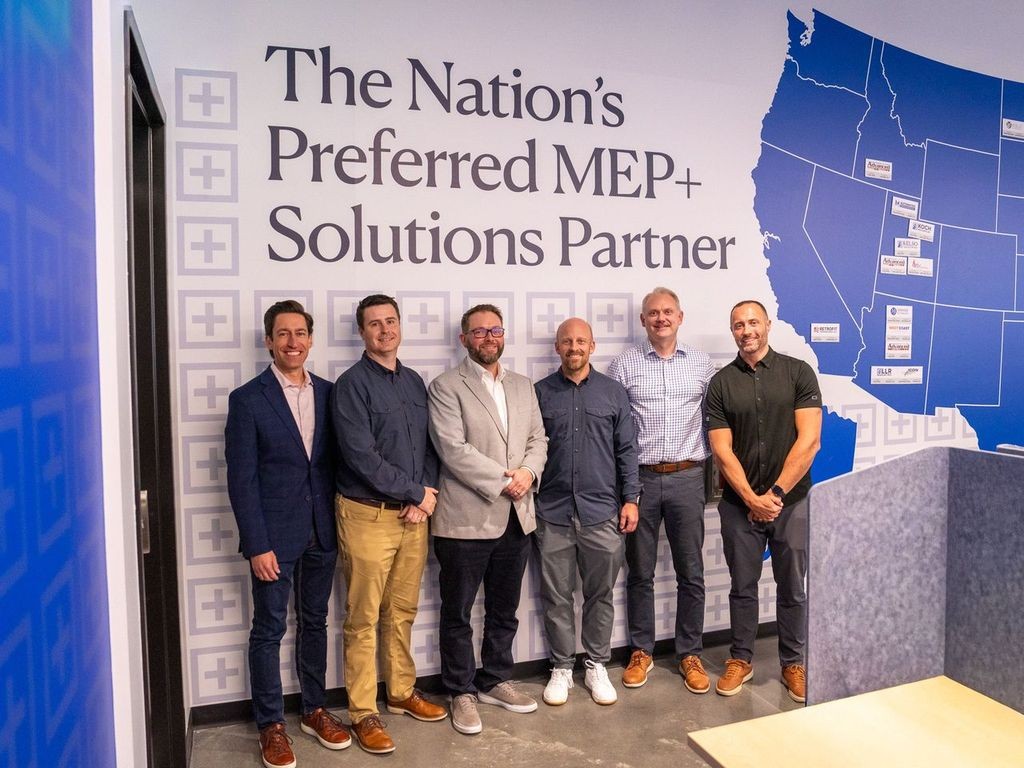
Kelso's own acquisition page is unusually clear about the profile it wants. The company says it invests in HVAC, sheet metal, refrigeration, pipefitting, plumbing, controls, electrical, engineering and energy-services businesses serving commercial, industrial and institutional markets. It says there is no absolute size floor or ceiling, although it prefers companies with more than 100 employees.
More interesting is what happens after the deal.
Kelso markets "legacy and brand preservation" to sellers. The current Peterson announcement says its partnership model lets entrepreneurial business leaders preserve local culture, customer relationships and operating autonomy while gaining the resources and scale of a national organization.
That is a very different value-creation model from buying a contractor solely to replace the sign on the building. It recognizes that in many B2B service businesses, the local brand, estimator relationships, project-management reputation, field leadership and long-standing customer ties are part of the asset being purchased. Destroying them in the name of integration can destroy value.
The platform therefore has to integrate selectively. Finance, purchasing, recruiting, safety, technology, insurance, training, cross-selling and national-account capability can benefit from scale. Customer-facing identity and local decision-making may benefit from continuity.
That balance is one of the hardest problems in any roll-up—and one of the most useful lessons for an owner considering either buying competitors or selling into a larger platform.
Kelso's public acquisition thesis, translated for operators
| Kelso emphasizes | Why a platform wants it | What an owner should build before a sale |
|---|---|---|
| Strong local culture | Labor-intensive service companies depend on people staying after close. | Leadership bench, retention, training and a culture that exists beyond the founder. |
| Consistent customer experience | Predictable delivery makes revenue easier to underwrite. | Documented service standards, project controls and customer-quality metrics. |
| 100+ employee preference | Scale can signal management depth and a meaningful regional platform. | Org chart, middle management and repeatable recruiting—not simply more headcount. |
| Commercial / industrial / institutional exposure | Large facilities create recurring maintenance, retrofit and project opportunities. | Account concentration visibility, recurring-service mix and disciplined backlog reporting. |
| Local brand preservation | Customer trust and market reputation can survive the ownership change. | A real brand that customers choose for reasons beyond the owner's personal relationships. |
The demand story is not just construction. It is keeping critical buildings running.
The Wall Street Journal framed NorthSands' investment partly around the durability of mechanical, electrical and plumbing work in critical infrastructure. Peterson's announcement lists data centers, healthcare, airports, industrial facilities and advanced manufacturing among Kelso's end markets.
That mix matters. A new data center creates large installation opportunities, but the economic relationship does not end when construction is complete. Cooling, electrical distribution, plumbing, controls, preventive maintenance, emergency repair and retrofit work become ongoing requirements for facilities where downtime can be extraordinarily expensive.
Kelso's public service menu spans installation and retrofit as well as maintenance and service. That gives the platform exposure to both capital-project spending and recurring or nondiscretionary building needs.
For residential contractors, the analogy is familiar even if the customer is different. Replacement cycles, maintenance, emergency demand and code-driven work create durability that pure new construction does not always provide. The best scaled service businesses do not rely on a single demand source if they can avoid it.
There is also a caution here: "mission critical" does not make a business recession-proof, and data-center enthusiasm can become an easy narrative shortcut. Kelso's actual diversification across healthcare, airports, manufacturing, industrial facilities and other end markets is more important than any single boom category.
A1 and Kelso show two very different ways private equity can scale the trades
TradeVulcan Dispatch recently examined A1 Garage Door Service after Reuters reported KKR had agreed to acquire the residential garage-door platform for around $2 billion. A1's story was built around a powerful national consumer brand, centralized operating disciplines and years of founder-led organic growth before acquisitions became an increasingly important accelerator.
Kelso is almost the inverse architecture. It was established as a platform in 2021 and scaled primarily by partnering with established commercial trades businesses while preserving their local operating identities.
Both models can work because the common denominator is not the logo strategy. It is repeatability.
A1 needed to prove that a consumer-service machine could reproduce booking, dispatch, sales, training, marketing and customer experience across markets. Kelso needs to prove that a multi-brand federation of MEP businesses can produce consistent financial control, safety, talent development, purchasing power, cross-company capability and customer outcomes without suffocating local operators.
Private equity is not paying for "the trades" in the abstract. It is paying for operating systems that make fragmented local demand investable at scale.
Two paths to institutional scale
| Kelso Industries | A1 Garage Door Service |
|---|---|
| Primary market | Commercial, institutional and industrial MEP+ |
| Scaling architecture | Purpose-built acquisition platform from 2021 |
| Brand model | Preserve local brands and operating autonomy |
| Public 2026 capital event | $510M continuation vehicle to extend sponsor ownership and fund growth |
| Shared lesson | Integration and shared infrastructure must make local operators stronger |
Forty acquisitions can create a platform—or forty different versions of the truth
Roll-ups look easiest on a transaction list. They are hardest after closing.
Every acquired contractor brings its own accounting conventions, estimating habits, software, safety practices, compensation plans, purchasing relationships, job-costing discipline, customer contracts and management personalities. A platform can preserve local autonomy and still fail if headquarters cannot see what is happening consistently across the portfolio.
That is why the operational infrastructure behind Kelso matters more than the acquisition count itself. The company says its growth has included investments in people, systems and operational excellence. Its 2025 milestone announcement specifically pointed to integration, data-driven management, workforce development, infrastructure systems and technology as parts of the platform.
Those claims are company descriptions, not independent proof of performance. But they identify the right problem. At $1 billion-plus of revenue, the question is no longer whether the platform can buy companies. It is whether it can make dozens of businesses legible enough to allocate capital, compare performance, share talent, identify risk and improve operations without flattening local strengths.
That is also the warning for smaller contractors building through acquisition. If the reporting layer arrives after the third deal, management spends the next two years trying to reconcile history. If it arrives before the first deal, acquisitions can plug into a common operating language from day one.
What an operator can take from Kelso before buying—or selling—a company
- Standardize financial definitions before adding locations: revenue recognition, gross margin, backlog, service agreement revenue, job costing and branch contribution should mean the same thing everywhere.
- Build a management bench. A buyer wants operating leadership that can stay and grow; an acquirer needs leaders who can absorb new locations without the founder becoming the integration department.
- Know which systems must be centralized and which should remain local. Finance, safety, data and purchasing may benefit from standards even when customer-facing brands remain independent.
- Protect customer relationships during ownership transitions. In commercial trades, estimator, project-manager and facility relationships can be as valuable as the brand itself.
- Measure organic performance separately from acquired growth. Acquisition volume can make top-line growth look spectacular while hiding branch-level deterioration.
- Track working capital and cash conversion, not just EBITDA. Project-heavy MEP businesses can consume cash quickly even while reported revenue rises.
- Treat recruiting and retention as deal infrastructure. Acquiring a contractor and losing its field talent is an expensive way to buy a customer list.
- Design the integration playbook before the acquisition pipeline accelerates: day-one access, payroll, benefits, accounting, insurance, technology, safety, purchasing, reporting and leadership cadence should not be improvised deal by deal.
The Company remains in the early innings of a significant opportunity.
TradeVulcan Perspective: enterprise value starts with operational legibility
TradeVulcan is a software company serving home-service contractors, so our interest in this transaction is naturally operational. The most transferable lesson is not the fund structure or the acquisition count. It is legibility.
A scaled contractor has to know where demand came from, whether it was answered, whether it booked, whether the work sold, what gross margin it produced, whether the customer returned, what remains in backlog and how one branch compares with another. That chain becomes more important—not less—when a company adds locations or acquired businesses.
Institutional capital can finance growth. It cannot replace clean operating information.
That is why the most valuable preparation for a contractor considering a future transaction often looks mundane: accurate books, consistent KPI definitions, documented processes, durable customer acquisition, disciplined follow-up, strong managers and systems that let leadership see the business without asking five people for five spreadsheets.
Kelso's story is unusually large, but that principle applies at $5 million of revenue just as much as it does at $1 billion.
The $510 million headline is really a vote for another round of consolidation
Peterson could have treated Kelso's rise past $1 billion as the end of the story. Instead, it created a new vehicle to stay invested, rolled its own capital and brought in a specialist investor willing to commit more than $450 million. The announced use of proceeds is straightforward: more acquisitions, more capabilities, more people and more market expansion.
That means the next chapter is unlikely to be quieter.
Kelso's public acquisition program is still inviting HVAC, sheet metal, refrigeration, pipefitting, plumbing, controls, electrical, engineering and energy-services companies to join the platform. Recent deals show the company broadening geographically and technically. The capital structure announced Wednesday gives it additional runway to continue.
For independent owners, that creates both opportunity and pressure. Strategic and private-equity-backed buyers have more capital, more sophisticated acquisition teams and increasingly clear playbooks for what they want. The best response is not to obsess over who might buy the company. It is to make the company better before that conversation ever happens.
Build management depth. Make the numbers trustworthy. Reduce key-person dependence. Know your margins. Protect the brand. Document the process. Invest in the field team. Understand which customers and service lines create durable cash flow.
Kelso's $510 million continuation vehicle is a private-equity transaction. The reason it matters to contractors is simpler: investors are still putting enormous amounts of money behind the idea that fragmented trades businesses can become much more valuable when they are assembled into a disciplined operating platform.
Kelso Industries, the $510 million continuation vehicle and MEP consolidation: quick answers
Did someone buy Kelso Industries for $510 million?
No. Peterson Partners announced a $510 million single-asset continuation vehicle for Kelso Industries. The amount refers to capital raised for the vehicle, not a disclosed purchase price or enterprise valuation for Kelso.
Who invested the $510 million?
NorthSands Capital was the sole lead investor and committed more than $450 million. Peterson Partners Fund X rolled its existing position and made an additional investment. Other participation details were not fully disclosed in the announcement.
How large is Kelso Industries?
Peterson's Sept. 9 announcement says Kelso has more than 4,000 employees operating across more than 40 states. The Wall Street Journal reports the company generates more than $1 billion in annual revenue and has acquired roughly 40 businesses.
What trades does Kelso Industries operate in?
Kelso and its operating companies span mechanical, HVAC and refrigeration, plumbing, electrical, controls and automation, engineering, energy services and related MEP capabilities for commercial, institutional and industrial customers.
What is a private-equity continuation vehicle?
A continuation vehicle is a new investment structure that can allow an existing sponsor to keep owning an asset beyond the original fund's planned hold period while providing liquidity options to earlier investors and bringing in new capital. It is different from a straightforward sale to a new owner.
How many companies has Kelso acquired?
Kelso said in October 2025 that it had completed 31 acquisitions. The Wall Street Journal reported on Sept. 9, 2026 that the platform has now acquired roughly 40 businesses.
Why does the Kelso transaction matter to residential contractors?
Kelso serves primarily commercial, institutional and industrial markets, but the enterprise-value lessons transfer: management depth, recurring and nondiscretionary demand, disciplined integration, trustworthy financial data, talent retention and repeatable operating systems all reduce risk as a contractor scales.
Methodology
TradeVulcan Dispatch treated Peterson Partners and NorthSands Capital's Sept. 9, 2026 announcement as the primary source for the continuation-vehicle structure, the $510 million raise, NorthSands' $450 million-plus commitment, Peterson Fund X's rollover and incremental investment, Kelso's 4,000-plus employee count, 40-plus-state footprint and stated use of capital. The Wall Street Journal's same-day reporting was used for the approximately 40-acquisition count, $1 billion-plus annual revenue figure, Paceline exit and continuation-market context. Historical growth was cross-checked against Kelso's October 2025 company announcement, Paceline's 2023 investment announcement, Kelso's acquisition-program materials and 2026 transaction disclosures from Schryver & Co., Rodefer Moss and Honigman. The article distinguishes capital raised for the continuation vehicle from Kelso's undisclosed enterprise valuation and does not infer EBITDA, leverage or transaction multiples that the parties did not disclose. Reporting was current through Sept. 9, 2026 at publication.
Sources
- Peterson Partners Raises Continuation Vehicle for Kelso Industries; NorthSands Capital Serves as Sole Lead Investor — Peterson Partners / NorthSands Capital via PR Newswire
- NorthSands Capital Leads a $510 Million Continuation Deal Backing Kelso Industries — The Wall Street Journal / WSJ Pro Private Equity
- MEP+ Contractor, Kelso Industries, Announces Continued Growth and Operational Milestone — Kelso Industries via Newsfile
- Affiliate of Paceline Equity Partners Provides $50 Million Investment to Kelso Industries — Paceline Equity Partners
- Acquisition Program — Kelso Industries
- About Us — Kelso Industries
- Kelso Industries adds three contractors in Alabama, Wyoming, and Washington, pushing its MEP platform further into industrial and infrastructure work — Schryver & Co.
- Rodefer Moss Transaction Advisors Announces Sale of United Services, Inc. — Rodefer Moss Transaction Advisors
- Honigman Represents Kelso Industries in Acquisition of Gaddy Electric & Plumbing Company — Honigman / Public Technologies
- Honigman Represents Kelso Industries in Acquisition of All Electric, LLC — Honigman / Public Technologies
- Honigman Represents Kelso Industries in Acquisition of Clearwater Construction & Management, LLC — Honigman / Public Technologies
- KKR Is Buying A1 Garage Door Service for About $2 Billion. The Bigger Story Is How Tommy Mello Built It. — TradeVulcan Dispatch