
Disclosure
TradeVulcan develops and sells software for home-service contractors. TradeVulcan has no reported role in the Point 41 Capital, Safe-Way Garage Doors or CW Industrial Partners transaction, nor in the A1 Garage Door Service or Guild Garage Group transactions discussed for context. Point 41’s Sept. 9 announcement is sponsor-provided transaction information; financial terms for Safe-Way were not disclosed. Reuters’ reported values for A1 and Guild are cited as reported transaction values and are not presented as Safe-Way valuation comps.
Deal status — Sept. 9, 2026
Point 41 Capital Partners announced Wednesday that it acquired Safe-Way Garage Doors from CW Industrial Partners and is partnering with Safe-Way management for the company’s next phase of growth. The parties did not disclose the purchase price or other financial terms.
One number should not be misread: Point 41 says its broader investment strategy targets North American companies with enterprise values between $50 million and $350 million. That is the firm’s stated investment range—not a disclosed valuation for Safe-Way.
The garage-door consolidation story just moved upstream
A week ago, the loudest garage-door story in home services was about who fixes and replaces the door. Reuters reported that KKR had agreed to acquire A1 Garage Door Service for around $2 billion, following Oak Hill Capital’s agreement earlier this year to acquire Guild Garage Group for more than $800 million.
Today’s Safe-Way transaction points to another layer of the same industry. Point 41 did not buy a residential service fleet. It bought a manufacturer and distributor that supplies the physical product moving through dealer and contractor channels—and the buyer immediately said Safe-Way is actively seeking partnerships with additional overhead-door manufacturers and distributors.
That is what makes the announcement more important than another middle-market recapitalization. The garage-door private-equity thesis is expanding from consolidating local service demand to consolidating pieces of the supply chain behind that demand.
For contractors, the practical question is no longer only which service companies will sell. It is what happens when capital also starts concentrating product breadth, manufacturing capacity, distribution reach, lead-time performance, procurement and dealer relationships.
What contractors should know
- Point 41 Capital announced Sept. 9 that it acquired Safe-Way Garage Doors from CW Industrial Partners. Terms were not disclosed.
- Safe-Way is a Warsaw, Indiana-based manufacturer and distributor of residential, commercial and industrial overhead doors with operations in Indiana, Tennessee and Missouri and distribution across North America.
- Point 41 says it plans to help Safe-Way deepen core markets, enter new geographies and broaden its product portfolio.
- The announcement explicitly says Safe-Way is seeking partnerships with additional residential and commercial overhead-door manufacturers and distributors—a clear signal that buy-and-build activity is part of the growth plan.
- Safe-Way was already using M&A under CW Industrial Partners. In 2023 it acquired 1st United Door Technologies to expand western distribution while creating eastern distribution opportunities for 1st United products.
- The transaction arrives seven days after Reuters reported KKR’s roughly $2 billion A1 Garage Door Service agreement and in the same year Reuters reported Oak Hill’s $800 million-plus Guild Garage Group deal.
- There is no disclosed corporate connection between the Safe-Way, A1 and Guild transactions. The connection is the capital pattern: investors are finding value at multiple layers of a fragmented garage-door market.
The garage-door capital stack in four numbers
- Safe-Way founded
- 1959
- A1 reported deal value
- ~$2B
- Guild reported deal value
- >$800M
- Safe-Way deal value
- Undisclosed
Point 41’s announcement says Safe-Way was founded in 1959; the company traces its origin to Ohio in the 1950s.
Reuters, Sept. 2, 2026, citing people familiar with KKR’s agreement to acquire A1 Garage Door Service.
Reuters, March 6, 2026, on Oak Hill Capital’s agreement to acquire Guild Garage Group.
Point 41 and CW Industrial Partners did not disclose transaction terms.
What happened: Point 41 bought Safe-Way and immediately signaled another acquisition chapter
Point 41 Capital Partners said it acquired Safe-Way from CW Industrial Partners and will partner with the company’s management team. Ted Rock remains identified as Safe-Way’s chief executive in the announcement.
Point 41 managing partner Aaron Wolfe said the firm intends to support Safe-Way as it deepens its presence in core markets, expands into new geographies and broadens its product portfolio. Managing partner Jordan Wadsworth framed the company as a fit with Point 41’s experience in building products.
Then came the sentence that matters most to the rest of the industry: Safe-Way is actively seeking partnerships with leading residential and commercial overhead-door manufacturers and distributors.
That turns the transaction from an ownership change into the potential start of another platform-building cycle. It tells independent manufacturers and distributors that Point 41 is open for deals, and it tells contractors that the capital moving through garage-door service companies is now visibly active on the product side as well.
William Blair served as exclusive financial adviser to Point 41. KeyBanc Capital Markets served as exclusive financial adviser to Safe-Way, while several law firms advised the parties. Those adviser lineups are another indication that this was an institutional transaction even though the purchase price remains private.
Three garage-door transactions, three versions of the consolidation thesis
| Platform | Layer of the market | 2026 transaction context | What it demonstrates |
|---|---|---|---|
| A1 Garage Door Service | Residential repair and replacement service | Reuters reported KKR agreed to acquire A1 for around $2 billion. | A scaled consumer-service brand with dense local operations can become a large institutional asset. |
| Guild Garage Group | Residential service consolidation | Reuters reported Oak Hill agreed to acquire Guild for more than $800 million after rapid acquisition-led growth. | A purpose-built roll-up can create national scale quickly in a fragmented trade. |
| Safe-Way Garage Doors | Manufacturing and distribution | Point 41 acquired Safe-Way from CW Industrial Partners; terms were not disclosed. | The investment thesis is extending into the companies that make and distribute the product used by dealers and contractors. |
Safe-Way is not a startup platform. It is a decades-old manufacturer with a distribution footprint to compound.
Safe-Way’s history matters because Point 41 is not underwriting a brand-new consolidation concept. The company’s own history says the business originated in Ohio in the 1950s, moved to Warsaw, Indiana in the early 1960s and built a 65,000-square-foot Warsaw facility in 1983. It added industrial steel doors in 1986 and opened its first distribution center in Murfreesboro, Tennessee the following year.
Today Safe-Way describes itself as a manufacturer and distributor of residential, commercial and industrial overhead doors, with facilities in Indiana, Tennessee and Missouri and distribution throughout North America. Its product catalog spans residential steel, insulated, wood-look and carriage-house products along with commercial aluminum, insulated and non-insulated steel doors and opener products.
For a financial sponsor, that creates several levers that look different from buying a local service contractor. Manufacturing scale can affect purchasing and production economics. Distribution density can affect lead time and freight. Broader product lines can create more wallet share with dealers. Acquisitions can add geographies, capacity, brands or product categories.
Those are possibilities inherent in the business model—not promises about what Point 41 will do. The confirmed plan is narrower: geographic expansion, product-portfolio expansion and additional manufacturer/distributor partnerships.
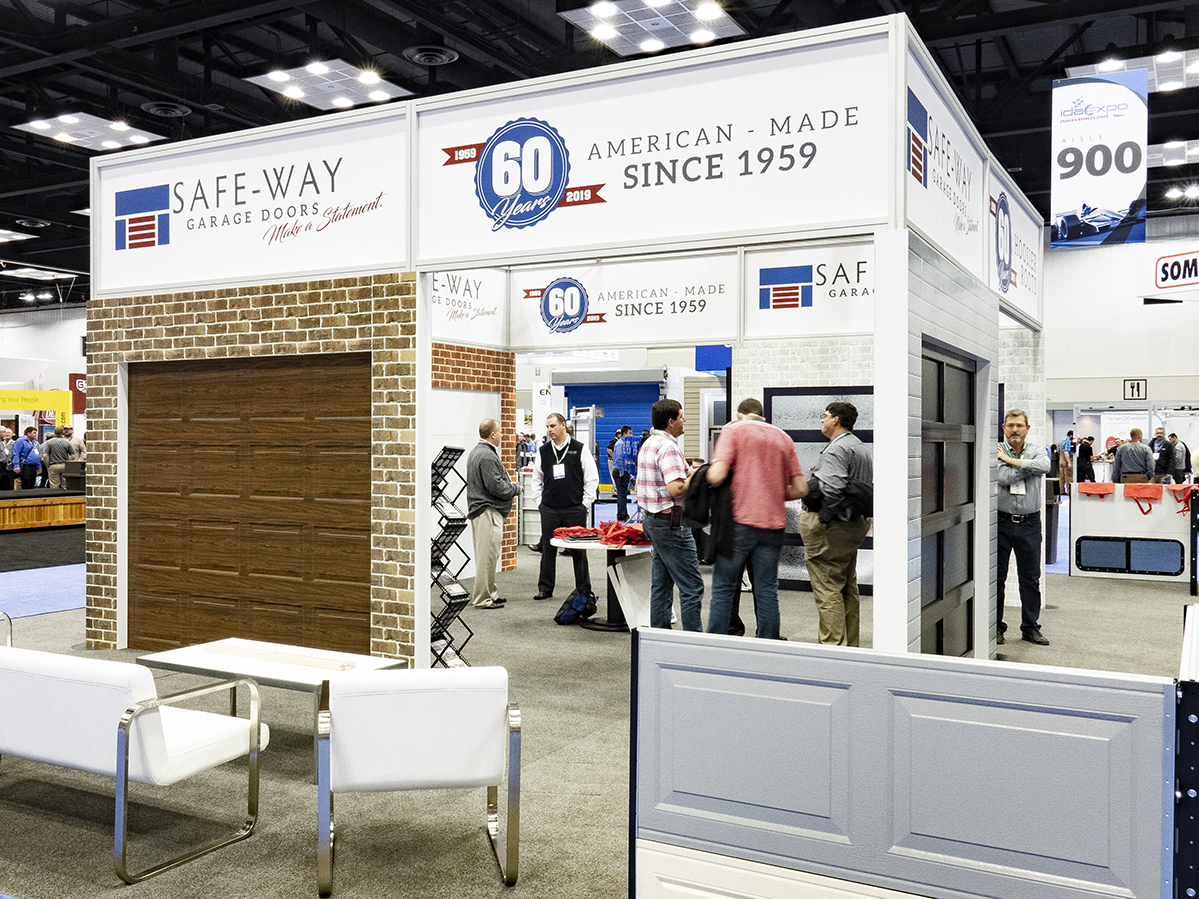
The ownership timeline shows the playbook already in motion
Safe-Way’s recent institutional growth timeline
| Date | Event | Why it matters |
|---|---|---|
| 2021 | CW Industrial Partners invested in Safe-Way. | Safe-Way entered an institutional ownership phase before the current Point 41 transaction. |
| Sept. 2023 | Safe-Way agreed to acquire the assets of 1st United Door Technologies. | The stated rationale included western distribution expansion, eastern distribution opportunities for 1st United and procurement and sales synergies. |
| Sept. 9, 2026 | Point 41 acquired Safe-Way from CW Industrial Partners. | The new owner says Safe-Way will pursue geographic and product expansion and is actively seeking manufacturer and distributor partnerships. |
The 1st United deal explains why distribution is a strategic asset
Safe-Way’s 2023 acquisition of 1st United Door Technologies is a useful preview of the logic Point 41 may seek to repeat.
When that transaction was announced, Safe-Way said the combination would expand its distribution network into key western markets while creating opportunities to move 1st United products through the eastern half of the United States. CEO Ted Rock specifically highlighted faster, easier access to a broader range of products. The companies also identified sales and procurement synergies while saying the 1st United brand would continue operating.
That is a very different acquisition thesis from adding another service branch. A manufacturer/distributor deal can create value by shortening the distance between product and dealer, filling gaps in the catalog, increasing production or warehouse reach and giving existing customers more items to buy from the same supplier relationship.
For garage-door contractors, lead time is not an abstract finance metric. It affects install scheduling, replacement-cycle speed, inventory decisions, customer communication and working capital. Product availability can change how quickly a sold job becomes collected revenue. That is why distribution capacity can be strategically valuable even when homeowners never know the distributor’s name.
Why private equity moving upstream matters to the contractor
Contractors tend to experience private equity at the service-company level: a competitor sells, a regional platform enters the market, a technician recruiting campaign gets more aggressive or another local brand joins a national group.
Supplier consolidation is quieter, but it can influence the contractor’s economics just as directly. The manufacturer and distributor sit between raw materials and the finished installation. Their product breadth, warehouse locations, dealer programs, freight economics, warranty policies, stock positions and production schedules all affect the field operator.
Nothing in Point 41’s announcement says Safe-Way will change dealer pricing, territories, warranty terms or channel strategy, and contractors should not assume those changes are coming. The right response is simply to recognize that the ownership structure of the supply base is becoming part of the same consolidation story.
When a supplier becomes an acquisition platform, contractors should pay attention to what it buys next and why. A manufacturing add-on can bring a product category. A distributor can add regional density. A complementary brand can bring a dealer base. A plant can add capacity. Each move can change service levels or competitive positioning without ever appearing as a home-services acquisition headline.
What garage-door operators should monitor as the supplier side consolidates
| Signal | What to track | Why it matters operationally |
|---|---|---|
| Lead times | Quoted versus actual days from order to delivery by product family and market. | Lead-time drift changes scheduling, customer expectations and working-capital timing. |
| Vendor concentration | Percentage of purchases tied to the top one, two and three suppliers. | A contractor that cannot source a critical door or component elsewhere has more supply-chain risk. |
| Dealer economics | Discount schedules, freight, rebates, minimums, returns and payment terms. | Small changes in product economics can materially affect gross margin at installation volume. |
| Product breadth | New categories, brands and SKUs added after acquisitions. | A broader catalog can reduce sourcing friction—or create new opportunities to standardize purchasing. |
| Distribution footprint | New warehouses, plants, acquired distributors and service territories. | Physical proximity can improve availability and freight economics. |
| Warranty and support | Claims process, parts availability, dealer support and turnaround time. | The customer experiences warranty friction through the contractor even when the manufacturer owns the root cause. |
What not to conclude from today’s deal
First, Safe-Way’s valuation is not public. Point 41’s stated $50 million-to-$350 million target enterprise-value range describes the firm’s investment strategy and should not be presented as the Safe-Way purchase price.
Second, there is no evidence in the announcement that Safe-Way plans to raise prices, change dealer territories, reduce brands or alter warranty policies. Those are areas contractors should monitor in any supplier ownership change, not claims about this transaction.
Third, Safe-Way is not part of A1 or Guild based on the reviewed sources. The transactions are separate. The analytical connection is that institutional capital is active in both the service and product/distribution layers of the same garage-door ecosystem.
The lesson extends beyond garage doors
HVAC, plumbing and electrical contractors should pay attention even if they never buy a garage door. Every trade has an upstream layer: equipment manufacturers, supply houses, specialty distributors, parts networks and dealer programs.
Once investors become comfortable with the demand durability and fragmentation of a service category, there can be strategic logic in owning businesses adjacent to that demand. That does not mean the garage-door pattern will repeat identically in every trade. It means contractors should understand enterprise value on both sides of their own P&L: the customers they acquire and the suppliers they depend on.
A company that measures vendor concentration, purchasing economics, lead-time reliability and inventory turns has a better view of risk than one that only watches revenue and marketing leads. Supply-chain discipline becomes even more valuable as counterparties get larger and ownership changes more frequently.
The contractor playbook: turn supplier uncertainty into operating data
- Calculate vendor concentration by dollars spent and by mission-critical product category. A 20% vendor can still be a single point of failure if it supplies the one product you cannot substitute.
- Track actual lead time against promised lead time. If the number is not in a system, the company is managing supply-chain risk by anecdote.
- Maintain an approved second source for critical doors, components, equipment or materials where practical and consistent with quality standards.
- Measure gross margin by product family and supplier, not only by technician or job type. Purchasing changes can hide inside otherwise healthy revenue growth.
- Document freight, rebates, payment terms, warranty credits and returns. The invoice price is not the full supplier economics.
- Watch acquisition announcements from major suppliers and distributors. Geography and product-category additions often reveal the buyer’s strategy before operational changes reach the field.
- Keep customer-facing promises tied to current supply data. A sold replacement job is not completed revenue until the product can be delivered and installed.
- If you are building your own company for acquisition, treat procurement and inventory as diligence-ready operating systems. A buyer will care about concentration, stock accuracy, vendor terms and whether purchasing scales across branches.
A1 showed what a service brand can become. Safe-Way shows investors are studying who supplies the brand, too.
The temptation after the A1 story is to conclude that private equity simply loves garage-door companies. The better conclusion is that sophisticated investors are learning how value is created across the garage-door market.
A1 demonstrates the value of a scaled consumer service brand, operating system and technician network. Guild demonstrates the speed at which fragmented local operators can be assembled into a national platform. Safe-Way demonstrates another asset class inside the same ecosystem: the manufacturer and distributor that can broaden products, extend geography and potentially add more businesses behind the dealer network.
For an independent contractor, none of this requires chasing a private-equity exit. The useful lesson is to understand the complete machine around the customer. Demand creates the job. The technician creates the service experience. The supplier makes the product available. Inventory and logistics convert the sold job into an installed job. Data tells management where the margin and risk actually live.
The garage-door industry is becoming institutional from both directions. One week after a reported $2 billion service-company deal, Safe-Way’s new ownership is a reminder that the consolidation story does not stop at the truck. It reaches all the way back to the factory door.
Point 41, Safe-Way and garage-door M&A: quick answers
Did Point 41 Capital acquire Safe-Way Garage Doors?
Yes. Point 41 announced on Sept. 9, 2026 that it acquired Safe-Way Garage Doors from CW Industrial Partners and is partnering with Safe-Way management for the company’s next phase of growth.
How much did Point 41 pay for Safe-Way?
The purchase price and other financial terms were not disclosed. Point 41’s stated firm-wide investment range of $50 million to $350 million in enterprise value is not a disclosed valuation for Safe-Way.
What does Safe-Way Garage Doors do?
Safe-Way manufactures and distributes residential, commercial and industrial overhead garage doors. It is headquartered in Warsaw, Indiana and says it operates facilities in Tennessee and Missouri with distribution throughout North America.
Is Safe-Way planning more acquisitions?
Point 41’s announcement says Safe-Way is actively seeking partnerships with leading residential and commercial overhead-door manufacturers and distributors. The release does not identify specific targets.
Who owned Safe-Way before Point 41?
CW Industrial Partners was the selling sponsor. Its portfolio materials identify 2021 as the investment year for Safe-Way.
Is Safe-Way connected to A1 Garage Door Service or Guild Garage Group?
No corporate connection was disclosed in the sources reviewed for this article. The companies are discussed together because the transactions show institutional capital operating at different layers of the same garage-door market.
Why does a manufacturer acquisition matter to service contractors?
Manufacturing and distribution ownership can influence product breadth, geographic availability, lead times, freight, dealer programs and supply concentration. The Point 41 announcement does not say those terms will change at Safe-Way, but the ownership shift makes supplier strategy worth watching.
Methodology
TradeVulcan Dispatch reviewed Point 41 Capital’s Sept. 9, 2026 transaction announcement, Safe-Way’s current company history and product materials, Safe-Way’s 2023 1st United Door Technologies acquisition announcement, CW Industrial Partners’ Safe-Way portfolio materials, and Reuters reporting on the 2026 A1 Garage Door Service and Guild Garage Group transactions. Safe-Way transaction terms were not disclosed. Point 41’s stated $50 million-to-$350 million target enterprise-value range is treated only as the firm’s investment strategy and not as a Safe-Way valuation. Statements about potential contractor implications are identified as analysis and are not presented as announced changes to Safe-Way pricing, dealer territories, warranty programs or channel policy. Reporting was current through Sept. 9, 2026 at approximately 10 a.m. Pacific time.
Sources
- Point 41 Capital Partners and Management Recapitalize Safe-Way Garage Doors to Support the Company’s Next Phase of Growth — Point 41 Capital Partners / PR Newswire
- About Safe-Way Door — Safe-Way Garage Doors
- Safe-Way Garage Doors Strengthens National Reach Through Acquisition of 1st United Door Technologies — Safe-Way Garage Doors
- Safe-Way Garage Doors — CW Industrial Partners
- KKR to acquire A1 Garage Door Service for around $2 billion, sources say — Reuters
- Oak Hill Capital to acquire Guild Garage Group in $800 million-plus deal, sources say — Reuters