
Disclosure
TradeVulcan develops and sells software for home-service contractors, including communications, lead-management and workflow products that can overlap with categories discussed in this article. TradeVulcan has no reported financial relationship with Yelp, Hatch or OpenAI. Acquisition figures are drawn from Yelp's SEC filings. Product-capability and performance statements are attributed to Yelp, Hatch or OpenAI where appropriate; Dispatch has not independently benchmarked Hatch's voice agent against competing systems. This article is editorial analysis, not a product endorsement or investment recommendation.
Status — Sept. 12, 2026
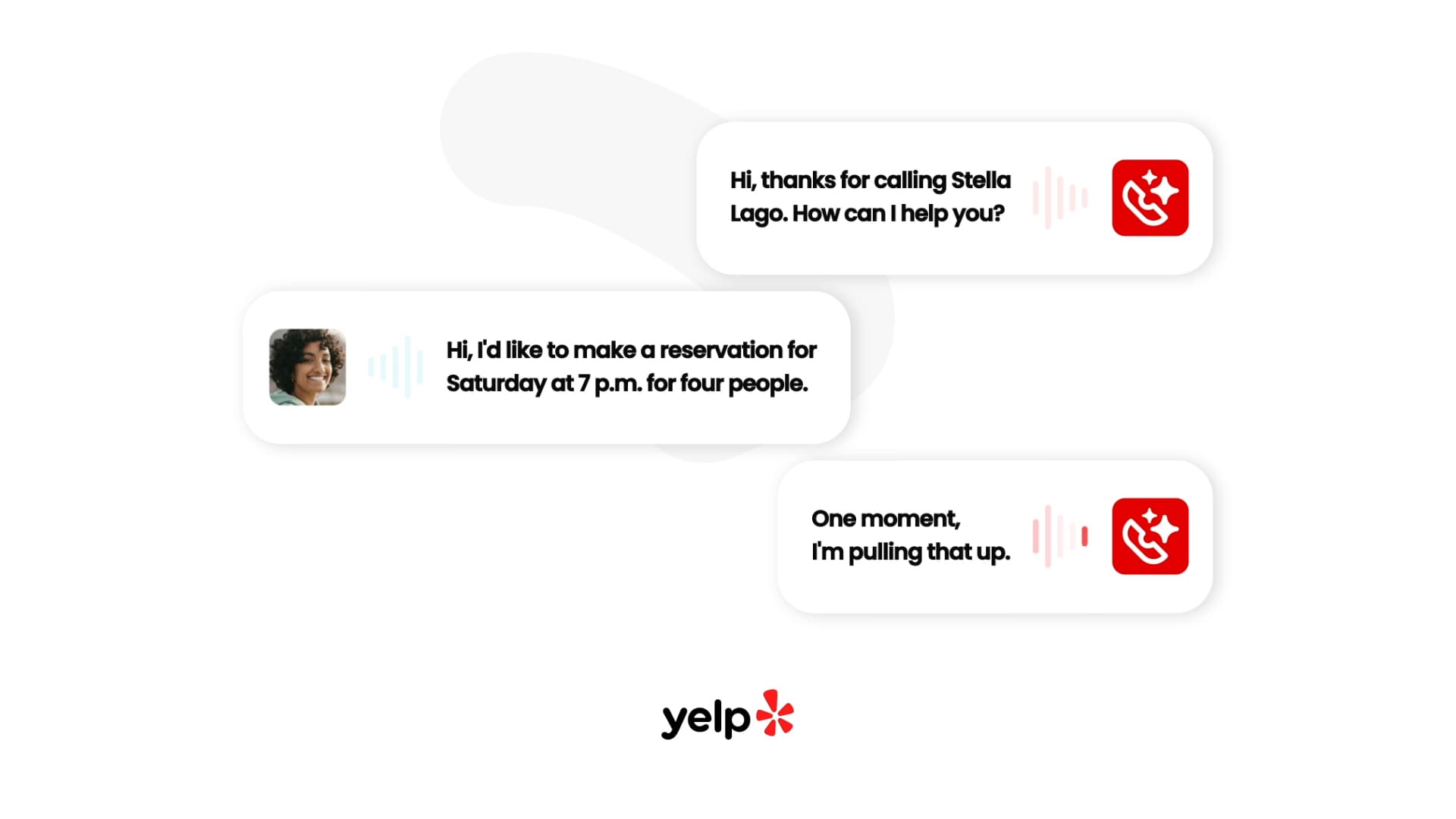
Yelp announced Sept. 10 that it has integrated OpenAI's GPT-Live-1 into Hatch, the AI communications platform it acquired in February, and into Yelp Host for restaurants. For service businesses, Yelp says Hatch's voice agent can diagnose the reason for a call, verify service area and job details, use real-time availability to book appointments, and apply business-specific scheduling and emergency-routing rules.
The transaction itself is already closed. Yelp's SEC filings show that it acquired Hatch on Feb. 2 for approximately $271.2 million in cash. Yelp separately committed $30 million of acquisition- and integration-related compensation to certain continuing Hatch employees over two to three years; the company accounts for those payments as post-combination expense rather than purchase consideration.
The new event is the GPT-Live-1 deployment, not a second acquisition. OpenAI made GPT-Live-1 generally available in the API on Sept. 10 as a full-duplex front-end voice layer capable of listening and speaking at the same time while delegating deeper reasoning and tools to a backend agent.
Yelp did not spend $271 million to make a phone bot sound nicer.
The strategic prize is the workflow between a homeowner raising a hand and a contractor putting a real job on the board.
Yelp already sits near the top of that funnel: homeowners search for service companies, read reviews, request quotes and generate paid advertising demand. Hatch moves Yelp farther downstream. It can take demand from multiple sources, respond across voice, text, email and web, qualify the opportunity, apply operating rules and book an appointment into the systems a service company already uses.
GPT-Live-1 makes the conversation layer more natural. That matters, especially when callers interrupt, change direction, speak over the agent or have background noise. But the more defensible part of an AI CSR is not the voice. It is whether the system actually knows where the company works, which jobs it accepts, when qualified technicians are available, what should be escalated to a human and how the outcome gets written back to the contractor's system of record.
For HVAC, plumbing and electrical operators, that changes the buying question. The useful comparison is no longer “Which bot sounds most human?” It is “Which system turns the highest share of real demand into completed, profitable work without creating bad appointments or operational cleanup?”
What contractors should know
- Yelp acquired Hatch on Feb. 2, 2026 for approximately $271.2 million in cash, according to Yelp's SEC filings. A separate $30 million employee compensation package is being expensed over two to three years and is not part of purchase consideration.
- Yelp and Hatch announced Sept. 10 that Hatch is now using OpenAI's GPT-Live-1 as its front-end voice layer for service-business calls.
- OpenAI says GPT-Live-1 supports full-duplex conversation and is priced at $0.05 per minute for the front-end voice layer; backend model and tool usage are charged separately.
- Yelp says Hatch manages tens of millions of leads across voice, text, email and web, representing billions of dollars of value attributed to customer businesses annually.
- Hatch annual run-rate revenue reached approximately $35 million in June 2026, up 59% year over year on Yelp's stated methodology, after reaching more than $34 million in March.
- In Q2, Yelp said Hatch shipped conversational analytics, outbound voice and enhancements to its Google Local Services Ads and ServiceTitan integrations.
- The operator lesson is to score AI call handling on booked and completed revenue, not voice naturalness alone.
The Yelp–Hatch bet in six numbers
- Hatch purchase consideration
- $271.2M
- Separate employee package
- $30M
- Hatch June run rate
- ~$35M
- Lead volume
- Tens of millions
- Yelp Q2 other revenue
- $33M
- GPT-Live-1 voice layer
- $0.05/min
Cash consideration reported in Yelp's SEC filings for the Feb. 2 acquisition.
Acquisition- and integration-related compensation to continuing employees over two to three years.
Annual run-rate revenue reported by Yelp for June 2026; up 59% year over year under Yelp's methodology.
Leads Hatch says it manages across voice, text, email and web.
Up 98% year over year; Yelp said the increase was driven primarily by Hatch, Places API and food-ordering partnerships.
OpenAI's API price for the front-end voice layer; backend model and tool usage are separate.
The $271 million deal is turning into a distribution strategy, not just a software acquisition
Yelp's historical strength in home services has been demand creation and discovery. In 2025, the company generated a record $948 million of Services advertising revenue, up 8% year over year. A homeowner could find a contractor, read reviews, request a quote or call. What happened after that handoff increasingly depended on the contractor's phones, staff, CRM, call center and follow-up discipline.
Hatch changes the perimeter of what Yelp can own.
The company was already a Yelp partner before the acquisition. Yelp then bought Hatch in February and began adding engineering and product resources. By the second quarter, Yelp said Hatch had shipped outbound voice, conversational analytics and enhancements to Google Local Services Ads and ServiceTitan integrations. On Sept. 10, it added OpenAI's newest live voice layer.
That sequence matters more than any single feature. Yelp is moving from being primarily a place where demand is discovered toward a position where it can also help work that demand after it arrives.
There is no public announcement that Yelp will force advertisers into Hatch, replace existing CRMs or bundle every Services advertiser into an AI call product. Contractors should not assume a roadmap Yelp has not announced. But the direction of investment is visible: Yelp has put more than a quarter-billion dollars of purchase consideration behind a platform whose job is to convert demand after the lead is created.
What Yelp paid—and what it has reported since
| Date / period | Reported metric | Why it matters |
|---|---|---|
| Nov. 2025 | Hatch ARR ~ $25M; +70% YoY | Yelp's acquisition announcement described Hatch as a fast-growing but modestly cash-flow-negative software business before closing. |
| Feb. 2, 2026 | Acquisition closes at ~$271.2M cash | SEC filings give the final reported purchase consideration, subject to customary post-close adjustments. |
| Post-close | $30M employee compensation | Separate from purchase consideration; tied to future service and expensed over two to three years. |
| March 2026 | Hatch annual run-rate revenue > $34M | Yelp said the run rate had risen 92% year over year by March. |
| June 2026 | Hatch annual run-rate revenue ~ $35M | Yelp reported 59% year-over-year run-rate growth as the business lapped a high-growth comparison. |
| Q2 2026 | Yelp other revenue $33M; +98% YoY | Yelp said the increase was driven primarily by Hatch alongside Places API and food-ordering partnerships. |
The next software war is not over who answers the phone. It is over who can finish the workflow.
A modern voice model can make an automated call feel dramatically less robotic. GPT-Live-1 is designed to handle overlapping speech, natural pauses and interruptions while continuing a live conversation. OpenAI also designed it so the voice layer can hand deeper reasoning or tool work to another model or backend system.
That architecture makes the business layer more important, not less.
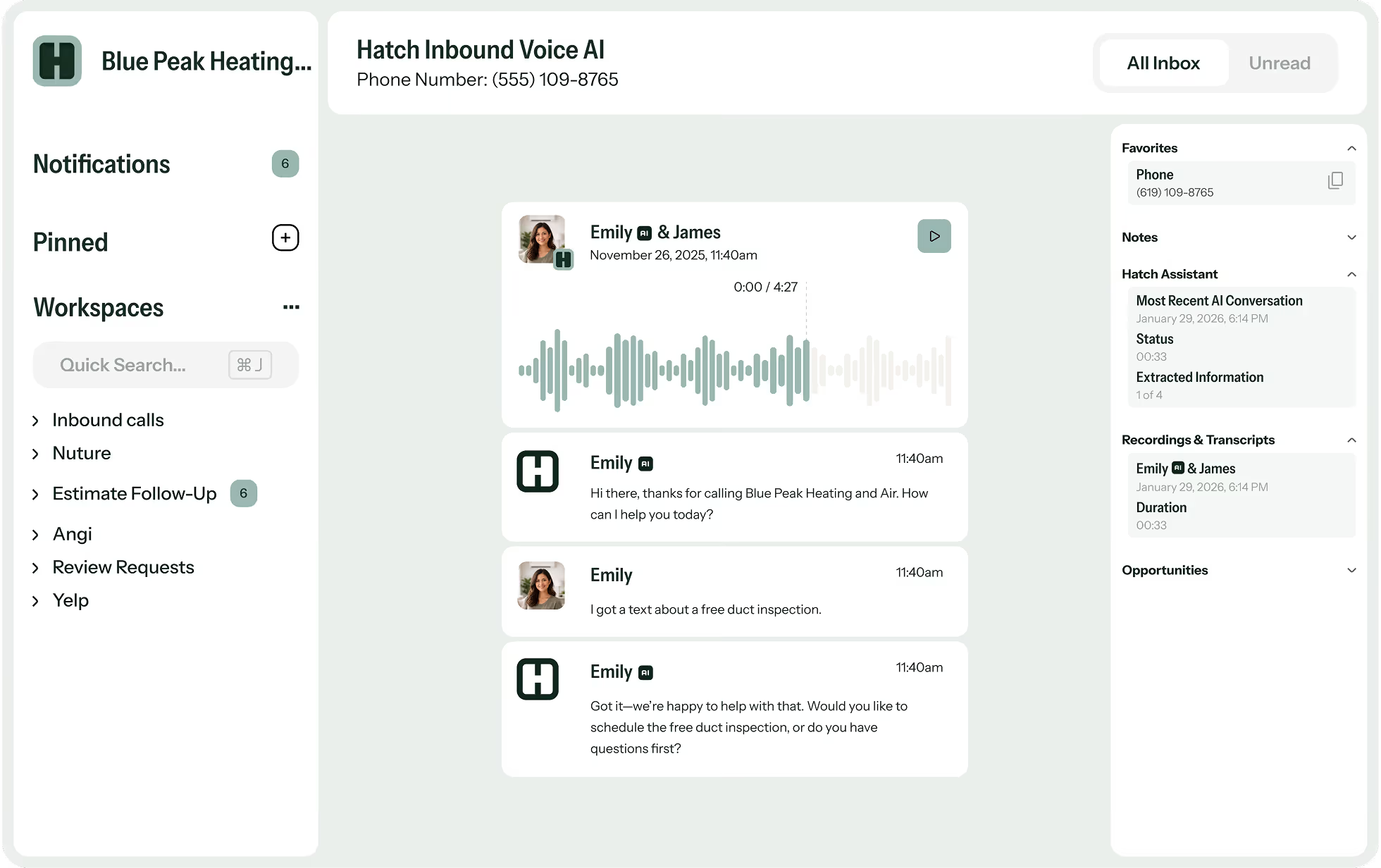
A homeowner saying “the upstairs unit stopped cooling and there is water by the furnace” does not merely need fluent speech in return. The system has to determine whether the address is inside the service area, classify the call correctly, understand whether the company offers that work, identify urgency, find an appropriate appointment window, apply dispatch constraints, capture customer details, tag the lead source, write the booking into the CRM and know when a human should take over.
Hatch's pitch is that it supplies that operational intelligence around the voice model. Yelp's Sept. 10 announcement specifically points to technician availability, service areas, scheduling rules and emergency routing. The company's current product materials also describe warm transfers, calendar booking and business-knowledge responses.
As foundational voice models improve, natural speech itself becomes easier for many vendors to buy. The competitive advantage shifts toward integration quality, workflow reliability, operating data and the ability to prove that an apparently successful conversation actually became profitable work.
What has to happen between the ring and the revenue
| Stage | What the system must do | Common failure | Operator KPI |
|---|---|---|---|
| Answer | Pick up quickly and remain available during peaks and after hours | Missed or abandoned call | Answer rate / abandonment rate |
| Qualify | Capture need, address, job type, urgency and customer intent | Garbage-in booking or false qualification | Qualified-call rate |
| Route | Apply service-area, trade, technician and escalation rules | Booking a job the company cannot or should not run | Routing accuracy / human escalation rate |
| Book | Use real availability and correct appointment windows | Double booking, wrong slot or unusable promise time | Booked-call rate / reschedule rate |
| Write back | Preserve source, transcript, contact and appointment context | CRM record lacks attribution or useful call context | CRM write-back completeness |
| Handoff | Transfer edge cases to a human with context intact | Caller repeats the story or abandons during transfer | Transfer completion / time to human |
| Monetize | Turn the booking into completed work at acceptable margin | AI reports a booking while the job cancels, no-shows or loses money | Completed-job rate / revenue and gross margin per handled call |
For contractors, voice quality is table stakes. Booking quality is the P&L.
An AI agent can improve the economics of a call center in two very different ways: handle more conversations with less labor, or convert more of the demand the business is already paying to generate. The second opportunity is usually more valuable for a growth-oriented contractor—but only if the appointments are real.
A contractor paying for Google, Yelp, Angi, Networx, SEO, direct mail or branded traffic should be able to connect each inbound call to the outcome. A high “AI booking rate” is not enough if the system is accepting low-intent calls, creating duplicate records, booking outside the service area or assigning a sales opportunity to a technician who cannot perform the work.
The right experiment is controlled and financial. Compare the AI path with the existing CSR or answering-service path by lead source and call type. Track not only answered calls and appointments, but show rate, completed jobs, average ticket, gross margin, cancellations, transfers, customer complaints and recovered after-hours demand.
That is especially important when the voice agent is inserted into paid lead channels. A contractor can make an AI product look successful by booking more calls while quietly increasing wasted truck rolls. The P&L only improves when the system creates more completed contribution margin than the operating cost and downstream friction it adds.
The AI CSR scorecard owners should require
| Metric | What it reveals | Why a vanity metric can mislead |
|---|---|---|
| Answer rate | Whether demand is actually being captured | A 100% answer rate is worthless if qualification and booking are poor. |
| Qualified-call rate by source | Whether the agent understands which inquiries fit the business | A blended rate hides differences between branded calls, LSA, aggregators and existing customers. |
| Booked-call rate | Ability to turn valid demand into appointments | Bookings can be inflated by bad slots or low-intent calls. |
| Booked-job show rate | Whether customers keep the appointments | A booking that immediately cancels should not be counted as equal to a kept job. |
| Completed-job rate | Whether appointments turn into actual field work | This exposes weak qualification and bad routing. |
| Revenue per handled call | Top-line production from the call stream | Revenue alone can reward unprofitable or low-quality work. |
| Gross margin per handled call | Economic value after direct job costs | This is closer to the real reason the call center exists. |
| Human escalation rate | How often edge cases need people | Too low can mean the AI is refusing to escalate; too high can erase labor savings. |
| Error / correction rate | Operational cleanup created by the system | Mistakes often show up downstream in dispatch rather than in the AI dashboard. |
| Cost per completed job | End-to-end acquisition and handling efficiency | Per-minute voice cost is only one small component of total economics. |
Yelp's larger move is from lead marketplace toward operating layer
The Hatch acquisition also matters because Yelp is making this push while its traditional advertising business is navigating a slower environment.
Yelp reported $376 million of Q2 net revenue, up 1% year over year. Services advertising revenue was approximately $241 million in the quarter and was essentially flat year over year, while Other revenue rose 98% to a record $33 million. Yelp said that Other-revenue increase was driven primarily by the addition of Hatch, plus growth in Yelp Places API and food-ordering partnerships.
That does not mean Hatch is replacing Yelp advertising. It means Yelp has a reason to expand the amount of software and workflow value it can sell around the lead.
The company also has unusually strategic integration points. Yelp's Q2 filing says Hatch shipped enhancements to both Google Local Services Ads and ServiceTitan integrations. Google can be the source of the homeowner's demand. ServiceTitan can be the system where a large contractor wants customer and job records to live. Hatch is trying to become the conversation and execution layer in between.
That is an important competitive position because no single company has to own the entire home-service stack to become economically valuable. Owning a high-friction transition point—lead to conversation, conversation to booking, booking to CRM—can be enough.
Where the strategic control points sit
| Layer | Examples | What the contractor needs from it |
|---|---|---|
| Demand creation | Google LSA / Google Ads, Yelp, aggregators, SEO | Qualified homeowner demand with clear source economics. |
| Conversation | Hatch and other AI or human call-handling platforms | Fast, accurate response across phone, text, email and web. |
| Operational decision | Service area, job type, technician skills, emergency and scheduling rules | A booking that matches what the field organization can actually execute. |
| System of record | ServiceTitan and other field-service CRMs | Clean customer, appointment, job and attribution data. |
| Field execution | Dispatch, technician, estimate, invoice and follow-up | Completed work with acceptable revenue, margin and customer experience. |
The downside case: AI can create bad capacity just as fast as good capacity
Home-service calls are full of exceptions. A homeowner may be outside the normal service radius but have a commercial property the company does serve. A warranty customer may require different handling. An electrical smell can require emergency escalation. A caller may ask for a price the company does not quote over the phone. A financing question may trigger approved-language requirements. An outbound campaign may face consent and do-not-call restrictions.
Those are not reasons to reject AI call handling. They are reasons to treat configuration and governance as operations work.
Before an AI CSR receives meaningful call volume, the contractor should define allowed job types, excluded work, service geography, appointment capacities, emergency rules, price and financing language, human-transfer conditions and the source-of-truth system for availability. Recorded calls and transcripts should be sampled continuously against actual job outcomes, not merely reviewed when a customer complains.
The system also needs a failure mode. If the AI service, integration or CRM connection is degraded during a July heat wave, calls still need somewhere to go. A contractor should know the fallback path before the first outage, not after a marketing budget is feeding dead air.
Before giving an AI CSR the phones
- Define the service map at ZIP, city or branch level and document any exception rules.
- Create a job-type taxonomy that distinguishes service, replacement, maintenance, warranty, estimate-only and work the company does not perform.
- Connect booking to real capacity and technician skill rules instead of a generic open calendar.
- Write explicit emergency-escalation and human-transfer logic for safety, high-value calls and angry customers.
- Approve what the AI may say about pricing, diagnostic fees, warranties, financing, guarantees and arrival windows.
- Preserve the original lead source through the call and into the CRM so cost per completed job can be calculated.
- Audit a sample of calls against real dispatch and invoice outcomes every week during rollout.
- Measure cancellations, no-shows, reschedules and wrong-job bookings separately from gross appointments.
- Maintain a tested human or alternate-routing fallback for vendor, telephony or CRM outages.
- Do not expand to outbound AI calling until legal, consent, do-not-call and internal communication policies are reviewed for the intended use.
What this means for ServiceTitan, Google lead traffic and independent voice-AI vendors
The most interesting competitive outcome may be interoperability rather than a winner-take-all stack.
Yelp's own Q2 filing says Hatch improved its Google Local Services Ads and ServiceTitan integrations. That is evidence that Yelp sees value in working across demand sources and systems of record rather than requiring every lead to originate on Yelp or every customer record to live inside a Yelp product.
For contractors, that is also the safer architecture. A call-handling vendor should be replaceable without losing the customer history or attribution needed to run the business. The contractor should own its phone numbers, customer data, booking history and outcome data—or have clear contractual portability—so a better model or provider can be adopted later.
Independent AI voice vendors still have room to compete on workflow depth, implementation speed, vertical expertise, telephony reliability, pricing, customization and integration quality. CRM vendors can push voice deeper into the system of record. Lead platforms can add conversion tools around the demand they already generate.
The likely result is not one AI receptionist. It is a rapidly converging category where voice, lead management, CRM and marketing attribution begin to overlap. Yelp's $271 million purchase of Hatch is one of the clearest signals yet that the conversion layer is valuable enough to fight over.
What Dispatch is watching next
First: whether Hatch's annual run-rate revenue reaccelerates from the approximately $35 million Yelp reported for June after the company increased product and engineering resources.
Second: whether Yelp begins distributing, packaging or pricing Hatch more directly alongside its Services advertising products. Yelp has not publicly announced a broad mandatory bundle, so any such move should be treated as a future possibility rather than current fact.
Third: how deep the Google LSA and ServiceTitan integrations become. The value of voice AI rises sharply if lead source, availability, booking, customer context and job outcome move cleanly across systems.
Fourth: whether vendors begin publishing outcome benchmarks that extend beyond answered calls and appointment counts to completed jobs, revenue, gross margin and error rates. That is where contractor buyers can separate a good demo from a good operating system.
The bottom line: manage AI call handling like a revenue operation, not a novelty
The headline number is $271.2 million because it shows how seriously Yelp is taking the conversion problem. The fresh development is GPT-Live-1 because it improves the interface homeowners actually hear.
The durable contractor lesson sits underneath both.
A home-service company can spend enormous amounts creating demand and still lose the economics in the minutes after a customer calls. Missed calls, slow response, weak qualification, bad bookings and incomplete CRM records are not customer-service inconveniences. They are acquisition-cost multipliers.
AI can attack that leakage at a scale human teams struggle to match during nights, weekends and seasonal spikes. But the standard should be high. The agent has to understand the operating rules, book the right work, preserve the data, escalate the exceptions and produce more completed contribution margin than it costs.
If it does that, the AI CSR becomes infrastructure.
If it only sounds good on a demo call, it is still just a demo.
Yelp, Hatch and GPT-Live-1: quick answers
Did Yelp buy Hatch?
Yes. Yelp's SEC filings say the acquisition closed Feb. 2, 2026 for approximately $271.2 million in cash, subject to customary post-closing adjustments. Yelp separately committed $30 million of service-contingent acquisition- and integration-related compensation to certain continuing Hatch employees.
What did Yelp announce on Sept. 10?
Yelp said it integrated OpenAI's GPT-Live-1 into Hatch for service businesses and Yelp Host for restaurants. The announcement was a product integration, not a new acquisition.
What is GPT-Live-1?
GPT-Live-1 is OpenAI's full-duplex voice model for the API. It is designed for natural live conversation and can delegate deeper reasoning and tool actions to a backend model or agent.
Can Hatch book home-service appointments?
Yelp and Hatch say the product can qualify service calls, verify service areas and job details, use real-time availability, apply scheduling and emergency-routing rules and book appointments. Dispatch has not independently benchmarked booking accuracy.
How much revenue does Hatch generate?
Yelp reported Hatch annual run-rate revenue of approximately $35 million in June 2026. Annual run rate annualizes the indicated month's results; it should not be read as audited full-year recognized revenue.
Does Yelp own OpenAI?
No. Yelp and Hatch are customers and integration partners using OpenAI's GPT-Live-1 voice model. No ownership relationship between Yelp and OpenAI was announced in the cited materials.
What should a contractor measure when testing an AI receptionist?
At minimum: answer rate, qualified-call rate, booked-call rate, show rate, completed-job rate, revenue and gross margin per handled call, transfer rate, error rate, customer complaints and cost per completed job. Those metrics should be segmented by lead source and call type where possible.
Methodology
Dispatch reviewed Yelp's Sept. 10 GPT-Live-1 announcement, OpenAI's GPT-Live-1 release materials, Yelp's Q1 and Q2 2026 SEC filings, Yelp's Q2 shareholder letter and earnings release, Yelp's full-year 2025 results, current Hatch product documentation and contemporaneous secondary acquisition coverage. Purchase consideration and employee-compensation treatment are reported from SEC filings. Hatch annual run-rate figures use Yelp's stated methodology and are not presented as audited full-year recognized revenue. Product-performance claims are attributed to the vendors because Dispatch did not independently test the software. Analysis and source status were rechecked Sept. 12, 2026 before publication.
Sources
- Yelp and Hatch Advance Voice AI for Restaurants and Service Pros with OpenAI's GPT-Live-1 — Yelp
- Build more natural voice experiences with GPT-Live-1 in the API — OpenAI
- Yelp Inc. Quarterly Report for the period ended June 30, 2026 — U.S. Securities and Exchange Commission
- Yelp Inc. Quarterly Report for the period ended March 31, 2026 — U.S. Securities and Exchange Commission
- Yelp Q2 2026 Shareholder Letter — Yelp / U.S. Securities and Exchange Commission
- Yelp Reports Second Quarter 2026 Results — Yelp
- Yelp Delivers Record Net Revenue in 2025, Accelerating Investment in AI Transformation — Yelp
- Voice AI — Hatch
- Yelp Purchasing AI Lead Management Platform Hatch for $300M — PYMNTS