
Disclosure
TradeVulcan Dispatch is published by TradeVulcan, a contractor-software company. This is independent, unsponsored reporting and operator analysis.
A new national buyer has entered the home-services conversation with a familiar promise and an important question: local brands will stay recognizable, but who will make the decisions behind them?
American Service Partners announced its launch October 7, bringing together residential HVAC, plumbing and electrical brands across more than 15 states. The company says it acquired brands from Platform Partner Holdings and Air Today Holdings following an institutional capital raise sponsored by Exuma Capital. Named businesses include A-One Refrigeration, John Stevenson Plumbing, Heating & Air, and Howze Plumbing.
CEO Landon Brewer is pitching operator-led businesses supported by shared services, AI and performance reporting. The release positions ASP against traditional private-equity models, while describing Exuma itself as a private-equity firm. That makes the distinction a claim about approach, not proof that institutional ownership is absent. The announcement does not disclose transaction prices, ownership terms or a planned exit date.
American Service Partners Launches National Home Services Platform ↗
A local name is not the same thing as local decision-making
For an owner evaluating any platform, separate the customer-facing brand from the operating agreement. A company can retain its name while changing who approves a technician hire, sets a pricebook or authorizes a replacement truck. It can also share accounting and recruiting without handing every field decision to a central office.
The useful question is not simply whether the sign stays on the building. Ask who decides when the branch misses its budget, needs an emergency equipment purchase or wants to decline work that does not fit its capabilities. Have the actual terms reviewed with qualified transaction advisers. A presentation is not a substitute for those answers.
Make the promised support visible in a normal workweek
Shared services should be evaluated as a service delivered to the branch. Pick a recurring frustration and follow it through: a payroll discrepancy, an unfilled position, an unanswered customer complaint or a parts invoice that needs approval. Who receives the request, how quickly must they respond, and who can resolve an exception?
An owner should be able to describe the improvement in ordinary terms. Fewer hours reconciling payroll is understandable. A faster, better-qualified hiring pipeline is understandable. A central dashboard that still requires the branch manager to repair every underlying record is not the same result. Ask for a working demonstration and references from operating companies, including ones that had a difficult transition.
Compare the complete operating cost, not a list of new benefits
A proposed support package needs an equally clear cost model. Request a sample branch-level statement that shows shared-service charges, software costs, purchasing arrangements and any expenses allocated from the parent. Identify which charges replace existing spending and which are additional.
Then test an ordinary month and a disappointing month. Does the branch retain enough flexibility to adjust staffing, inventory and marketing responsibly? Who approves those adjustments? This is a framework for comparing proposals, not an assertion that ASP uses any particular fee structure. Without the documents, Dispatch cannot determine what a joining business would pay or retain.
An owner’s comparison sheet
| Decision | Evidence to request |
|---|---|
| Local authority | Written approval rights for hiring, pricing, spending and service territory |
| Shared support | Named service owners, response commitments and escalation paths |
| Branch economics | A complete example showing allocations and remaining local costs |
| Technology changes | A migration plan, training schedule and measurable operating objective |
| Customer continuity | A clear owner for warranties, memberships and unresolved work |
Judge AI by one workflow that actually gets better
A useful technology evaluation starts with a bounded task. For example, choose a missed-call callback queue or an invoice-review process and record the current completion time, error rate and labor involved. Test the proposed system against the same type of work, including the exceptions that normally require a manager.
Do not confuse a recommendation with a completed action. An appointment still needs an appropriate technician and real capacity. A flagged invoice still needs someone authorized to resolve it. Require a clear owner for errors, a way to inspect what happened and a fallback that keeps customers from getting stranded. Those questions remain worthwhile whether the tool comes from a national platform or an independent vendor.
Protect the customer handoff before changing the back office
During an ownership or systems transition, use a dedicated checklist for work already promised. Identify open estimates, deposits, scheduled installations, memberships, warranties and unresolved callbacks. Assign responsibility for each before changing the systems that record them.
The customer should not have to understand a corporate transaction to obtain an answer about an appointment. Give the office a consistent explanation of any genuine service change and a named escalation contact. Train the team on the new process before announcing a new capability. A transition that looks orderly in an acquisition presentation still has to survive a Monday morning with three technicians running late and a homeowner asking about yesterday’s repair.
Independent contractors do not need to imitate a national platform
For a nearby independent company, the constructive response is to examine its own operating weaknesses rather than assume a larger competitor will win every job. Review unanswered inquiries, estimates without a next step, repeat complaints and time lost between the office and field. Pick the gap the business can actually close this month.
Compete with promises the team can keep: a realistic arrival window, a clear diagnosis, an understandable scope and reliable follow-through. Consider outside support where it solves a defined problem, but compare its full cost with the internal effort it replaces. Size is not a customer experience; the completed job is.
The model will be judged in the branches
A national platform’s pitch becomes meaningful when local teams can complete work more reliably without losing clarity over costs, accountability and customer promises. For owners, the next step is diligence rather than a reaction to the label. For competitors, it is improving the operating details customers actually encounter.
Methodology
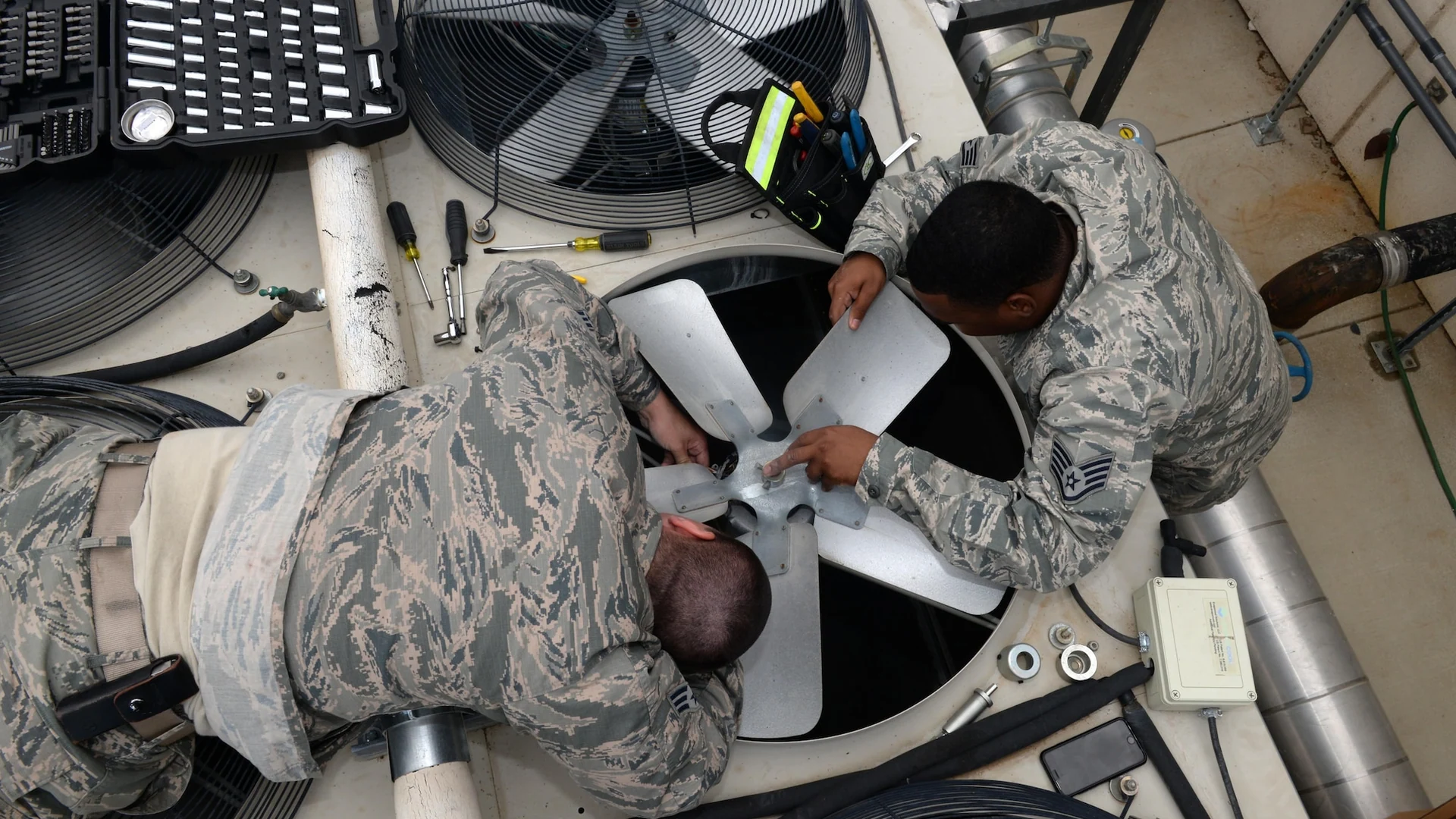
Dispatch reviewed the October 7 issuer announcement. The footprint and business-model descriptions are company statements, not independently audited operating results. No transaction documents, interviews or financial statements were obtained. The operating framework is original Dispatch analysis, not a finding about ASP's undisclosed contract terms. The hero is a real public-domain archival photograph, not a depiction of the reported announcement or an endorsement. The appearance of U.S. Department of War (DoW) visual information does not imply or constitute DoW endorsement.