
Disclosure
TradeVulcan publishes Dispatch and sells contractor software. This independent analysis is not sponsored by HomeServe or Brookfield and does not recommend a financing transaction.
A broken water line starts as a dispatch problem. Across a large portfolio of customers, the promise to handle that repair can also become a capital-markets asset.
Brookfield-backed HomeServe USA disclosed a $2.035 billion inaugural whole-business securitization through an October 1 announcement from its legal adviser, Kirkland & Ellis. The collateral includes home-repair plans, service contracts, and utility and municipality agreements.
That is a financing amount, not HomeServe's annual revenue or an acquisition valuation. For independent contractors, the more useful story is why the customer relationship can matter long before the next technician arrives.
Kirkland & Ellis: HomeServe financing announcement, October 1 ↗
The money is debt, not a price tag on the company
Securitization connects a defined pool of assets or payment rights to securities sold to investors. The Office of the Comptroller of the Currency describes the broader process as packaging financial assets into instruments backed by their cash flows.
In contractor language, the important distinction is between collecting a payment today and demonstrating a reliable stream of payments over time. Investors need a basis for expecting the promised debt payments to be met; a large customer count by itself does not settle that question.
Borrowing capacity also is not the same as business value. Debt has to be serviced. It does not become owner profit simply because the underlying contracts renew, and a lender's claim on future cash can limit what is available for other purposes.
What is inside the announced financing
| Component | Amount |
|---|---|
| Three A-2 term-note series | $1.800 billion combined |
| Variable funding facility | $200 million |
| A-1-L liquidity support | $35 million |
| Announced transaction total | $2.035 billion |
Kirkland says the A-2 term notes received investment-grade ratings from Moody's and KBRA. The announcement does not establish a market valuation for a local contractor's membership base, and Dispatch has not treated the full facility amount as newly drawn cash.
Kirkland & Ellis: term-note ratings and facility descriptions ↗
The customer-acquisition channel deserves as much attention as the debt
HomeServe's September announcement with Nashville Electric Service supplies a concrete example of the distribution model. The voluntary subscription program initially covers equipment connecting a home to the utility's electric system. The company describes a repair hotline and dispatch of local professionals, with NES-branded mailings identifying the partnership.
HomeServe separately describes a North American network of more than 2,600 contractor firms. The homeowner relationship and the field-service operation can therefore sit in different organizations.
For an independent business, that distinction matters. Acquiring the customer, setting the service promise and delivering the work are three separate economic roles. A contractor considering network work should understand which role it is being paid to perform, rather than assuming every completed job builds an equivalent direct customer asset.
HomeServe: Nashville Electric Service partnership ↗HomeServe: contractor network and operating model ↗
A profitable work order and a durable customer relationship are different assets
Consider a service company evaluating a third-party repair assignment. The job may be attractive if the approved rate covers labor, travel, materials, administration and an appropriate margin. But its longer-term value depends on the actual agreement.
Who can contact the homeowner afterward? Who handles a complaint? Who authorizes extra scope? What documentation is required before payment, and who pays when a second visit becomes necessary? Those are questions to answer in the contract, not assumptions to infer from the size of the platform.
For direct customers, the parallel question is whether the relationship survives the first invoice. Does the company know which equipment it installed, when the next useful service is due and whether the homeowner still trusts it? A contact list with stale addresses and no service history is not the same operating asset as a well-maintained customer base.
The membership lesson is retention, not a borrowed valuation multiple
An ordinary maintenance membership is not automatically equivalent to a repair-protection contract. The promises, exclusions, cost exposure and applicable legal treatment can differ. Contractors should not copy a protection-plan offering or financing structure without reviewing those obligations with qualified advisers.
The transferable operating principle is narrower: measure what customers keep paying for, what it costs to deliver and how long the relationship lasts. Separate new enrollments from renewals, cancellations from failed card payments, and collected dues from unpaid balances.
Then put fulfillment beside revenue. A plan that promises maintenance creates work to schedule. A discount creates a cost when redeemed. Priority service creates a capacity commitment. Recurring billing makes cash flow more visible; it does not make those obligations disappear.
A ten-point renewal improvement can matter without any Wall Street financing
Take a hypothetical contractor with 2,000 annual memberships priced at $240. At an 80% renewal rate, that cohort produces 1,600 renewals and $384,000 in annual renewal dues. At 90%, it produces 1,800 renewals and $432,000. The difference is $48,000 in gross dues from 200 additional retained members.
These are illustrative numbers, not HomeServe results or an industry benchmark. They exclude service delivery, payment processing, retention spending and every other expense. The difference is not $48,000 of EBITDA.
The useful management question is what caused the additional customers to stay. Better maintenance completion, clearer benefits and fewer unresolved service problems would tell a different story from a temporary discount that costs more than the extra renewals contribute.
Illustration: follow the same membership cohort
| Measure | 80% renewal | 90% renewal |
|---|---|---|
| Renewed memberships | 1,600 | 1,800 |
| Gross annual renewal dues | $384,000 | $432,000 |
| Difference before all costs | Baseline | +$48,000 |
The report an owner should be able to produce
A useful recurring-revenue report should follow a cohort from enrollment through renewal, not simply display an all-time membership count. Put billed and collected dues beside completed visits, outstanding promised visits, cancellations, refunds and service costs.
Review that report with operations, not only marketing. A team can sell memberships faster than technicians can deliver the promised work. In that situation, growth may be creating a future scheduling problem rather than a stronger business.
Also test the downside. What happens to the program if renewal rates fall, repair costs rise or service demand clusters in the same week? The objective is to find commitments the company cannot comfortably fulfill before customers discover them during a breakdown.
The recurring payment is only as strong as the service promise behind it
HomeServe's financing brings capital-market attention to an everyday contractor issue: how to make a customer relationship dependable over time. An independent operator does not need a securitization to benefit from better retention, cleaner records and a membership promise the field team can actually keep.
Methodology
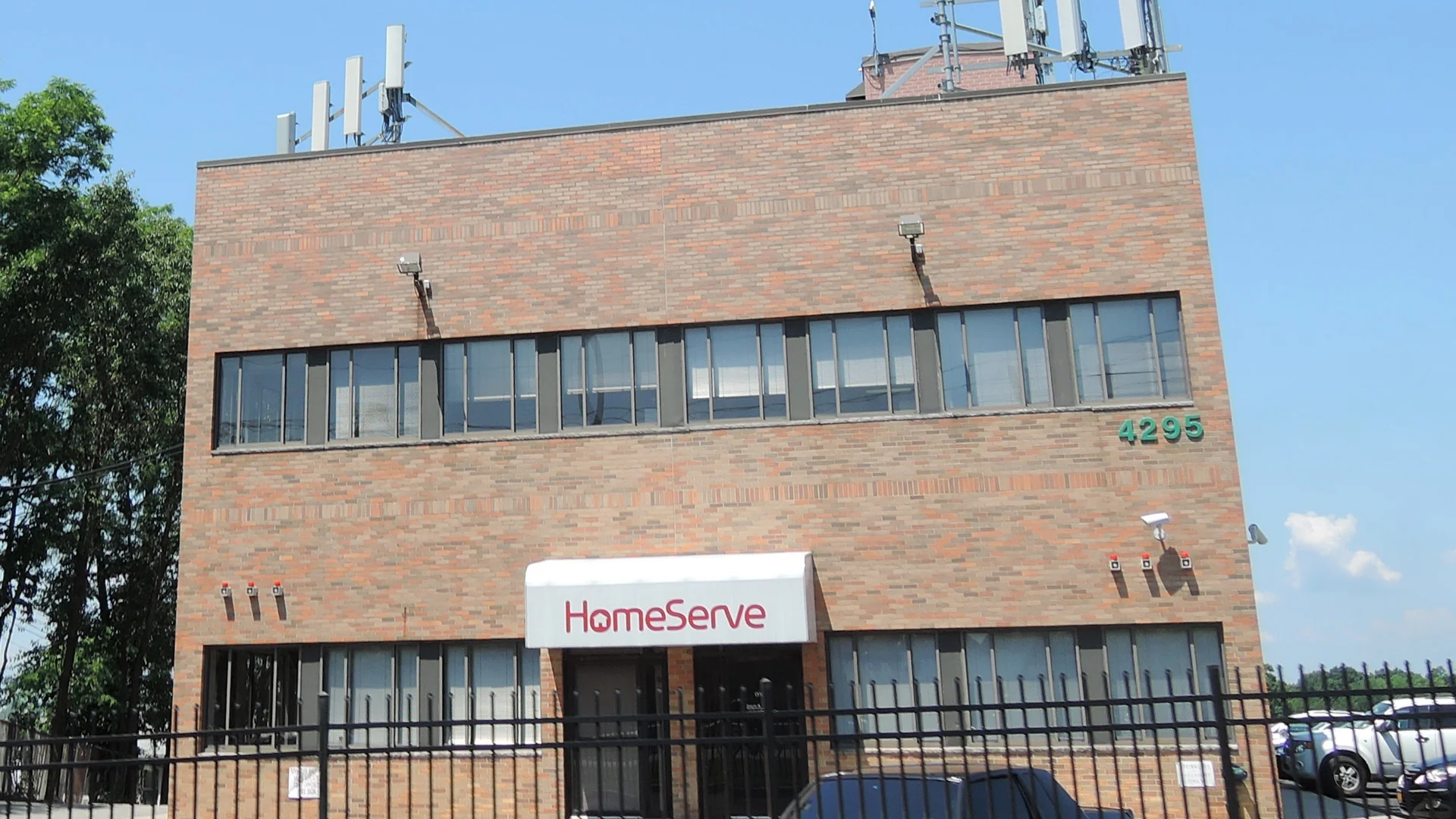
Dispatch reviewed Kirkland's October 1 announcement, HomeServe's Nashville Electric Service partnership announcement and media center, and the OCC's securitization overview. The transaction amount includes term notes and funding/liquidity facilities; it is neither annual revenue nor an enterprise valuation. No final sponsor-dividend amount is asserted. Company network descriptions are attributed to HomeServe. Membership calculations are hypothetical and measure gross dues, not profit; maintenance memberships are not equated with repair-protection contracts. No interviews were conducted. The photograph is archival and public-domain dedicated.
Sources
- HomeServe's $2.035 billion inaugural whole-business securitization — Kirkland & Ellis
- Nashville Electric Service partners with HomeServe — HomeServe
- HomeServe media center: network and service model — HomeServe
- Securitization — Office of the Comptroller of the Currency
- HomeServe office, Staten Island: original photograph — Wikimedia Commons
- Photograph: CC0 1.0 public-domain dedication — Creative Commons