
Disclosure
TradeVulcan publishes Dispatch and sells contractor software. This independent analysis is not sponsored by EDP, Pritzker Private Capital or the other companies discussed.
A propane delivery route is a local business. Put enough well-run local businesses together and the ownership story can become a billion-dollar one.
Pritzker Private Capital is exploring a potential sale of Energy Distribution Partners that could value the propane and light-fuels distributor at more than $1 billion including debt, according to Bloomberg's October 1 reporting summarized by Modern Distribution Management on October 2. The report cites people familiar with the matter and says no final decision has been made.
This is a reported sale exploration, not an announced buyer, signed agreement or completed exit. Its relevance to heating and home-service operators lies in the business that has been assembled behind the headline.
MDM: October 2 account of Bloomberg's sale-exploration report ↗
More than 200,000 customers, with local names still out front
EDP's current company overview says it serves more than 200,000 customers across 24 states, employs over 700 people and has helped more than 44 business owners transition since its 2012 inception. Its customers include residential, commercial, industrial and agricultural users; the total is not a count of households alone.
The company describes an operating philosophy of retaining acquired brands, local management and community teams. That is EDP's stated approach, not a contractual guarantee about every branch or a promise from a future buyer.
The model raises a familiar contractor question: how much can the organization standardize behind the scenes while preserving what customers value about the local company?
EDP: current footprint, customer scope and acquisition philosophy ↗
The 2020 recapitalization provides a historical marker
Jordan Knauff & Company announced in October 2020 that Pritzker Private Capital and Duchossois Capital Management invested alongside Concentric Equity Partners and EDP's management. Financial terms were not disclosed. The investment bank, which identifies itself as a co-founder of EDP, described more than 120,000 customers and operations in 10 states at that time.
Those historical descriptions and today's company figures show a larger stated footprint. They are not a same-customer retention study, and the rounded lower-bound counts should not be turned into a precise organic growth rate. Acquiring a customer book and winning a new account are different sources of expansion.
Jordan Knauff & Company: October 16, 2020 recapitalization announcement ↗
The reported deal and the established operating facts
| Item | What the sources establish |
|---|---|
| Potential EDP sale | Reported exploration; no final decision in the cited report |
| More than $1 billion | Potential valuation including debt, not stated seller cash proceeds |
| Current company scale | Company-reported footprint and customer counts |
| Acquired-business earnings or a sale multiple | Not disclosed in the sources used here |
Hocon shows how a regional platform adds depth
EDP's February 23 announcement confirmed its acquisition of Hocon Gas, a Connecticut provider of propane, fuel oil and related services. Hocon served more than 35,000 customers from five Connecticut locations. The announcement did not disclose a purchase price.
Those customers should not be added to EDP's current total as if Hocon were a new transaction today. The acquisition is an example of the expansion behind the current platform, not a fresh 35,000-account increment on top of its present footprint.
For a heating contractor, an established local customer relationship can matter as much as the equipment fleet. A buyer still has to make the next delivery, answer the service call and preserve the details the customer expects the company to remember.
Density only helps when the schedule can use it
The attraction of a tighter route is easy to understand: less travel between equivalent stops can leave more of the workday available for deliveries or service. But a map full of account pins does not establish that the business has achieved that benefit.
An operator needs delivery quantities, timing requirements, access constraints and the time spent at each stop. Two customers next to one another may still need service on different schedules. Combining businesses can make coordination easier, or it can bring incompatible records and routines into the same office.
That is why an acquisition model should distinguish geographic opportunity from realized productivity. Test whether the plan reduces total route cost while meeting the service promise. Do not count a projected saving as already earned just because two service areas overlap.
Fuel revenue is not interchangeable with service revenue
A fuel distributor and an HVAC repair business may visit the same properties, but their earnings models need different analysis. A higher commodity price can increase fuel sales dollars without proving that more customers were won or that each delivery became more profitable.
For an owner reviewing a fuel business, separate gallons, selling price, product cost and delivery contribution. Inspect weather sensitivity, purchasing arrangements, receivables and the cash required to fund inventory. For a service business, examine labor productivity, parts, callbacks and the work promised under maintenance agreements.
These are diligence questions, not findings about EDP's undisclosed financial statements. They explain why applying a plumbing or garage-door platform multiple to propane revenue would skip most of the work needed to understand the asset.
The local-brand promise depends on what survives the handoff
A customer can keep seeing the same logo while the systems behind it change. The transition succeeds only if the useful information moves with the relationship.
For a fuel and heating operation, that can include delivery history, equipment records, access instructions, account balances, service commitments and who is authorized to make decisions about the property. The buyer needs to know which information is verified, who maintains it and how an employee finds it during a busy day.
Build the handoff around a small set of observable outcomes. Can the office locate the correct account? Does it understand the customer's existing commitment? Can a driver or technician receive the information needed for the assignment without relying on the former owner?
Keeping the brand is a visible choice. Keeping the business dependable requires training, records and clear accountability. That lesson applies equally to a plumbing acquisition, a second HVAC branch or a company preparing for a founder's retirement.
What a founder should ask before signing a transition plan
The reported EDP exploration highlights a second transition to think about: what happens when the platform that bought a local business eventually changes ownership itself? A seller's plans should not stop at the first closing.
Ask which commitments are written into the agreement, who controls future operating changes and how retained equity would participate in a later transaction. Distinguish a general statement about preserving local identity from the specific employment, governance and payment terms being negotiated.
Also prepare for the practical transfer of authority. A founder who still approves every exceptional service request has not fully handed over the business, even when the ownership documents say otherwise. Develop managers who can make decisions within clear limits and explain the exceptions that still require escalation.
A billion-dollar enterprise headline is not a seller-proceeds statement
The reported valuation includes debt. That means it should not be described as the amount Pritzker would receive in cash. The eventual equity proceeds, if a transaction happens, would depend on debt, cash, adjustments, ownership interests and the final agreement.
No earnings figure in the sources reviewed here supports calculating an EDP EBITDA multiple. Dividing the headline by customer count would also be a poor substitute: it would ignore customer mix, physical assets, service obligations and debt.
The next meaningful developments would be an announced agreement, a disclosed buyer and financing terms, followed by evidence of how the organization operates afterward. Until then, the existing acquisition history is established; the proposed exit remains reporting about a possible transaction.
The next delivery is where the ownership strategy gets tested
EDP has assembled a substantial local-service footprint. The reported sale process puts a financial spotlight on it, but the transferable contractor lesson remains operational: preserve customer knowledge, develop local leadership and make the combined routes work better after the paperwork is signed.
Methodology
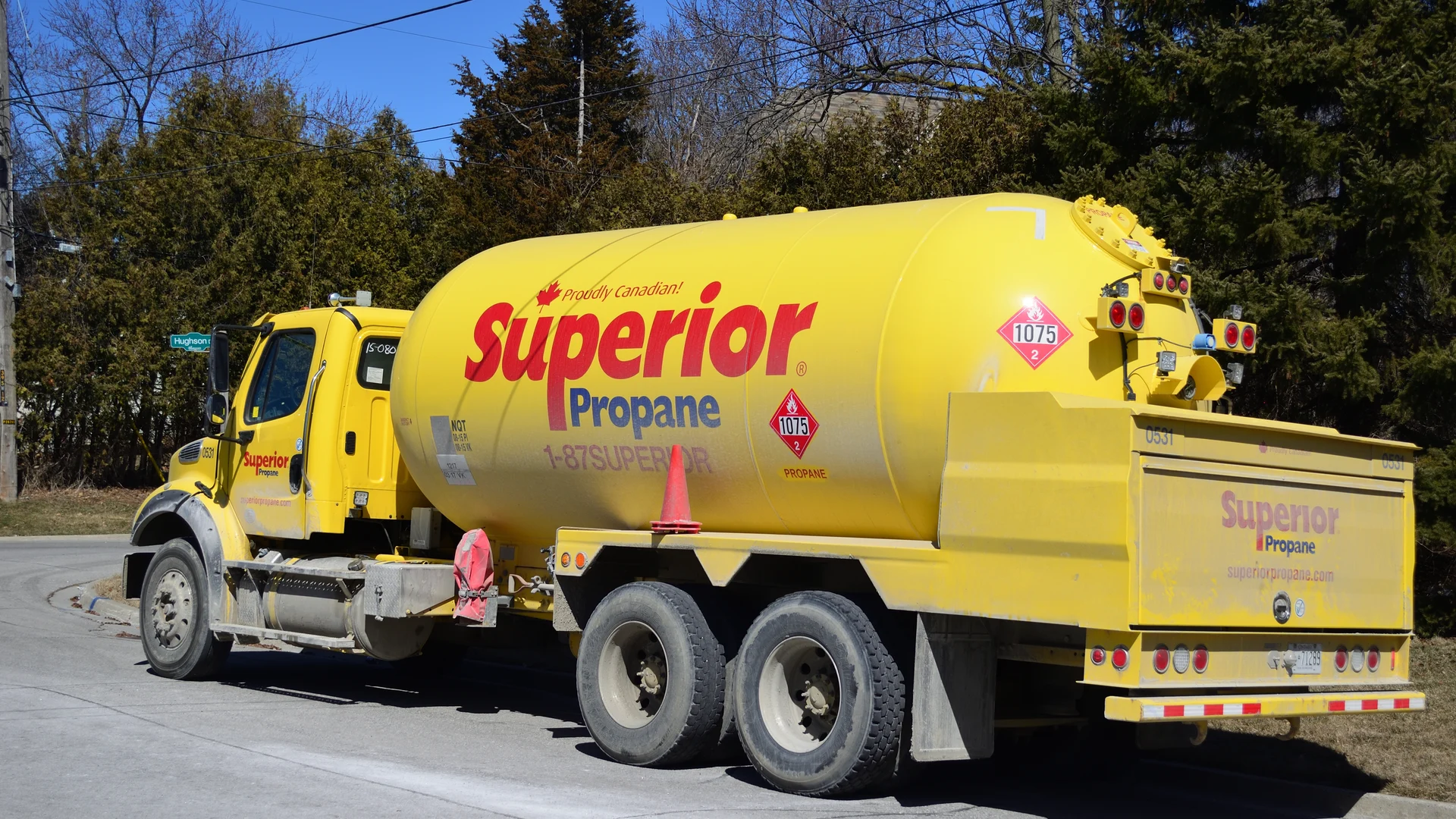
Checked October 4, 2026. Sale-exploration and valuation details are attributed to Bloomberg through MDM's October 2 report; Dispatch did not independently confirm private negotiations. Company scale and operating philosophy come from EDP, historical recapitalization details from Jordan Knauff & Company, and Hocon details from EDP's February announcement. Customer counts cover multiple end markets, are rounded lower bounds and are not added across dates. No organic-growth rate, EBITDA multiple or seller cash proceeds were inferred. Operating observations are Dispatch analysis, not claims about EDP's undisclosed results. No interviews were conducted. The CC0 Superior Propane photograph is archival context, not EDP or Hocon imagery.
Sources
- Report: Pritzker Weighs Potential $1B-Plus Sale of Propane Distributor EDP — Modern Distribution Management, reporting Bloomberg's October 1 account
- EDP company overview and local-brand operating philosophy — Energy Distribution Partners
- Energy Distribution Partners Completes Successful Recapitalization — Jordan Knauff & Company
- EDP Acquires Hocon Gas — Energy Distribution Partners
- PropaneTruck: original 2018 photograph and public-domain dedication — Wikimedia Commons
- Creative Commons CC0 1.0 Universal Public Domain Dedication — Creative Commons