
Disclosure
TradeVulcan Dispatch is published by TradeVulcan, which sells contractor lead-management and operating software. TradeVulcan is not affiliated with Chemed or Roto-Rooter. Transaction facts are attributed to Chemed; integration scenarios are Dispatch analysis, not company guidance. This is business reporting, not an investment recommendation or valuation of another contractor.
Not every plumbing acquisition brings a new logo to town. Sometimes the company behind the existing logo buys the business that has been operating under it.
Chemed announced September 16 that its Roto-Rooter subsidiary acquired its largest independent franchise for $60.6 million. The California operation generated annual revenue of $50 million to $55 million before the purchase and served territories containing approximately 11 million residents. That population figure describes geographic reach, not customers or completed jobs.
Deal announced September 16; analysis published September 26
Chemed described the acquisition as completed. Its announcement did not identify the seller, acquired earnings, employee count or quantified synergies. This is analysis of an existing announcement, not a transaction newly announced today.
Where ownership changed
The disclosed territories are Northern San Diego, Palm Springs, Ventura, Bakersfield, Lancaster, Fresno, Monterey, Stockton, Modesto, Manteca and Sacramento. They were already Roto-Rooter franchise territory. Acquiring them should not be described as introducing the brand to 11 million previously unserved people.
This is company-owned expansion, not a new private-equity platform
Chemed is the publicly traded parent of Roto-Rooter. Its July results describe a network of company-owned branches, independent contractors and franchisees. A franchise buyback changes which part of that operating structure serves a market.
The distinction matters when comparing deals. A buyer acquiring an unrelated local contractor must decide what to do with a different brand and operating identity. In a franchise buyback, the consumer-facing name can already be familiar. The harder questions are about the transition underneath it: management, customer records, recruiting, purchasing and accountability for service delivery.
That does not make integration automatic. An acquired operation can share a sign with its buyer and still have different dispatch routines, staffing constraints and cost structures. Brand familiarity is not evidence that those differences have already been resolved.
The California deal follows an explicitly stated strategy
Chemed's April 1 announcement said Roto-Rooter bought the San Francisco and Fort Worth franchise territories and assets in two March 31 transactions totaling approximately $20.6 million. It described franchise acquisitions as a strategy for improving productivity, market share and profitability.
On June 8, the company announced another franchise purchase covering 21 south Texas counties for approximately $12 million. The California acquisition is therefore not an isolated example of a franchisor deciding to become an operator in territory it already licenses.
These are selected disclosed transactions, not a complete tally of the year's acquisitions. Their prices should not be compared as interchangeable valuations: the announcements describe different geographies and do not provide matching profitability data.
The headline price is not a valuation formula for your shop
Dividing the California purchase price by the disclosed historical revenue range produces roughly 1.10 to 1.21 times annual revenue. That is simple Dispatch arithmetic, not an EBITDA multiple, a confirmed enterprise-value multiple or a recommendation about what another business is worth.
Revenue alone cannot tell you how much cash a buyer can retain. Consider two hypothetical plumbing businesses with $10 million of annual sales. At operating margins of 5% and 15%, they would produce $500,000 and $1.5 million of operating profit, respectively. Equal revenue would hide a threefold earnings difference before considering debt, reinvestment, working capital or transaction terms.
The useful owner exercise is to document the quality of the earnings: recurring versus one-time work, customer concentration, technician retention, callbacks, receivables and the cost of replacing the owner's labor. A public deal can help frame questions. It cannot supply the missing answers for a different company.
Do not assign the parent's margin to the acquired franchise
Chemed reported Roto-Rooter second-quarter revenue of $229.9 million and adjusted EBITDA margin of 21.1%, down 77 basis points from a year earlier. Those are results for the broader Roto-Rooter segment, not the acquired California franchise.
Applying that percentage to the seller's revenue would create an assumed earnings figure. It would not reveal the actual profitability of the acquisition. The September announcement does not provide enough detail to calculate an acquired-business EBITDA multiple or a reliable payback period.
That limitation matters to contractors because an attractive-looking price-to-sales number can mean very different things depending on the labor model, service mix, fleet condition and investment needed after closing. Treat integration benefits as something to demonstrate in later results, not as profit already earned on announcement day.
For local competitors, watch execution rather than assuming a price war
A change in ownership could affect how the acquired operation answers calls, recruits technicians, handles estimates or coordinates branches. The announcement does not establish that any specific change has occurred, and it does not prove that prices will rise or fall.
Independent contractors have a more useful response than guessing. Track their own response time, booked-call rate, repeat business and job-level gross profit. Ask customers why they chose the company and record the answer consistently. Inspect whether the promised arrival window and actual service experience match.
For an acquisition-minded owner, the same discipline becomes integration preparation. A contact record that survives a system handoff, a dispatcher who understands capacity, and a technician who knows the service promise are concrete operating assets. A larger ownership footprint will not fix weak execution by itself.
The sign may stay the same. The operating model changes.
Franchise buybacks deserve a place beside private-equity and independent strategic acquisitions in the contractor consolidation conversation. The lesson is not that every shop should sell. It is that ownership structure, operating control and earnings quality can matter as much as the number of markets on the map.
Methodology
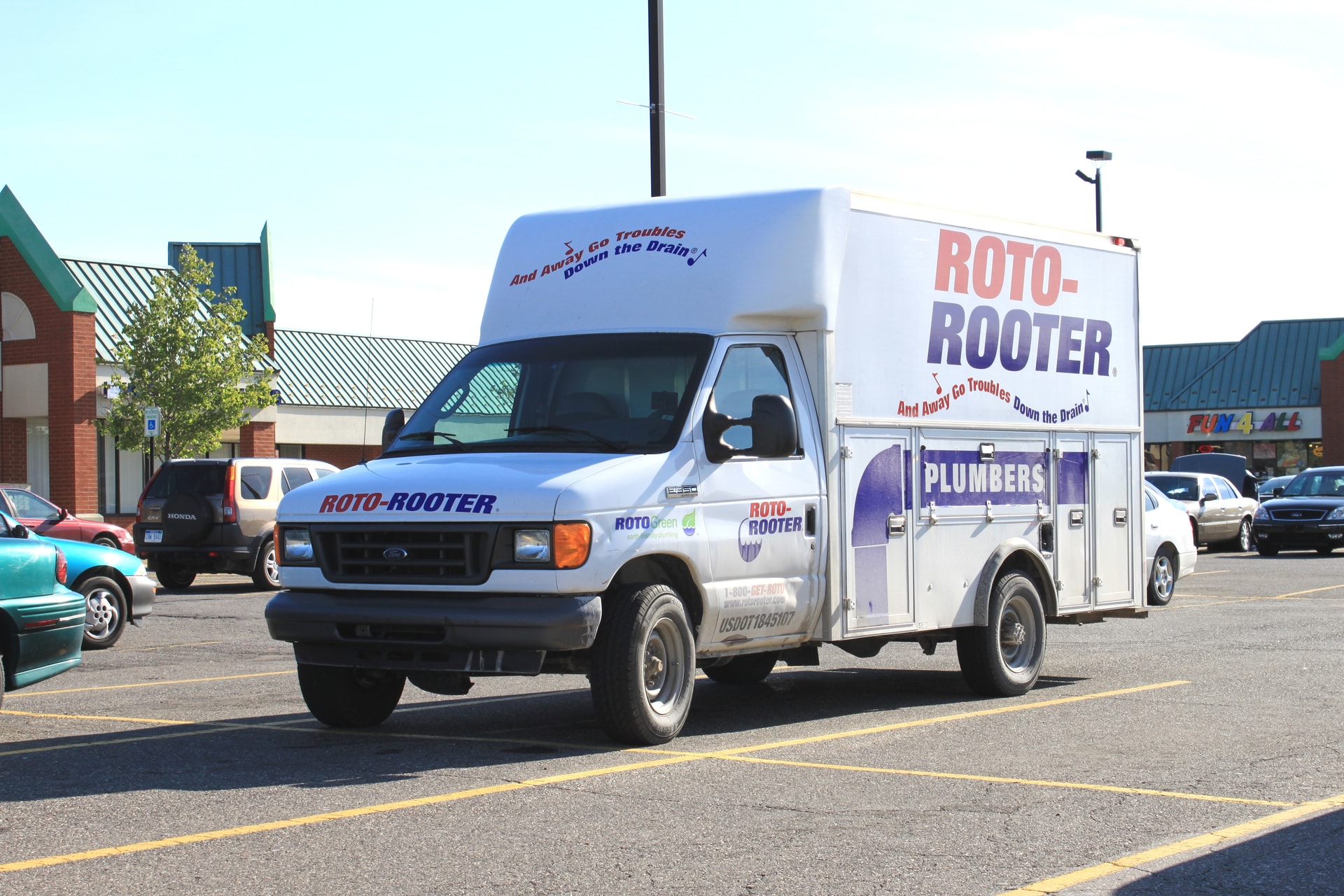
Dispatch checked Chemed's September 16, April 1 and June 8 acquisition announcements and July 28 second-quarter results. Price-to-revenue arithmetic is 60.6/55 through 60.6/50; it is not an earnings multiple. The $10 million businesses are explicitly hypothetical. No acquired EBITDA or quantified synergy was inferred from the parent segment's margin. Source dates remain distinct from publication date. Photo copyright, attribution and license links were verified September 26, 2026; archival Michigan imagery is not presented as the California transaction.
Sources
- Roto-Rooter Buys Largest Franchisee Territory — Chemed Corporation
- Roto-Rooter Completes Acquisitions for Two Significant Territories — Chemed Corporation
- Roto-Rooter Buys Franchise Territory in Corpus Christi, Rio Grande Valley, and Beaumont, Texas — Chemed Corporation
- Chemed Reports Second-Quarter 2026 Results — Chemed Corporation
- Photo source: Roto Rooter Service Van, Ypsilanti Township, Michigan (2012) — Wikimedia Commons
- Hero photograph license: Creative Commons Attribution 3.0 Unported — Creative Commons