
Disclosure
TradeVulcan Dispatch is published by TradeVulcan, a contractor-software company. This is an independent analysis of public rulemaking documents, not a permit determination or a finding that a particular property qualifies for an exemption.
Bay Area contractors have two different water-heater timelines to keep straight this fall: the adopted requirements and a proposal to change them.
The Air District's July draft would move the zero-NOx start date for small tank-type water heaters from January 2027 to January 2028 and add exemptions. As of October 1, the District's public rulemaking page still describes the amendments as a draft, with Board consideration tentatively scheduled for November.
The proposed delay is not an approved extension. Nor is the July announcement new breaking news. The timely issue is how to plan estimates, stocking and customer communications before the Board decides.
Current rulemaking status and tentative November decision ↗July 14 draft-amendment announcement ↗
The current rule does not require removing a working appliance
The District's September fact sheet describes the adopted phase-in as 2027 for small tank water heaters, 2029 for furnaces, and 2031 for larger and tankless water heaters. It says functioning equipment does not have to be replaced simply because a date arrives. The standards concern new equipment and replacements, with equipment-specific provisions.
This is a Bay Area Air District rule, not a statewide ban on every gas appliance. A homeowner asking about a gas stove, an existing furnace and a failing small tank water heater is asking three different questions.
Keep the adopted schedule separate from the draft
| Question | Status checked October 1, 2026 |
|---|---|
| Small tank-type water-heater zero-NOx phase-in | January 2027 under the adopted schedule |
| Move that start to January 2028 | Proposed in the July draft; not adopted |
| Additional income, space and electrical exemptions | Draft conditions, not automatic eligibility |
| Board consideration | Tentatively November; verify the posted agenda |
What the proposed exemptions would change
The July overview estimates income-based exemptions could account for about 18% of installations, with building or project constraints accounting for another 20%. Those are staff estimates of potential coverage, not a finding that any particular customer's replacement is exempt.
The draft includes electrical-constraint pathways involving such conditions as a panel below 100 amps, unavailable capacity, or a new 240-volt connection requiring more than 50 feet of wiring or conduit. The detailed criteria and certificate process matter; a rough measurement during a sales call is not an exemption determination.
The operational distinction is between a condition to document and an approval to rely on. Record the site facts now, but do not sell a proposed exemption as a permission already granted.
July overview: estimated exemption coverage ↗Draft rule: electrical-constraint criteria and certificates ↗
The official cost summaries do not use one consistent number
The July regulatory overview estimates roughly $3,500 in additional installed cost for a standard heat-pump water-heater project compared with a new gas unit. It attributes $600 to $1,600 of the difference to equipment and the remainder to installation labor.
The September fact sheet, however, cites a 2024 staff report for average additional costs below $2,000. These are different official summaries. The material reviewed does not reconcile them into a single like-for-like estimate. Neither number is a mandated surcharge, a maximum customer bill or a quote for an individual house.
That difference should be visible in reporting rather than quietly replaced with whichever number makes a stronger headline.
July overview, pages 6 and 22: approximately $3,500 incremental standard-project cost ↗September fact sheet, Myth 10: less-than-$2,000 estimate attributed to a 2024 report ↗
Build the estimate around the house, not the headline
For an owner or service manager, a useful preparation step is to make the survey consistent. Record the existing appliance, installation location, available space, access, electrical conditions and the work needed for the proposed replacement. Have the appropriately qualified trade assess electrical work rather than treating a sales assumption as a design.
The District notes that some heat-pump water heaters use 120-volt connections; a panel replacement or new 240-volt circuit is not a universal requirement. Equipment selection and the property's actual conditions need to be evaluated together.
Separate the appliance price from plumbing, electrical, access and finishing work in the estimate. List incentives separately, with eligibility and funding checked for the customer rather than copied from an old promotion. A clear scope lets the homeowner compare options without confusing an equipment price with a completed installation.
District fact sheet: electrical requirements vary by installation ↗
The draft also creates a records problem to plan for
Proposed Section 9-6-502 would require licensed contractors purchasing or installing covered NOx-emitting water heaters to retain purchase or installation dates and locations, plus applicable exemption-certificate numbers, for at least five years. Its proposed start is January 1, 2028. These are draft requirements, not a newly effective obligation.
That suggests a practical system-design question: where would the company keep the certificate, source documents and equipment record if the provision is adopted? A technician's camera roll is not a reliable shared archive. Link the documentation to the property and completed job, with access limited to the people who need it.
Avoid collecting sensitive income evidence casually in sales notes. Determine what the final official process actually requires, which party submits it and what the contractor must retain before adding new fields or asking customers to upload documents.
A plumbing call may need an electrical scheduling plan
Where a selected replacement needs electrical work, the customer's problem is not solved by two independent estimates with no coordinated installation date. The plumbing and electrical teams need a common scope, a named coordinator and a clear handoff.
For emergency replacements, keep immediate service needs separate from long-term equipment decisions. Do not assume a temporary arrangement is permitted simply because similar language appears in a draft. Check the rules and local permit requirements applicable when the work occurs.
For planned replacements, give the homeowner a written explanation of what has been assessed, what remains uncertain and what could change the price. That is a service process worth improving regardless of the Board's eventual decision.
What the rulemaking is trying to address
The District describes the underlying standards as a way to reduce nitrogen-oxide emissions that contribute to ozone and fine-particle pollution. Its proposed flexibility measures address affordability and difficult installations. Those are the agency's stated objectives; the final balance of requirements and exemptions remains for the Board to decide.
Contractors can prepare without forecasting that vote. Maintain separate versions of current compliance guidance and draft planning notes. Before changing customer-facing language, confirm the final rule text, effective dates, covered equipment and any application procedures actually adopted.
Prepare for the decision without presenting it as decided
The near-term task is accurate customer communication and a repeatable site assessment. Keep January 2027's adopted small-water-heater schedule distinct from the proposed January 2028 date. Use current official documents for compliance, a site-specific scope for pricing and the final Board action for any change in the operating playbook.
Methodology
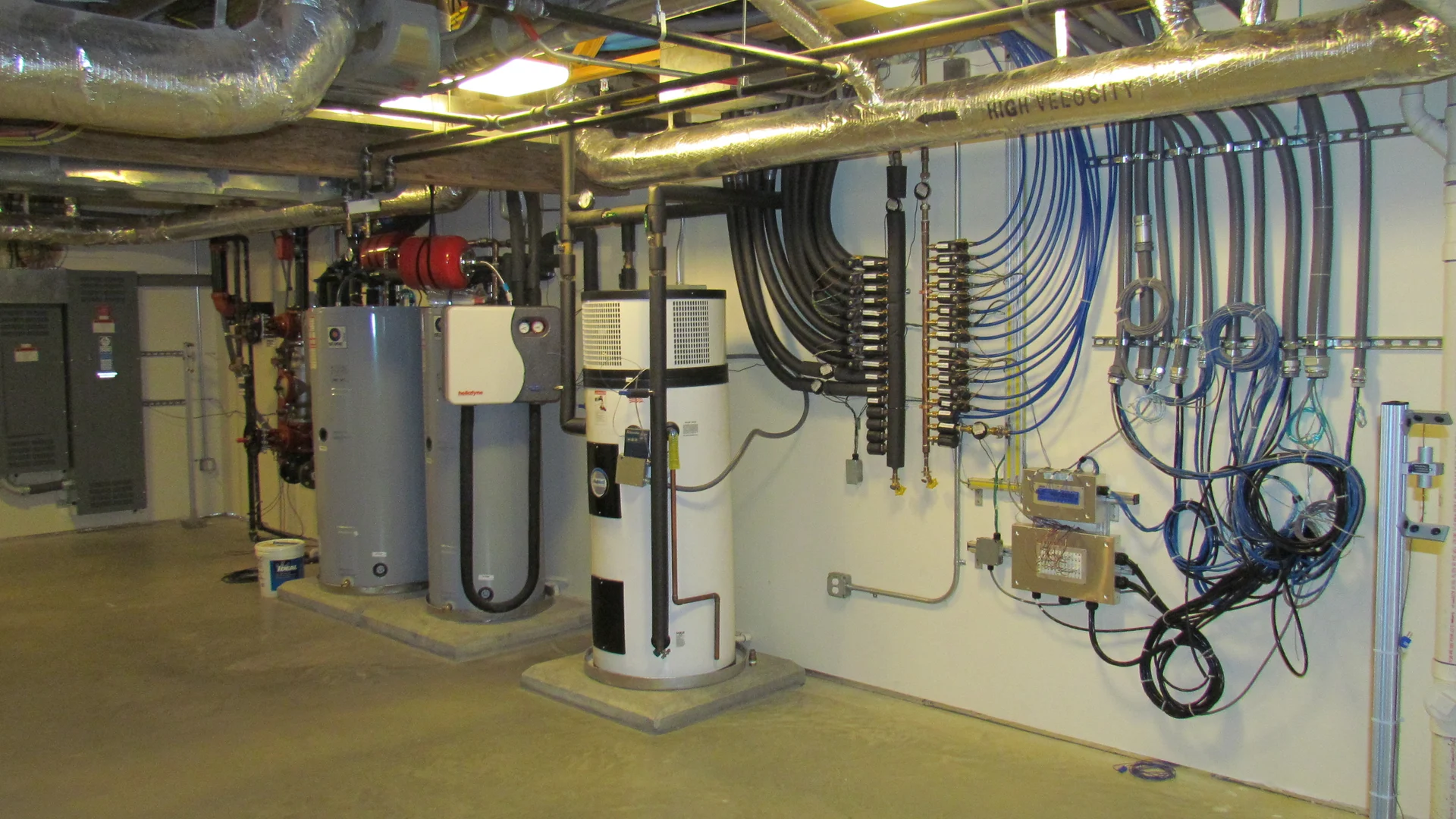
Status checked October 1, 2026 against the official rulemaking page, July draft and overview, and September fact sheet. This article analyzes an existing proposal ahead of tentative November consideration, not an adopted extension. Current and proposed requirements are labeled separately. The July and September cost summaries differ and are reported with their own source dates; Dispatch did not infer a reconciliation. Exemption-coverage percentages are staff estimates, not property determinations. No interviews were conducted. The NIST photograph is archival public-domain context.
Sources
- Building Appliances: current Rule 9-6 amendment status — Bay Area Air District
- Air District publishes draft changes to water-heater rule — Bay Area Air District
- Updated Regulatory Overview: Rule 9-6 Draft Flexibility Amendments — Bay Area Air District
- Rule 9-6 draft amended regulatory language — Bay Area Air District
- Appliance Rules: Myths vs. Facts, posted September 1 — Bay Area Air District
- NIST NZERTF basement photograph and public-domain provenance — Wikimedia Commons / NIST