
Disclosure
TradeVulcan Dispatch is published by TradeVulcan, a contractor-software company. This independently written analysis is not sponsored by Milwaukee Tool or the Alliance.
Milwaukee Tool has put a large number behind a familiar contractor problem: finding enough people who can do the work.
The manufacturer said September 30 that its U.S. skilled-trades workforce investment, combining spending since 2010 with plans through 2030, is expected to exceed $200 million. It also joined the Alliance for America's Skilled Trades. This is a cumulative investment total, not a new $200 million grant announced this week.
Milwaukee says its partnerships support more than 16,000 active apprentices annually through over 1,300 training centers and 25 national union and non-union partners. Those figures describe supported apprentices and organizations, not Milwaukee hires or newly graduated technicians.
Milwaukee Tool: September 30 workforce investment announcement ↗
The 1.7 million figure is about openings, not net new jobs
The same day, the Alliance released national research covering 124 skilled-trades occupations across all 50 states. It projects approximately 1.7 million openings annually through 2035, including replacements for people leaving occupations as well as growth. It is not a forecast of 1.7 million additional jobs every year.
The Alliance was founded in July by BlackRock, Carhartt, Ford and Google. Milwaukee joined alongside companies including DEWALT, Microsoft and NVIDIA. The breadth of that membership connects the workforce conversation to construction, service businesses, manufacturing and technology infrastructure rather than to one trade alone.
Read the training gap with the denominator attached
Jobs for the Future summarizes the study's measurable formal training pathways as preparing roughly 55 people for every 100 workers needed. The report also recognizes employer-led training and direct entry. Not all routes into a trade are captured in that formal-pathway comparison.
That makes the ratio useful as a measure of training-system capacity, not proof that exactly 45% of future jobs will remain unfilled. JFF also stresses that there is no single uniform skilled-trades shortage: occupation and location change the picture.
JFF: key findings and limits of the formal-pathway comparison ↗
Formal preparation relative to projected worker need
- Workers needed (normalized)
- 100
- Prepared through measurable formal pathways
- 55
Enrollment is not the finish line
The report's apprenticeship analysis estimates a completion rate of about 48%. Its separate employment-outcome measures use different cohorts and time windows. They should not be read as a single group of students moving through a perfectly tracked funnel. Selected strong programs demonstrate much better results, but that does not make a 90%-plus completion rate the national norm.
For a contractor, the distinction is practical. An applicant, a first-day employee, a program completer and a technician ready for independent assignments are different milestones. Counting the first as though it guarantees the last can make a growth plan look staffed long before it is.
A training seat needs a field mentor behind it
The next constraint to examine is not advertising reach. It is the company's capacity to teach.
Before opening another entry-level position, identify who will supervise the hire, which assignments are suitable, and how training time will appear in the schedule. A senior technician cannot be treated as fully available for production and fully available for instruction at the same hour.
Build a progression around observable work: safe preparation, tools and materials, customer communication, documented task proficiency, and supervisor sign-off. Keep that internal progression separate from licensing or formal apprenticeship requirements. A manager's confidence is not a substitute for a credential required for a particular assignment.
Then make the progression understandable to the employee. The person should know what comes next, what competence looks like and who decides. A vague promise of advancement is much harder to act on than a written sequence with regular feedback.
The same ten hires can produce very different capacity
Consider two hypothetical shops, each hiring ten entry-level employees. One retains six after a year; the other retains eight. The second shop has two more people available to continue developing even though recruiting produced the same number of starts.
This is an illustration, not a forecast of what any training program will achieve. Retention alone also says nothing about proficiency. A useful operating review pairs it with completed competencies, supervision required and service quality.
The point is to measure the entire process rather than celebrating a full orientation room. Ten starts followed by repeated departures can leave the owner buying the same recruiting work again. Eight retained employees who are progressing safely can create a different base for the following year's capacity plan.
Illustration: equal recruiting, different one-year retention
| Measure | Shop A | Shop B |
|---|---|---|
| Entry-level hires | 10 | 10 |
| Still employed after one year | 6 | 8 |
| One-year retention | 60% | 80% |
Measure recruiting cost against a productive hire
An owner reviewing training economics should include recruiting expense, paid learning time, mentor time, required equipment and the cost of additional supervision. Put those costs beside the employee's progress and eventual contribution, not just the first month's sales.
Track time to demonstrated proficiency by role. The milestones for a helper, a maintenance technician and a field supervisor should not be interchangeable. Avoid designing incentives that reward speed by encouraging work beyond an employee's training or authorization.
This also changes how a buyer might examine an acquisition. Headcount is a snapshot. A functioning training system is a way to replenish capacity. Ask whether the acquired branch can develop replacements, whether its strongest people want to stay and whether knowledge lives in a process or only in one exhausted manager. Those questions are useful even when no sale is planned.
Use the national report to ask a local question
JFF's accompanying dashboard offers state- and occupation-level detail. A residential electrical contractor and an industrial maintenance employer should not assume a national headline describes their hiring pools equally. Use the research to frame a discussion with nearby training providers, then compare it with actual applicant quality, offer acceptance and employee departures at the business.
For the next operating meeting, bring three pieces of evidence: where recent hires came from, where they are in their development, and why the people who left decided to leave. Ask the training partner about completion and placement definitions, not only enrollment.
A practical partnership should connect classroom preparation to work the company can supervise. That connection is worth more than collecting another organization's logo for the careers page.
The useful investment is a career people can complete
Milwaukee's cumulative commitment and the new national research put scale behind workforce development. For an individual contractor, the response can start smaller: a prepared mentor, a clear progression and a reliable way to learn why employees stay or leave. Recruiting begins the process. Developing and retaining people creates operating capacity.
Methodology
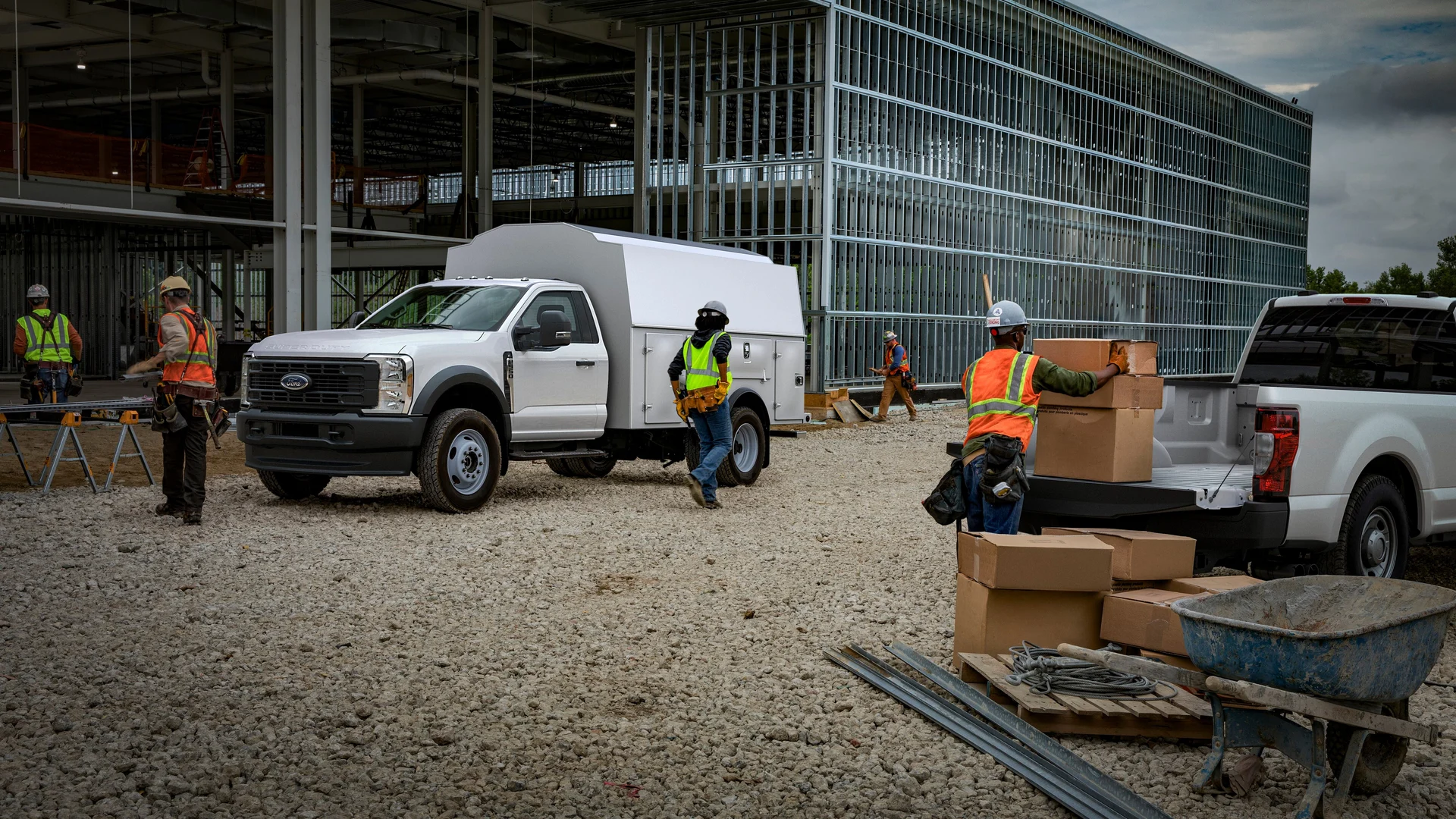
Dispatch reviewed the September 30 company and Alliance announcements, JFF's findings and the full report, including Figure 3's differing cohort definitions. Milwaukee's investment is cumulative from 2010 through planned 2030 spending. Annual openings include growth and replacement, not just net new jobs. The formal-pathway ratio is not total labor supply. The ten-hire comparison is hypothetical original arithmetic, not a measured intervention result. No interviews were conducted. The real Ford photo is used for editorial reporting, not advertising.
Sources
- Milwaukee Tool joins the Alliance for America's Skilled Trades — Milwaukee Tool
- Alliance expands and releases new national research — Ford Motor Company / Alliance for America's Skilled Trades
- The State of America's Skilled Trades: findings and dashboard — Jobs for the Future
- The State of America's Skilled Trades: full report and methodology — Jobs for the Future and research partners
- Ford newsroom: editorial-use permission for media assets — Ford Motor Company