
Disclosure
TradeVulcan Dispatch is published by TradeVulcan, which sells software to home-service contractors. TradeVulcan is not affiliated with Duke Energy, the U.S. Department of Energy, generator manufacturers, solar installers, battery manufacturers or utilities. The federal order and Duke customer notice are reported facts; recommendations about contractor positioning are Dispatch analysis, not claims that every homeowner needs backup power or that outages occurred during the September 18 peak period.
There was no hurricane making landfall in the Carolinas on September 18. No ice storm had pulled down distribution lines. The immediate problem was heat and demand.
Duke Energy asked customers in North Carolina and South Carolina to voluntarily reduce electricity use from 2 to 8 p.m. as unusually hot September weather pushed demand higher. The same day, the U.S. Department of Energy issued an emergency order authorizing Duke Energy Carolinas to dispatch specified generation and, working with transmission owners, direct backup generation resources to operate as a last resort before declaring an Energy Emergency Alert 3 or during an EEA-3. The order runs through September 21.
That does not mean residential customers were ordered to turn on home generators, and the public notices do not establish that rolling blackouts occurred. It does put a useful fact in front of electrical and generator contractors: the resilience conversation is broader than storm damage. A grid can become tight because the system is trying to serve exceptional demand at the same time available supply and transmission flexibility are constrained.
For homeowners, that changes the sales conversation. Backup power can be discussed as risk management for the house—not simply as an expensive appliance that gets used after a hurricane.
What happened in the Carolinas
- Peak-demand request
- 2–8 p.m.
- Federal order
- Sept. 18–21
- Backup generation
- >35 GW
Duke Energy asked Carolinas customers to voluntarily reduce use during this September 18 window.
DOE Order No. 202-26-48 authorizes specified resources and backup generation under defined emergency conditions.
DOE’s nationwide estimate of unused backup generation; not a Duke-specific or residential-only figure.
The contractor takeaway
- Do not sell this as proof that a blackout happened. Duke asked for voluntary conservation and DOE acted to reduce blackout risk.
- Backup-power conversations can be triggered by heat-driven peak demand and supply tightness, not only hurricanes, wind and ice.
- Standby generators, battery storage and properly configured solar-plus-storage solve different resilience problems; the right system starts with the loads the homeowner cannot afford to lose.
- Grid-tied solar by itself generally shuts down when the grid goes down. DOE says outage operation requires the right inverter configuration and storage.
- The strongest sales approach is education and load planning—not fear, artificial scarcity or claims that every homeowner needs whole-home backup.
First, understand what the federal order actually says
DOE Order No. 202-26-48 was issued under Section 202(c) of the Federal Power Act after an application from Duke Energy Carolinas. It authorizes Duke to use specified generating units as needed for reliability and, in collaboration with transmission owners, to direct backup generation resources to operate as a last resort before an EEA-3 declaration or during an EEA-3.
The order is preventive authority for a utility and grid operators. It is not a blanket instruction to residential generator owners and it should not be presented to homeowners that way.
DOE separately said it estimates more than 35 gigawatts of unused backup generation exists nationwide. That figure helps explain why the department sees backup resources as a reliability tool, but it is a national estimate. It is not 35 GW sitting inside Duke’s residential territory.
This was also not Duke’s first September request for this authority. DOE issued a similar Duke Energy Carolinas order on September 3 that ran through September 8. Two emergency orders in the same month do not predict a particular homeowner’s outage risk, but they are a useful signal that late-summer grid stress can be operationally meaningful even when the weather event is heat rather than a named storm.
Why this changes the homeowner conversation
Most homeowners understand backup power through a storm narrative: wind arrives, a tree falls, the neighborhood goes dark, the generator starts. That remains a real use case. The Carolinas event adds another one: a power system can face reliability pressure because demand is unusually high, not because a tree is lying across the service drop.
For contractors, the point is not to tell customers that brownouts are inevitable. The point is to broaden the question from “Do you get hurricanes here?” to “What happens in this house if utility power is unavailable when you need it most?”
That question becomes more important as homes carry more electrically dependent loads. Refrigeration, well pumps, internet equipment, medical devices, sump pumps, security systems, heat-pump systems, air conditioning and EV charging can all compete for limited backup capacity. Not every load needs to stay on. Some absolutely may.
That is why backup power is moving, for some households, from a luxury discussion toward a resilience-planning discussion. Dispatch is not claiming that every homeowner needs a generator or battery. A small urban home with rare short outages has a different risk profile from a rural well-and-septic property, a household with medical equipment, or a home where an outage can quickly create water, heat or cooling problems. The contractor’s job is to make that risk visible and size the response honestly.
Five resilience paths contractors can put on the table
| Option | What it does well | Important limitation to explain |
|---|---|---|
| Automatic standby generator | Can support long outages when fuel remains available; automatic transfer can restore selected or whole-home loads without the homeowner moving equipment. | Requires fuel planning, code-compliant siting, transfer equipment, maintenance and load sizing. Noise, emissions and fuel availability matter. |
| Battery storage | Fast, quiet backup for selected or whole-home loads depending on system size; can support load shifting and other energy-management uses. | Stored energy is finite. Runtime depends on battery capacity and actual loads, and recharge strategy matters during a long outage. |
| Solar + storage | Can pair daytime solar production with stored energy and extend resilience when designed for islanded operation. | Solar panels alone generally do not power a home during an outage. The inverter, storage and controls must be designed for backup operation. |
| Generator + battery / solar hybrid | Can combine long-duration fuel-based generation with fast battery response and renewable recharge in compatible systems. | More components, controls and commissioning create more design complexity and a higher need for clear service responsibility. |
| Critical-load strategy | Keeps the circuits that matter most on backup and can reduce generator or battery size compared with trying to carry every load. | Requires the homeowner to prioritize loads. Large HVAC, electric heat, ranges, EV charging and other high-demand loads can change the design quickly. |
Solar is not automatically backup power
This is an important place for electrical and solar contractors to educate customers. The Department of Energy’s Solar and Resilience Basics guidance says residential solar panels alone are generally not enough to keep a home powered during a grid outage. Grid-connected systems are typically designed to shut down when utility power disappears for safety reasons.
DOE says outage-capable solar needs the appropriate inverter configuration and storage so the home can operate in an islanded mode. That distinction matters because a homeowner may look at a roof full of panels and assume the house is already resilient.
For contractors, this creates an adjacent opportunity that is more useful than simply pushing a second product. A solar customer can be offered a resilience assessment: which circuits matter, whether existing equipment supports backup, how much storage is needed, whether a critical-load panel or smart load controls make sense, and what recharge expectations are realistic.
A generator customer can receive the same treatment from the other direction. Maybe a generator is the best fit. Maybe a battery can carry short interruptions and a generator can handle extended events. Maybe solar-plus-storage makes sense because the customer already owns PV. The sale should follow the load plan, not the other way around.
Sell the load plan before the equipment
“Whole-home backup” is an attractive phrase because it is easy to understand. It is not always the smartest first design question.
Start with what the customer cannot lose. A refrigerator and internet connection are different from a 5-ton air conditioner. A well pump has a different starting profile from lighting circuits. Electric resistance heat, large heat pumps, ranges, dryers, pool equipment and EV chargers can dominate a backup calculation. The same nameplate capacity can produce very different real-world runtimes depending on what is actually connected and how controls sequence those loads.
A strong proposal therefore documents priorities: must-run, nice-to-have and intentionally shed. It explains whether the system is automatic, how long the expected backup window is under an agreed load profile, what fuel or recharge assumptions were used, and which circuits will not be supported.
That approach also creates a better customer experience when budgets are limited. Instead of reducing safety or quality, the contractor can reduce scope intelligently. A customer who cannot justify full-home backup may still value a critical-load solution that keeps refrigeration, communications, a well pump, selected lighting and another essential load available.
The summer sales message should be resilience, not fear
Grid reliability can create legitimate demand, but it is easy to turn a real issue into bad sales behavior. Do not tell a homeowner that a blackout is coming because a federal order exists in another state. Do not imply the utility is failing when the evidence only shows elevated demand. Do not manufacture a deadline around a weather advisory.
Use local facts instead: utility outage history, the customer’s own experience, the loads in the home, fuel access, medical or work-from-home needs, and the practical cost of losing refrigeration, water, cooling or communications.
Then broaden seasonal marketing. Generator campaigns do not have to wait for hurricane season or the first winter storm. A heat wave, a utility conservation notice, a planned-public-safety shutoff in relevant markets, or a high-profile grid reliability event can be an educational moment: “Here is how backup power works, here is what solar can and cannot do during an outage, and here is how to decide what level of resilience your home actually needs.”
That message also opens the door to ongoing service. A standby generator that has not been exercised, maintained or load-tested is not the same thing as a ready system. A battery customer may need software, firmware or capacity checks. A solar-plus-storage customer may not know which loads are actually backed up. Reliability is a system lifecycle, not only an installation invoice.
A safety line contractors should never blur
Portable generators are not substitutes for a code-compliant standby installation. The U.S. Consumer Product Safety Commission warns that portable generators can produce lethal carbon monoxide and should be operated outdoors only, at least 20 feet from a home, with exhaust directed away from openings. Contractors should follow manufacturer instructions, applicable electrical and fuel codes, permitting rules, utility requirements and local authority having jurisdiction. Never encourage improvised backfeeding or unsafe connections.
A backup-power playbook for electrical and generator contractors
- Add a resilience assessment to generator, panel, solar and battery estimates: identify must-run loads, outage tolerance and preferred level of automation.
- Build good/better/best around system architecture, not fake feature tiers: critical loads, broader backup, then whole-home or hybrid where the load study supports it.
- Train comfort advisers and electricians to explain why ordinary grid-tied solar generally shuts down in an outage and when storage changes that.
- Create a summer campaign around heat-driven grid stress and peak-demand events, but use local facts and avoid predictions that a blackout is imminent.
- Offer readiness service for installed generators and storage systems before peak season: maintenance, testing, fuel considerations, load review and customer education.
- Track backup-power leads separately by trigger—storm, heat, outage, utility alert, solar/storage upgrade—so marketing decisions follow actual booked-job economics.
The bigger story is resilience
Duke’s September 18 request was temporary. The federal order expires September 21. The contractor lesson lasts longer.
Power outages are still caused by storms, equipment failures and trees. But grid stress can also emerge during periods when demand is exceptionally high. That means the homeowner’s backup-power decision should not be framed only around the probability of the next hurricane. It should be framed around the consequence of losing power and the options available to manage that risk.
For generator contractors, that makes the product easier to connect to everyday home resilience. For electricians, it expands the conversation into transfer equipment, load management, critical-load panels and service capacity. For solar and storage contractors, it creates an opportunity to explain the difference between energy production and outage-capable power.
The best companies will not sell panic. They will sell a plan.
Questions contractors may hear
Did Duke Energy have rolling blackouts on September 18?
The public sources reviewed by Dispatch document a voluntary 2–8 p.m. conservation request and a federal emergency order intended to reduce blackout risk. They do not establish that rolling blackouts occurred during that period.
Did DOE order homeowners to run their generators?
No. The order authorizes Duke Energy Carolinas, working with transmission owners, to direct specified and backup generation resources under defined grid-emergency conditions. It is not a blanket order to residential generator owners.
Will ordinary rooftop solar keep a home powered during an outage?
Generally not by itself. DOE says grid-connected residential solar is typically designed to shut off when grid power is lost. Outage operation requires the appropriate inverter configuration and storage or another system specifically designed for islanded backup.
Does every homeowner need a standby generator?
No. Backup-power needs depend on outage frequency and duration, essential loads, fuel availability, budget, property constraints and the consequences of losing power. Generators, batteries, solar-plus-storage and critical-load strategies each fit different situations.
Methodology
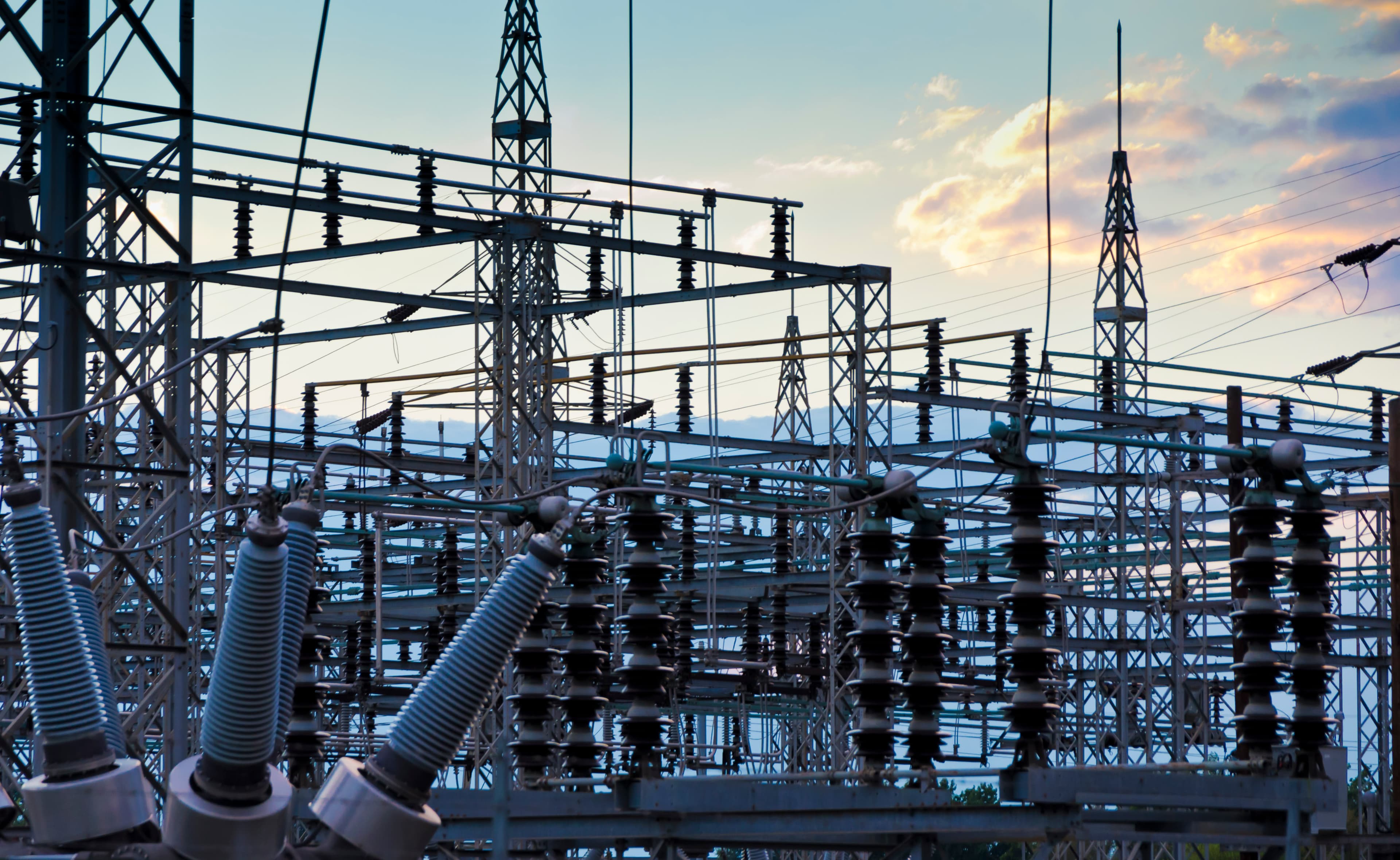
Dispatch reviewed DOE Order No. 202-26-48, DOE’s 2026 Section 202(c) order index, Duke Energy’s September 18 customer conservation notice, DOE’s September 19 release, DOE’s Solar and Resilience guidance, and CPSC generator-safety guidance. The article distinguishes preventive emergency authority from an actual blackout and does not claim that residential customers were ordered to run generators. The >35 GW backup-generation figure is presented as DOE’s national estimate, not as Duke-specific residential capacity. Recommendations about contractor positioning, load planning and seasonal marketing are Dispatch analysis and are not evidence that every homeowner needs backup power. Equipment selection, transfer methods, generator siting, fuel systems, batteries, solar inverters, islanding, load management and interconnection must be designed and installed to manufacturer requirements, applicable codes and local authority requirements. The Duke Energy hero photograph is a real file photo from the company’s official News Center; the source page states photographs are for news-media use only. It is labeled as archival and is not represented as showing the September 18 event.
Sources
- Federal Power Act Section 202(c): Duke Energy Carolinas, LLC (Duke) Order No. 202-26-48 — U.S. Department of Energy
- Duke Energy asks Carolinas customers to reduce electricity use during today’s peak-demand period — Duke Energy News Center
- Energy Secretary Secures Carolinas’ Grid Amidst Hot Weather Conditions — U.S. Department of Energy
- 2026 DOE 202(c) Orders — U.S. Department of Energy
- Solar and Resilience Basics — U.S. Department of Energy
- Generators and Engine-Driven Tools — U.S. Consumer Product Safety Commission
- Photo: Duke-Energy-Substation — Duke Energy News Center