
Disclosure
TradeVulcan publishes Dispatch and makes software for contractor lead handling.
The FCC’s scheduled Nov. 25 changes distinguish service updates from sales messages. Contractor offices have to carry the right opt-out across the tools doing the sending.
Updated

Disclosure
TradeVulcan publishes Dispatch and makes software for contractor lead handling.
Imagine a California homeowner clearing the dinner dishes when a seasonal maintenance offer from her contractor lights up her phone. She types STOP and sets it beside the sink.
A week later, another message arrives from the same company: a reminder that she has not had service in six months. She remembers asking the company to stop.
In this hypothetical, the first provider’s texting tool recorded her reply and stopped its campaign. A second provider’s tool still had the reminder queued. The opt-out never reached that workflow.
The office cannot settle the matter by showing that the first tool worked as configured. It needs to account for the second message.
That is the practical issue behind FCC 26-67, published Oct. 26 and scheduled to take effect Nov. 25. The Nov. 24 public-source review for this article identified no later stay or postponement. The underlying duty to honor covered opt-outs is already in force.
For the second tool, “service reminder” is only a label. A six-month nudge may be trying to sell another visit. An estimate message can likewise arrange a requested appointment or encourage a purchase. Read the whole message and its purpose before assigning a category.
For communications covered by the cited TCPA provisions, the amended rule draws these distinctions:
| Message in the office’s review | What the office must establish | Revocation scope |
|---|---|---|
| The seasonal maintenance offer | It contains advertising or constitutes telemarketing. | STOP covers all future promotional calls and texts from that caller, across campaigns and tools. |
| The six-month reminder or an estimate message | Its wording and purpose determine whether it is promotional. The label does not. | If promotional, it falls within that same promotional opt-out. |
| An appointment-only update | It contains no advertising or telemarketing. | A revocation directed at this informational category may be limited to that category. |
That last row does not give the second tool permission to keep sending service messages. Any later covered communication still needs valid consent or an applicable exemption. Informational content alone cannot supply either.
The week between the homeowner’s two texts does not settle compliance, either. Requests must be honored within a reasonable time, capped at 10 business days after receipt. The cap is not an automatic waiting period. Seven business days remains an idea in a separate proposal.
Pull up the original offer, including its opt-out instructions. Under the amendments, callers may designate an exclusive method: automated voice/key-press opt-out, standardized text reply, or a designated website or telephone number. The method must be clearly and conspicuously disclosed in the call or text. Without a valid designation, any reasonable means must be processed.
A designated reply channel must recognize all seven responses: stop, quit, end, revoke, opt out, cancel and unsubscribe. The text can display just one of those words only if the system honors all seven.
If technical limitations prevent replies, every text must clearly and conspicuously disclose that limitation and provide reasonable alternative ways to opt out. An unmonitored inbox and a protocol that cannot receive replies are different situations.
Separate rules for covered artificial or prerecorded voice calls remain under §64.1200(b)(3), including automated voice/key-press opt-outs, instructions within two seconds after identification and a toll-free callback to that mechanism for voicemail.
Keep any confirmation neutral, without another offer. A confirmation within five minutes is presumed to fall within prior express consent; the sender must justify a longer delay as reasonable. One acknowledgment is our office-workflow recommendation.
For this homeowner’s request, trace the original offer and STOP through both tools. Preserve the message, reply and receipt time. Compare the suppression record with the second tool’s actual sending queue. Assign someone to resolve differences and document what stopped, when it stopped, and the consent or exemption supporting anything left to send.
An already handled opt-out is a useful place to begin that review. The evidence should follow the request beyond the first campaign’s unsubscribe flag.
Check applicable state law and provider requirements separately. A narrower federal category is not permission to bypass a provider’s broader block.
To the homeowner, there was only one contractor to tell.
The homeowner, messages and behavior of the two tools are hypothetical. This article draws on public regulatory sources; no customer exchange or contractor system was inspected. It provides news and general operational context, not legal advice.
Cited in: Find where the request stopped
Continue reading
 NewsRegulations, Policy & SafetyThe federal contractor test is changing. A side business won’t settle it.Starting Jan. 22, the Labor Department’s wage-law test emphasizes who controls the work and who can earn a profit or take a loss. Tax and state rules are separate.TradeVulcan Editorial Desk4 min
 ExplainerMarketing, Local Search & GrowthGoogle is linking Angi and Thumbtack. Which inbox gets the lead?The feature is coming to Search. Here’s how to follow a request to the right inbox and tell whether it became a booked job.TradeVulcan Editorial Desk4 min
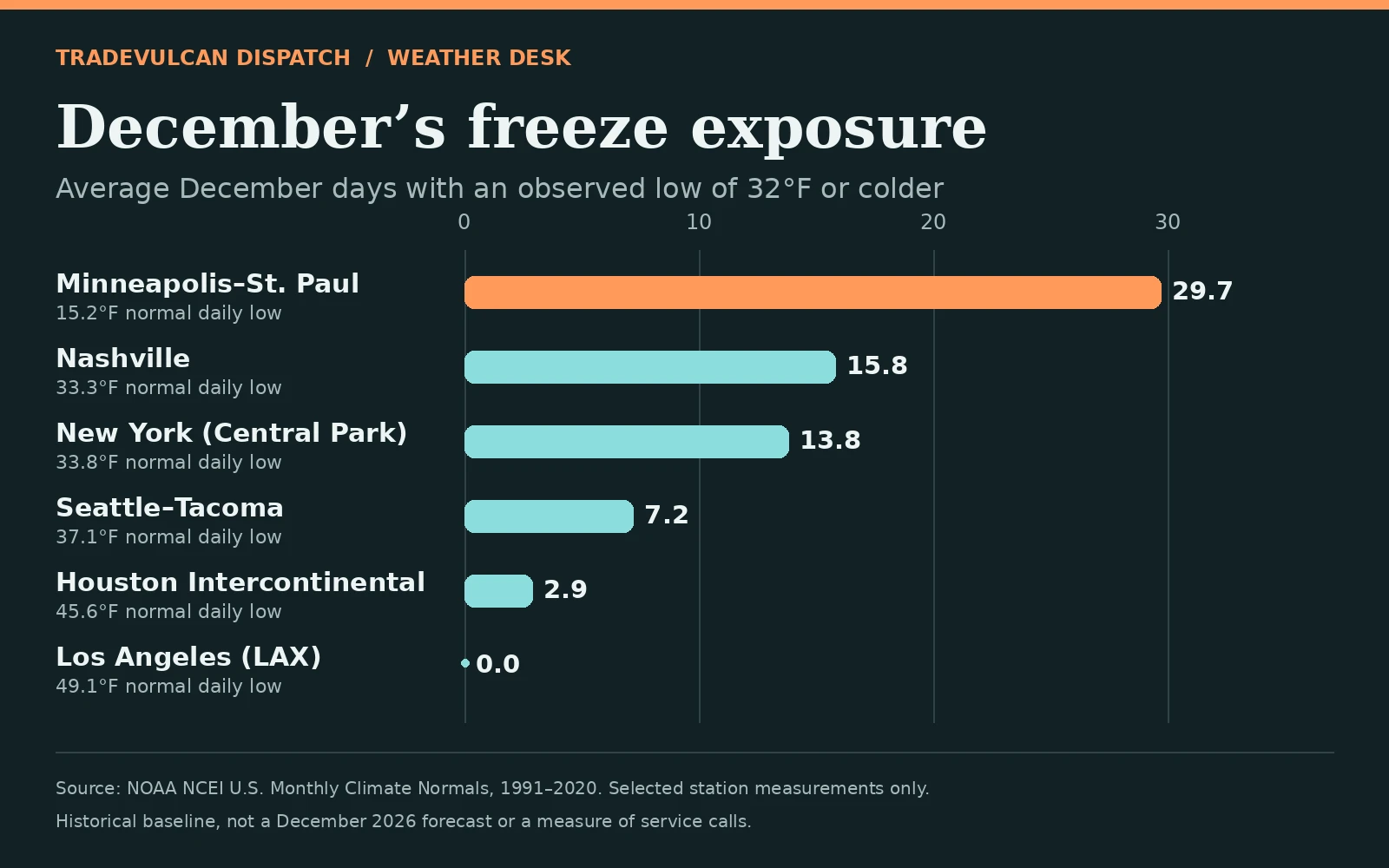 AnalysisBenchmarks, Data & ResearchDecember weather outlook: A mild month can still bring a hard freezeNOAA favors a warmer December across much of the North and a wetter one across much of the South. That could mean fewer routine heating calls in some markets and a tougher schedule for outdoor crews in others.TradeVulcan Editorial Desk6 min