

Status at publication
September 1, 2026 is the expiration date written into Exception No. 2 of NEC Section 210.8(F). The expiration does not function like a new federal law taking effect uniformly in all 50 states. The National Electrical Code is adopted and enforced by states and local authorities, often with amendments and on different edition schedules.
As of publication, AHRI’s proposed Tentative Interim Amendment to move the expiration date to September 1, 2028 remained in NFPA’s public-comment process, with comments due September 9. Contractors should verify the locally adopted code, amendments and enforcement position with the authority having jurisdiction before treating any national summary as an installation instruction.
A deadline arrived before the argument was settled
A four-year reprieve for outdoor HVAC equipment has run out.
Section 210.8(F) of the National Electrical Code expanded GFCI protection to outdoor dwelling-unit outlets, a definition broad enough to reach hard-wired air conditioners and heat pumps. After contractors, manufacturers and inspectors reported unwanted trips and compatibility problems, NFPA approved a temporary exception for listed HVAC equipment. That exception was carried into the 2023 and 2026 editions, but with a fixed expiration date: September 1, 2026.
The 2026 NEC now provides a path forward through GFCI or special-purpose GFCI protection, including a Class C SPGFCI option for listed HVAC equipment. The problem is that the industry organizations that asked for the original delay say the field evidence and product supply are not yet mature enough for a clean nationwide transition.
AHRI has asked NFPA to extend the exception through September 1, 2028. ACCA supports the request. NAHB says at least 19 states have already amended, delayed or limited the requirement in some way, while another eight remain on editions of the NEC older than 2020. That leaves contractors with the least comfortable answer in code compliance: the national deadline is real, but the practical rule still depends on where the job is located.
What contractors need to know today
- Exception No. 2 to NEC 210.8(F), which temporarily allowed listed outdoor HVAC equipment to avoid the GFCI requirement, expires September 1, 2026 by its own terms.
- The change is not nationally uniform. State and local code adoption, amendments and AHJ interpretations determine what is enforceable on a particular job.
- The 2026 NEC permits GFCI or SPGFCI protection for listed HVAC equipment and expressly allows a listed Class C SPGFCI pathway with required disconnect marking.
- AHRI’s 2026 Phase II research found continuing high-frequency compatibility concerns; ACCA says five of 12 GFCIs in the research tripped below the applicable must-hold current above 60 Hz.
- AHRI has proposed extending the HVAC exception to September 1, 2028 for the 2020, 2023 and 2026 NEC editions. NFPA public comments on the proposal are due September 9, 2026.
- NAHB reports that at least 19 states have amended, delayed or limited the requirement and eight more remain on pre-2020 NEC editions, so contractors should not assume the September 1 deadline changes every market the same way.
- For shops operating across jurisdictions, code verification now belongs in estimating, purchasing and install planning—not as a surprise at final inspection.
The September 1 code picture
- Exception expiration
- Sept. 1
- States already modified
- 19+
- Pre-2020 NEC states
- 8
- Extension requested
- 2028
The date written into NEC 210.8(F) Exception No. 2 for listed HVAC equipment.
NAHB says at least 19 states have amended, delayed or limited 210.8(F) in some manner.
NAHB says eight additional states are on NEC editions that predate Section 210.8(F).
AHRI’s proposed TIA would move the exception expiration to September 1, 2028.
What exactly expired today?
The issue begins with the word “outlet.” In electrical-code language, an outlet is not limited to the receptacle a homeowner recognizes on a wall. It is a point in the wiring system where current is taken to supply utilization equipment. That definition is why Section 210.8(F), added in the 2020 NEC, reached hard-wired outdoor HVAC equipment.
The 2020 language required GFCI protection for covered outdoor dwelling-unit outlets supplied by qualifying single-phase branch circuits. Early enforcement exposed a practical conflict: some HVAC systems and some Class A GFCI devices did not reliably coexist. Reports from early-adopting jurisdictions described unwanted trips that could leave an air conditioner or heat pump inoperable even when technicians could not identify a dangerous fault.
NFPA eventually issued a Tentative Interim Amendment in 2022 that added Exception No. 2. The language exempted listed HVAC equipment from the GFCI requirement, but only temporarily. The same September 1, 2026 sunset was carried into later NEC editions.
The 2026 code does not simply delete ground-fault protection after the exception disappears. It states that, effective September 1, 2026, GFCI or SPGFCI protection is to be provided for listed HVAC equipment covered by the section. It also creates a Class C special-purpose GFCI option for listed HVAC equipment.
How the code evolved
| Milestone | What changed | Why it matters now |
|---|---|---|
| 2020 NEC | Section 210.8(F) expanded GFCI protection to covered outdoor dwelling-unit outlets, reaching hard-wired HVAC equipment. | The requirement exposed HVAC/GFCI compatibility complaints in early-adopting markets. |
| 2022 TIA | NFPA added an exception for listed HVAC equipment and set September 1, 2026 as the expiration date. | The industry received several years to investigate nuisance tripping and develop technical solutions. |
| 2023 NEC | The temporary HVAC exception was carried forward. | Jurisdictions adopting the 2023 edition may still have local amendments affecting enforcement. |
| 2026 NEC | The code retains the September 1 sunset, raises the covered current threshold in 210.8(F) to 60 amperes and adds a Class C SPGFCI option for listed HVAC equipment. | After the exception expires, compliant protection depends on the adopted edition, local amendments and available equipment. |
Why nuisance tripping became the center of the fight
A Class A GFCI is designed to protect people from electric shock by opening a circuit when it detects a sufficiently small imbalance between outgoing and returning current. That sensitivity is a feature, not a flaw.
HVAC equipment, however, has become electronically more complex. Variable-speed compressors, inverters, power-conversion electronics and electronically commutated motors can create leakage-current signatures and high-frequency components that look different from the simple 60 Hz conditions under which older protection strategies were commonly evaluated. ACCA also points out that field complaints were not limited to inverter equipment; the 2022 task-group record included single-stage equipment as well.
The disagreement is therefore more precise than “GFCIs trip.” The technical question is whether protection devices can distinguish a hazardous ground-fault condition from normal current behavior across the installed population of modern HVAC equipment, in real operating conditions, without creating an unacceptable rate of unwanted shutdowns.
This is not a choice between electrical safety and equipment reliability.

AHRI’s latest research did not close the case
AHRI’s 2026 Phase II report, Assessment of Incompatibility of HVAC Equipment and Ground Fault Circuit Interrupter Breakers, added fresh laboratory evidence just before the deadline. AHRI’s technical-results library lists the report under project AHRI-8029.
According to ACCA’s summary of that research, five of 12 GFCIs tested tripped below the applicable must-hold current at frequencies above 60 Hz. AHRI’s work also evaluated variable-speed HVAC systems and the interaction of high-frequency leakage current with GFCI sensing behavior.
That does not mean five of every 12 field installations will fail. It was a laboratory research set, not a national failure-rate study. It does mean the organizations seeking an extension can point to current technical evidence rather than relying only on complaints from the first years of 210.8(F).
UL Solutions notes that the standards ecosystem has also moved. Supplement SB to UL 943 was issued in August 2025 to address high-frequency behavior, and the 2026 NEC recognizes special-purpose protection. In other words, the market is not standing still. The unresolved question is whether those changes have matured into a sufficiently broad, available and field-validated solution for the combinations contractors will encounter after the exception ends.
Why the industry is still asking for time
- GFCIs in cited AHRI test
- 12
- Tripped below must-hold
- 5
- NFPA comment deadline
- Sept. 9
ACCA’s August 24 summary describes a 12-device portion of AHRI’s Phase II work.
ACCA says five devices tripped below the applicable must-hold current above 60 Hz.
Public comments on the proposed two-year extension remain open after the September 1 sunset.
The biggest operational problem: the code does not change everywhere at once
The NEC is a model code. It becomes enforceable through state or local adoption, and jurisdictions can modify the language. That distinction is easy to lose in a national deadline story.
NAHB reported in August that at least 19 states had amended, delayed or limited Section 210.8(F) in some way. It also counted eight states still using NEC editions older than 2020, which do not contain the section. NAHB’s point was not that every remaining state would instantly impose the same requirement on September 1. Local amendments, adoption dates and administrative interpretations still matter.
For contractors operating in one city, the answer may be straightforward after a call to the building department. For a multi-state or multi-branch operator, it is a configuration problem: the estimating rules, breaker or protection-device purchasing, installation SOP and inspection checklist may need to vary by jurisdiction.
What September 1 can mean on a real job
| Local code situation | Likely practical effect | Contractor action |
|---|---|---|
| Applicable NEC language adopted without an HVAC carve-out | The temporary exception has expired and the adopted protection requirement may now be enforceable. | Confirm approved device type, markings, amperage, listing and inspection expectations with the AHJ and manufacturer documentation. |
| State or local amendment delays, limits or removes 210.8(F) for HVAC | The national model-code sunset may not change the local installation rule today. | Use the local amendment, not a national summary, as the compliance source. |
| Jurisdiction remains on a pre-2020 NEC edition | Section 210.8(F) is not part of that adopted edition. | Track the next adoption cycle and any local requirements that exist outside 210.8(F). |
| Local enforcement policy is unclear during transition | Permit reviewers and inspectors may be interpreting product availability and code language in real time. | Get written clarification before ordering equipment or promising a final inspection date when possible. |
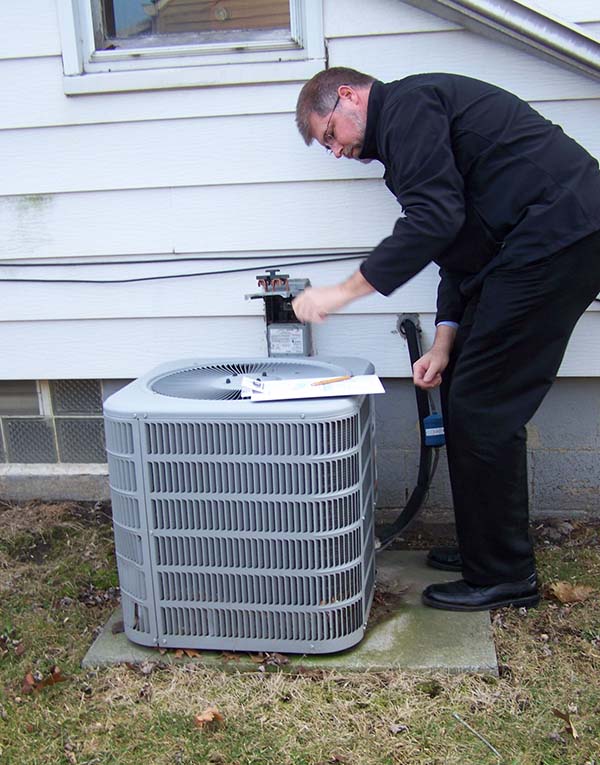
The 2026 NEC gives contractors more than one protection path
The expiration does not force every covered installation into one identical breaker. The 2026 NEC’s Section 210.8(F) allows GFCI or SPGFCI protection for listed HVAC equipment, and Exception No. 3 expressly permits a listed Class C SPGFCI for listed HVAC equipment. When that Class C option is used, the disconnect serving the unit must carry the warning marking specified by the code.
IAEI’s summary of the 2026 changes identifies four practical protection categories available under the new framework: conventional Class A GFCI, Class A devices marked for high-frequency behavior, Class C SPGFCI, and Class C SPGFCI with HF/HF+ marking. Exact product suitability still depends on listing, equipment instructions and local acceptance.
This is where code language and supply-chain reality meet. A protection method can exist in the standard before every electrical distributor has the right device for every panel family, amperage and project schedule.
Protection routes described for 2026 NEC HVAC applications
| Route | What it is | Contractor watchpoint |
|---|---|---|
| Class A GFCI | Conventional personnel-protection GFCI approach. | Verify HVAC compatibility and manufacturer/AHJ requirements. |
| Class A GFCI marked HF or HF+ | A device designed and marked for specified high-frequency behavior. | Confirm listing, panel compatibility, amperage and actual availability. |
| Class C SPGFCI | Special-purpose GFCI route expressly permitted for listed HVAC equipment by 2026 NEC 210.8(F). | The serving disconnect requires the code-specified Class C SPGFCI warning marking. |
| Class C SPGFCI marked HF or HF+ | Special-purpose protection combined with high-frequency marking. | Do not assume a listed product exists for every panel and equipment combination. |
Product availability is part of the readiness dispute
Leading Builders of America has added a supply-chain argument to the technical one. ACCA’s August 24 account of LBA’s filing says major manufacturers were at different stages of bringing newer protection devices through manufacturing and distribution, with some volume availability expected after September 1.
NAHB raised the same practical concern for builders: a technically compliant product is not yet a scalable solution if contractors cannot reliably buy it in the panel families and ratings required across a production schedule.
That distinction matters especially for residential replacement work. A contractor does not select the condensing unit, electrical panel, breaker ecosystem and local code in isolation. Existing homes create combinations. A device that solves the problem for one panel family or equipment platform does not automatically solve it for the next service call.
The safety argument now runs in both directions
The original expansion of GFCI protection was driven by electrical-shock and electrocution risk. That purpose should not be minimized. A ground fault that energizes an outdoor HVAC cabinet can be lethal, and GFCI protection exists to interrupt dangerous current quickly.
ACCA’s argument for more time is that an unwanted trip can also create a safety problem if it silently removes cooling during extreme heat. In its public comments, ACCA cited Maricopa County, Arizona’s 2024 heat-mortality report. The county recorded 138 indoor heat-related deaths. An air-conditioning unit was present in 88% of those indoor cases; among cases where AC was present, the unit was not functioning in 70%.
Those numbers do not show that GFCI trips caused the deaths—Maricopa County did not make that claim, and neither does this report. ACCA uses the data to make a narrower point: loss of cooling can itself become a life-safety condition, particularly for older adults and other vulnerable occupants who may not recognize or be able to correct a shutdown.
The policy challenge is therefore not “safety versus convenience.” It is how to preserve electrical-shock protection without introducing an avoidable reliability problem in equipment that can also be life-sustaining during extreme heat.
The heat-risk data ACCA cited
- Indoor heat deaths
- 138
- AC unit present
- 88%
- AC not functioning
- 70%
Maricopa County’s 2024 annual heat report.
Share of indoor heat-death cases where an air-conditioning unit was present.
Among indoor cases where AC was present. This statistic does not identify GFCI tripping as the cause.
What happens next
AHRI’s proposed TIA, Log No. 1924, would change the expiration date from September 1, 2026 to September 1, 2028 in the 2020, 2023 and 2026 NEC editions. ACCA has filed comments in support. NFPA’s public-comment period remains open through September 9.
That creates an unusual transition window: the exception has reached its published sunset while the industry is simultaneously asking NFPA to revive it for two more years. Until NFPA acts, contractors cannot treat the proposed TIA as if it were already effective.
Even if NFPA ultimately issues the amendment, adoption and enforcement still travel through state and local code processes. Some jurisdictions may incorporate an NFPA TIA automatically or quickly; others may require a formal amendment, interpretation or later code-adoption action.
The immediate operational priority is therefore local certainty. Contractors need to know what the inspector expects on the next permit—not only where the national code debate may land later this month.
The road to September 1
| Date | Development | Status |
|---|---|---|
| 2020 | NEC 210.8(F) expands GFCI protection for covered outdoor dwelling-unit outlets. | Compatibility complaints emerge after enforcement begins in early-adopting jurisdictions. |
| Aug. 2022 | NFPA Standards Council approves the industry-backed temporary exception for listed HVAC equipment. | Exception is set to expire September 1, 2026. |
| Aug. 2025 | NFPA Standards Council declines appeals seeking to extend the 2026 NEC deadline during that code cycle. | September 1, 2026 remains in the published 2026 NEC. |
| Aug. 2026 | AHRI submits a new TIA request for a two-year extension; ACCA and allied groups support additional time. | NFPA opens the proposal for public comment. |
| Sept. 1, 2026 | Exception No. 2 reaches its stated expiration date. | Local effect depends on adopted NEC edition, amendments and enforcement. |
| Sept. 9, 2026 | NFPA public-comment deadline for the proposed extension. | The TIA request remains pending as of this article’s publication. |
What HVAC contractors should do this week
- Confirm the currently adopted NEC edition and every local amendment affecting 210.8(F) in each jurisdiction where your company pulls permits.
- Ask the AHJ how it is treating the September 1 expiration and whether it has issued a bulletin, interpretation, variance process or transition policy.
- Coordinate with your electrical subcontractor or in-house electrician on approved GFCI/SPGFCI devices, required disconnect marking and panel-family compatibility.
- Check manufacturer installation instructions and technical bulletins for the specific outdoor unit being installed; do not generalize one brand’s compatibility guidance to another.
- Call distributors before the install date to verify device availability in the required amperage and panel family rather than assuming inventory exists because a product has been listed.
- Update estimating templates so any added protective-device, electrical or labor cost is captured before the job is sold.
- Document nuisance trips, equipment combinations, breaker/device models and corrective actions. Field evidence is especially valuable while NFPA’s TIA process remains open.
- Brief dispatchers and CSRs on the possibility of post-install no-cool calls caused by a tripped protective device so the issue can be triaged quickly and safely.
- For multi-state operations, make code requirements a branch-level configuration rather than a single national SOP.
HVAC GFCI deadline: quick answers
Did a new federal HVAC law take effect September 1, 2026?
No. The September 1 date is the expiration written into an exception in the National Electrical Code. The NEC is adopted and enforced by state and local jurisdictions, often with amendments.
Does every outdoor air conditioner and heat pump now need a GFCI breaker?
Not as a universal national statement. The adopted code edition, branch-circuit characteristics, local amendments, equipment listing and available protection method all matter. The 2026 NEC also permits a listed Class C SPGFCI pathway for listed HVAC equipment.
What is a Class C SPGFCI?
It is a special-purpose ground-fault circuit-interrupter category recognized as an option for listed HVAC equipment in the 2026 NEC. When used under 210.8(F), the serving disconnect must carry the code-specified warning marking.
Did NFPA already extend the exception to 2028?
No as of this article’s publication. AHRI has proposed a Tentative Interim Amendment that would extend the date to September 1, 2028, and the NFPA public-comment deadline is September 9, 2026.
Are nuisance trips only a variable-speed or inverter problem?
No. High-frequency behavior from power electronics is a major focus of current research, but ACCA notes that the earlier NFPA task-group record also included unwanted tripping involving conventional single-stage equipment.
What should a contractor rely on for a job today?
The locally adopted code and amendments, the authority having jurisdiction, applicable product listings and the equipment manufacturer’s instructions. National trade-association guidance is useful context, but it is not a substitute for the enforceable local code.
The bottom line
The HVAC industry did not wake up September 1 with a single new national installation rule. It woke up with the expiration of a national model-code exception—and a patchwork of local answers about what replaces it.
The technology has advanced since 2022. The 2026 NEC now recognizes new protection options, UL work has addressed high-frequency behavior and manufacturers are bringing new devices to market. But AHRI, ACCA, builders and other stakeholders are still telling NFPA that compatibility, field validation and supply are not ready for a clean transition at scale.
For contractors, the argument in Quincy matters. The inspector on tomorrow’s job matters more.
Methodology
TradeVulcan Dispatch reviewed the published 2026 NEC revision record for Section 210.8(F), NFPA Standards Council materials, AHRI’s public research index, ACCA’s public comments and technical summary, NAHB’s state-adoption overview, UL Solutions’ code-and-standards analysis, IAEI’s 2026 NEC change summary and Maricopa County’s 2024 heat-mortality report. The report distinguishes the model-code expiration date from state and local enforceability. State counts are attributed to NAHB rather than independently represented as a complete 50-state legal survey. AHRI laboratory findings are described as research results, not projected field failure rates. Reporting was current through September 1, 2026.
Sources
- 2026 NEC Second Correlating Revision No. 10 — Section 210.8(F) — National Fire Protection Association
- NFPA Standards Council Final Minutes — August 2025 — National Fire Protection Association
- Technical Results — AHRI-8029 Phase II GFCI/HVAC Research — Air-Conditioning, Heating, and Refrigeration Institute
- ACCA Urges National Fire Protection Association to Extend HVAC GFCI Exception Through 2028 — Air Conditioning Contractors of America
- ACCA fights to extend GFCI exception — ACCA HVAC Blog
- Sept. 1 Deadline Looms for Code Changes on Outdoor Outlets, GFCIs — National Association of Home Builders
- The Coordination Between Model Codes and Standards: 2026 National Electrical Code — UL Solutions
- NEC 2026 Significant Code Changes — IAEI Magazine
- ACCA Celebrates Win: Limits NEC GFCI Protection — Air Conditioning Contractors of America
- 2024 Heat-Related Deaths Report — Maricopa County Department of Public Health
- Update: Resolving the GFCI Nuisance Trip Issue for HVACR — ACCA HVAC Blog
- Two New Standards Designed to Improve HVAC Performance — ACHR NEWS