
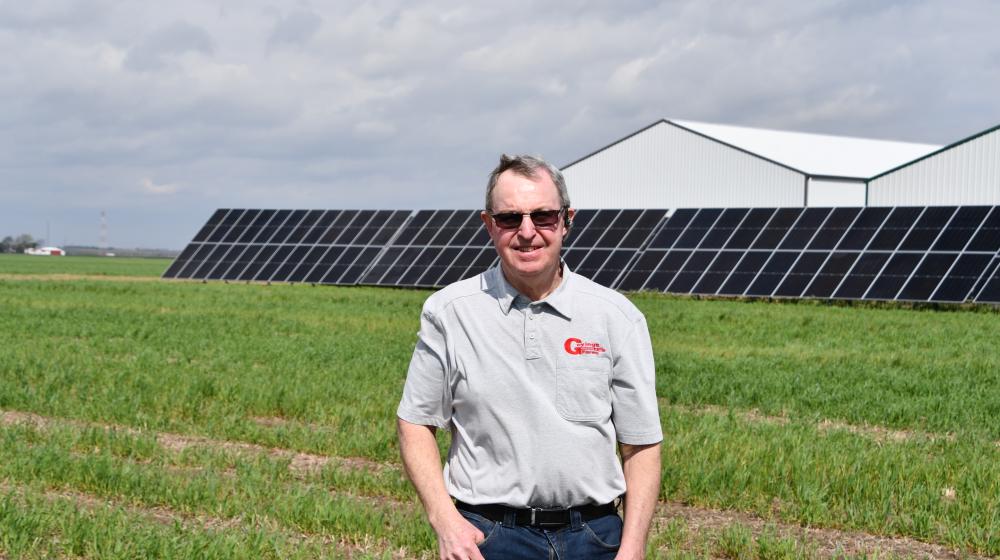
USDA’s Rural Energy for America Program is about to change the funding conversation for contractors serving farms and rural businesses. A final rule published October 1 takes effect October 16, shifting renewable-energy and efficiency grants to completed projects with documented operating results. Public comments remain open through November 2. This is an adopted rule with a comment period, rather than a proposal awaiting adoption.
For an HVAC, electrical or energy contractor, the practical issue is the gap between installing equipment and a customer receiving possible grant support. A sales estimate that assumes the grant arrives alongside construction can leave the customer with a funding problem and the contractor with a collection problem.
The timetable moves behind the work
Projects generally must be completed 12 to 24 months before application, with a year of actual production or savings data. The first application window permits a longer, 12-to-36-month lookback for the project-period end date.
That makes recordkeeping part of the job’s value. Contractors can help customers plan for utility records, equipment specifications, commissioning dates and usable performance data before the installation. Waiting until a customer asks for a grant packet a year later creates avoidable work, especially when the person who sold the job has moved on.
USDA says the redesign is intended to simplify applications and evaluate demonstrated performance. Its October 2 announcement also describes a national competition and a planned application portal. Those are the agency’s intended benefits; they do not establish how quickly a particular application will be processed or paid.
A later grant still leaves a financing decision
The revised grant requirements call for at least 75% cost sharing. Maximum requests are $500,000 for renewable-energy projects and $250,000 for efficiency improvements. Separately applied-for REAP guaranteed loans remain available for upfront costs; combined REAP grant and guaranteed-loan funding cannot exceed 75% of project cost.
The contractor takeaway is to discuss the customer’s ability to carry the project before making a grant central to the proposal. A possible future award should not be presented as cash already available to pay an installation invoice. A loan also brings repayment obligations, so “financing available” is only the start of the conversation.
USDA’s guaranteed-loan guidance says interest rates are negotiated between borrower and lender, and lenders must assess repayment capacity and other credit factors. It identifies high-efficiency HVAC, lighting and refrigeration among potential efficiency uses. Individual eligibility still needs a project-level check.
Recheck the pipeline before reusing an old proposal
The rule also tightens project eligibility, including restrictions affecting solar and wind on cropland, component sourcing and projects spanning multiple locations. That warrants a fresh review of older REAP sales materials, especially any blanket promise that an installation will qualify.
A useful review starts with three questions:
Questions before quoting
- Can the customer pay for the work and carry any debt if a grant is delayed or never awarded?
- Who will preserve the project records and track actual performance after installation?
- Has the customer checked the current requirements with USDA and, where relevant, the lender?
Existing applications deserve separate attention. USDA says applications with Form 1940-1 signed by both the applicant and agency before the rule’s effective date can continue, subject to applicable terms. Its announcement says annual notices will set application windows. October 16 should therefore not be marketed as a grant-application deadline.
The immediate opportunity for contractors is a better-qualified pipeline: customers who understand the funding sequence, proposals with defensible assumptions, and completed jobs whose results can be documented.
Methodology
Prepared from the official REAP final rule, USDA's October 2 announcement and USDA Rural Development guaranteed-loan guidance. Regulatory facts, including effective dates, transition provisions, grant limits and financing rules, are attributed to USDA and Federal Register materials. Contractor implications regarding proposal assumptions, documentation practices and pipeline review are editorial analysis based on the published rule sequence and are not measured USDA outcomes. This article does not provide individualized eligibility, legal, tax or lending advice.
Sources
- Final rule, 91 FR 62600, October 1, 2026 — Federal Register / U.S. Government Publishing Office
- USDA Issues Final Rule, Comment Period Ahead of Opening Application Window for Rural Energy for America Program — U.S. Department of Agriculture
- Rural Energy for America Program Renewable Energy Systems & Energy Efficiency Improvement Guaranteed Loans — USDA Rural Development
- REAP final rule, official HTML — U.S. Government Publishing Office
- REAP final rule, Federal Register — Federal Register
- Ohio grain farm gets positive jolt from solar energy grant — USDA Rural Development
- USDA Digital Rights and Copyright policy — U.S. Department of Agriculture