
Disclosure
TradeVulcan develops and sells software for home-service contractors and publishes TradeVulcan Dispatch. TradeVulcan has no reported financial relationship with Blackstone, Flow Control Holdings, Audax Private Equity, Modine, Gentherm or Airedale by Modine. Transaction terms for Blackstone's acquisition of Flow Control Holdings were not disclosed. The $4 billion figure discussed in this article is Modine's contracted capacity to supply Airedale cooling products during 2027 through 2029, not Modine's market value, transaction value or guaranteed recognized revenue.
Deal status — Sept. 11, 2026
Blackstone announced Sept. 10 that affiliated private-equity funds have signed a definitive agreement to acquire Flow Control Holdings from Audax Private Equity. Audax will retain a minority stake. Financial terms were not disclosed, and Blackstone said the transaction is expected to close in the fourth quarter.
The same day, Modine said it intends to become Modexus Solutions after completing the spinoff of its Performance Technologies business and that business's combination with Gentherm. Gentherm shareholders approved the required proposals Sept. 10, and the companies currently expect the transaction to close Oct. 1, subject to customary conditions. The underlying transaction was announced earlier this year at approximately $1 billion.
Those are separate transactions involving separate companies. Dispatch is analyzing them together because both point toward the same capital-allocation thesis: thermal management is becoming a critical infrastructure layer of the AI buildout.
The AI infrastructure race is becoming a cooling-capacity race.
The chips receive the headlines. The heat is creating the contractor opportunity.
Blackstone is buying Flow Control Holdings, whose engineered components are used in coolant distribution units, in-row manifolds and secondary fluid networks for data centers. FCH says it completed 10 acquisitions during Audax's ownership while expanding production and distribution capacity. Blackstone called liquid cooling one of the high-conviction themes inside the buildout of AI infrastructure.
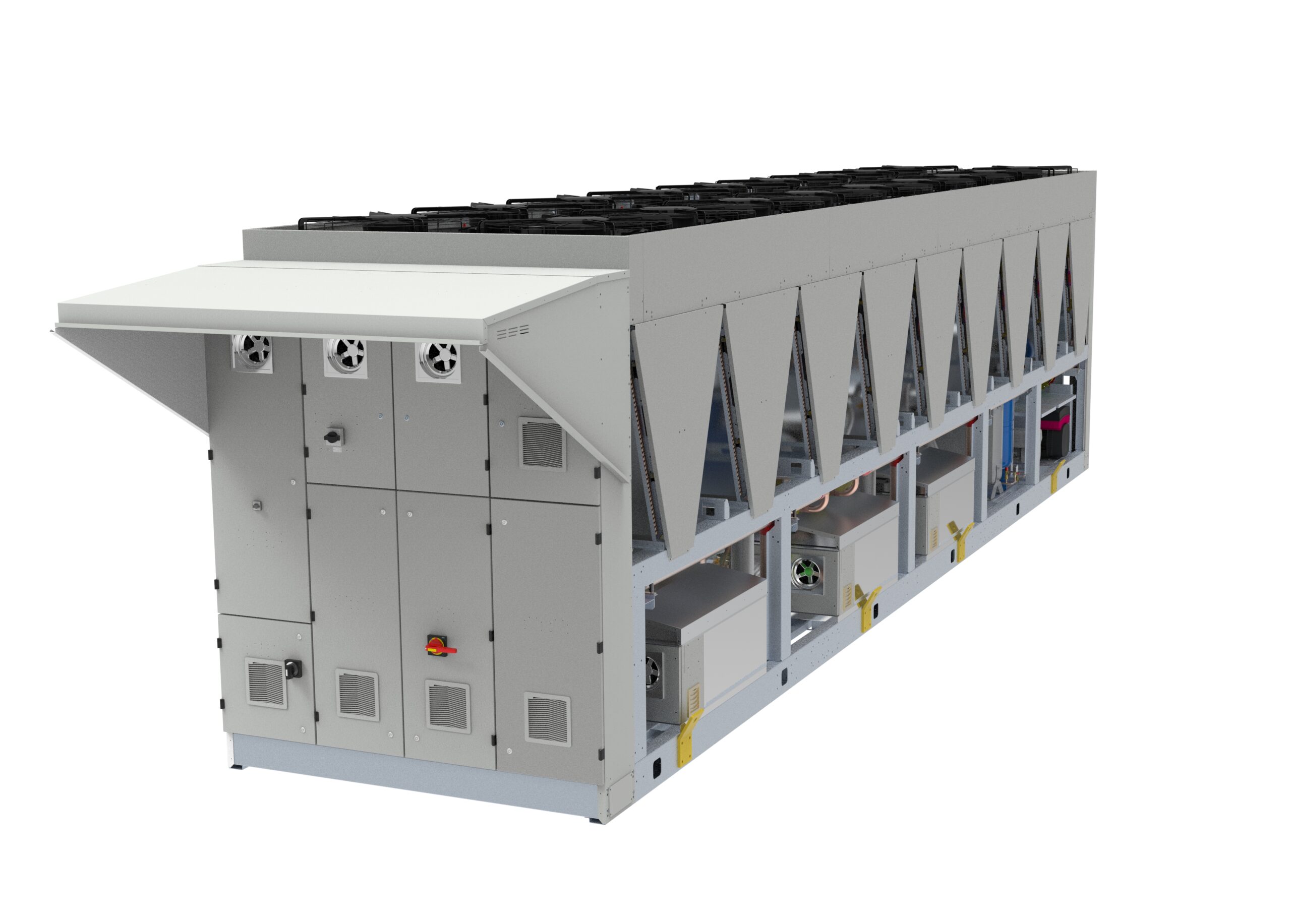
Modine is making an even larger strategic statement. After the pending separation of Performance Technologies, the company that remains is being positioned around data-center cooling, commercial HVAC and refrigeration. In May, Modine disclosed a long-term capacity agreement under which it will reserve capacity to supply more than $4 billion of Airedale cooling products to one strategic data-center customer during calendar years 2027 through 2029; the customer paid $165 million up front to support capacity investments.
For HVAC, mechanical, plumbing and electrical contractors, the signal is not that residential service companies should suddenly chase hyperscale projects. It is that the mechanical systems surrounding compute—chillers, CDUs, piping, controls, pumping, heat rejection, commissioning and service—are becoming strategically valuable infrastructure. The contractors capable of executing and maintaining those systems are moving closer to the center of the AI capital cycle.
What contractors should know
- Blackstone signed a definitive agreement Sept. 10 to acquire Flow Control Holdings from Audax; terms were not disclosed and Audax will retain a minority stake.
- FCH components are used in coolant distribution units, in-row manifolds and secondary fluid networks serving data-center OEMs and hyperscalers.
- Blackstone also agreed in March to acquire a majority stake in Advanced Cooling Technologies, which makes two-phase liquid-cooling, cold-plate and other thermal-management products.
- Modine plans to become Modexus Solutions after separating Performance Technologies in an approximately $1 billion transaction and concentrating the remaining company on data-center cooling, commercial HVAC and refrigeration.
- Modine has a separate capacity agreement to supply more than $4 billion of Airedale data-center cooling products during 2027-2029, backed by a $165 million upfront customer payment.
- The contractor opportunity is concentrated in commercial and mission-critical capabilities: hydronics, controls, high-density electrical infrastructure, commissioning, redundancy, water chemistry, leak management and 24/7 service execution.
The cooling buildout in six numbers
- Modine capacity agreement
- >$4B
- Customer upfront payment
- $165M
- Modine / Gentherm transaction
- ~$1B
- FCH add-ons under Audax
- 10
- Blackstone AUM
- >$1.3T
- Modine FY2026 sales
- $3.18B
Cooling-product capacity reserved for one strategic data-center customer during 2027-2029.
Paid to Modine to support capacity investments tied to the long-term agreement.
Approximate value announced for the Performance Technologies separation and combination.
Acquisitions FCH says were completed over the prior four years.
Assets under management reported by Blackstone in the FCH announcement.
Full-year company sales reported by Modine, up 23% year over year.
Blackstone is not buying a chiller company. It is buying deeper into the liquid-cooling stack.
Flow Control Holdings sits below the marquee data-center brand names and closer to the plumbing of the cooling system. Blackstone says the Cincinnati-based company supplies highly engineered flow-control components used by OEMs and hyperscalers in coolant distribution units, in-row manifolds and secondary fluid networks.
That positioning matters because direct-to-chip and hybrid liquid-cooling architectures introduce a larger network of pumps, valves, manifolds, heat exchangers, controls, filtration, connections and fluid-management components around the IT load. More compute density can mean more thermal infrastructure per square foot, not less.
Blackstone's latest deal also is not an isolated cooling wager. In March, Blackstone Energy Transition Partners agreed to acquire a majority stake in Advanced Cooling Technologies, a Pennsylvania manufacturer whose products include two-phase liquid cooling, heat pipes, cold plates and environmental control units. In January, Blackstone also became the sole institutional investor in AIR Control Concepts, which describes itself as the largest commercial HVAC, electrical and controls platform in North America, operating through more than 38 companies across 35 states and Canada.
Those investments are not one combined operating platform, and Dispatch is not suggesting Blackstone has announced plans to merge them. They do show the same investor allocating capital at multiple layers of the thermal and electrical infrastructure ecosystem: equipment, components, commercial distribution and contracting capacity.
Modine is doing the opposite of diversification: it is becoming more concentrated around cooling.
Modine's Sept. 10 name announcement could look cosmetic if read by itself. The portfolio move underneath it is not.
Earlier this year, Modine agreed to separate its Performance Technologies business and combine it with Gentherm in a Reverse Morris Trust transaction valued at approximately $1 billion. Modine said the remaining Climate Solutions business would be focused on data centers, commercial HVAC and refrigeration. Gentherm shareholders approved the proposals required for the combination on Sept. 10, and closing is currently expected Oct. 1. Modine says the renamed company, Modexus Solutions, will continue trading under the ticker MOD after the name change becomes effective, which itself remains subject to Modine shareholder approval.
The financial profile explains why cooling is getting the corporate focus. Modine reported fiscal-2026 sales of $3.18 billion, up 23%, and said its fourth-quarter performance was driven by higher Climate Solutions sales, particularly data-center products. Earlier in the year, management raised its two-year data-center sales-growth outlook to 50% to 70% annually after reporting a 78% increase in third-quarter data-center sales.
Then came the $4 billion capacity agreement. Modine is not simply forecasting demand; one strategic customer paid $165 million up front so Modine can reserve and build capacity to supply more than $4 billion of Airedale cooling products from 2027 through 2029. That does not guarantee that every dollar becomes recognized revenue, but it is a powerful indication that cooling capacity itself has become scarce enough for a customer to help fund it.
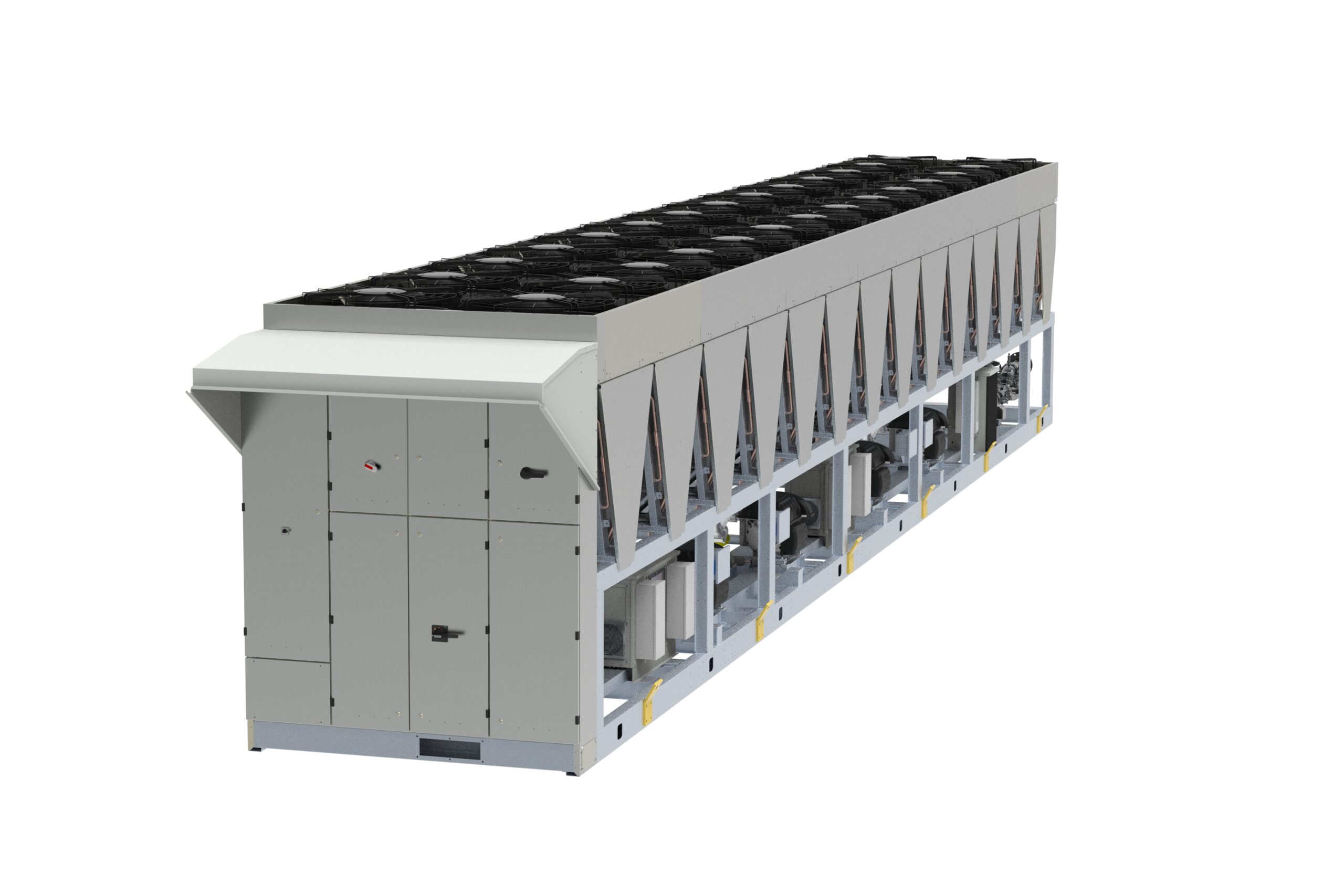
Where the money is moving in the AI cooling stack
| Layer | Examples in this story | What has to be executed | Contractor relevance |
|---|---|---|---|
| Heat rejection / chilled water | Airedale by Modine chillers and controls | Plant design, heat rejection, pumping, controls, redundancy and commissioning | Commercial HVAC and mechanical contractors with central-plant expertise |
| Liquid distribution | CDUs, manifolds and secondary fluid networks using FCH components | Flow control, filtration, pressure management, leak prevention and serviceability | Hydronic/mechanical specialists; precision piping and controls capabilities |
| Chip / component thermal management | ACT cold plates, two-phase cooling and thermal systems | High-density heat transfer close to compute hardware | Mostly OEM/specialist territory, but it changes facility-side requirements |
| Electrical and controls | Mission-critical power, sensors, BMS and cooling-control systems | Power quality, redundancy, instrumentation, automation and fault response | Electrical and controls contractors with data-center standards and 24/7 support |
| Field service | Airedale service networks and commercial HVAC platforms | Preventive maintenance, emergency response, water quality and uptime | Recurring service opportunity for qualified mission-critical operators |
The contractor opportunity is real—but it is not residential HVAC with a bigger tonnage label.
Data-center cooling is attractive precisely because failure is expensive. That also raises the capability threshold.
A residential HVAC company can have outstanding technicians and still be unprepared for mission-critical work. Data centers demand formal commissioning, redundancy planning, documented change control, controls integration, water-treatment discipline, leak detection, safety procedures, security requirements, precise startup sequences and service-response commitments that can be measured in minutes. Electrical scopes can involve high-voltage distribution, backup power, power quality and coordination with cooling controls. Mechanical scopes may combine large chilled-water systems with facility water loops feeding CDUs and direct-liquid-cooling equipment.
The operators with the most credible path are commercial HVAC, mechanical, controls and electrical contractors that already serve hospitals, laboratories, industrial plants, semiconductor facilities or other uptime-sensitive environments. For them, the question is whether existing capabilities can be certified, staffed and packaged for data-center owners, general contractors and equipment OEMs.
For residential-focused companies, the useful lesson is strategic rather than tactical: when investors and manufacturers concentrate around a new end market, follow the adjacent labor and service bottlenecks before assuming the opportunity belongs only to the equipment maker.
A contractor-readiness checklist for mission-critical cooling
| Capability | Minimum operating question | Why buyers care |
|---|---|---|
| Commissioning | Can the team document startup, functional testing and acceptance procedures? | Capacity is worthless if systems cannot be proven under load. |
| Controls integration | Can technicians troubleshoot BMS, sensors, valves, variable-speed equipment and alarm logic? | Cooling performance increasingly depends on software and control sequences. |
| Hydronics / fluid quality | Can the company manage flushing, filtration, glycol/water chemistry, pressure and leak risk? | Liquid cooling adds more fluid infrastructure closer to expensive compute. |
| 24/7 field response | Is there staffed escalation, parts strategy and an enforceable response SLA? | Mission-critical owners buy uptime, not merely installation labor. |
| Documentation | Are as-builts, equipment records, service logs and changes controlled consistently? | Data-center operators require traceability across long-lived assets. |
| Safety and site compliance | Can crews meet electrical, mechanical, security and owner-specific work rules? | The cost of a procedural failure is much higher in critical facilities. |
The operator lesson: follow bottlenecks, not buzzwords.
The easy version of this story is that AI is hot and cooling companies benefit. The useful version is to identify what customers are paying to secure.
Modine's customer paid $165 million before the 2027-2029 supply window to support capacity. Blackstone is buying a company that spent four years adding production, distribution and ten acquisitions around flow components. The same Blackstone strategy has already invested in Advanced Cooling Technologies, while another Blackstone vehicle is backing AIR Control Concepts across commercial HVAC, electrical and controls.
Capital is moving toward capacity, engineered components, service coverage and technical execution. Those are bottlenecks.
Contractors should apply the same framework to their own markets. When a manufacturer announces a capacity expansion, ask who commissions the equipment. When a hyperscaler reserves billions of dollars of cooling capacity, ask who installs the piping, powers the plant, integrates controls and owns emergency service. When private equity buys upstream component suppliers, ask which downstream field capabilities become more valuable because equipment deployment is accelerating.
That is a better operating strategy than attaching the letters AI to a sales deck. The opportunity is in the physical work the digital economy cannot skip.
Blackstone, Modine and data-center cooling: quick answers
How much is Blackstone paying for Flow Control Holdings?
The parties did not disclose the purchase price or enterprise valuation. Any valuation estimate would be speculation unless additional transaction information is released.
What does Flow Control Holdings make for data centers?
Blackstone says FCH supplies engineered flow-control components used by OEMs and hyperscalers in coolant distribution units, in-row manifolds and secondary fluid networks.
Is Modine changing its name to Modexus Solutions?
Modine announced that it intends to use the Modexus Solutions name after the Performance Technologies separation and Gentherm combination. The name change remains subject to Modine shareholder approval under applicable law.
Is the Modine deal worth $4 billion?
No. The approximately $1 billion figure refers to the Performance Technologies/Gentherm transaction announced earlier in 2026. The separate $4 billion figure is a long-term capacity agreement under which Modine will reserve capacity to supply more than $4 billion of Airedale cooling products to one strategic data-center customer during 2027-2029.
Can ordinary HVAC contractors work on data centers?
Some commercial HVAC and mechanical contractors can move into mission-critical work if they have the required engineering, controls, commissioning, hydronic, safety, documentation and around-the-clock service capabilities. Residential experience alone generally does not establish readiness for hyperscale or colocation work.
Why does liquid cooling matter for electrical contractors?
Higher-density compute changes both thermal and power infrastructure. Cooling pumps, controls, heat-rejection systems, backup strategies, sensors and associated electrical distribution must operate as coordinated mission-critical systems.
Methodology
TradeVulcan Dispatch independently rechecked the Sept. 10, 2026 Blackstone/Flow Control Holdings acquisition announcement, Blackstone's earlier 2026 Advanced Cooling Technologies and AIR Control Concepts announcements, Modine's Sept. 10 Modexus announcement, Gentherm's shareholder-vote results, the original approximately $1 billion Modine/Gentherm transaction announcement, Modine's fiscal-2026 results and its May 2026 $4 billion long-term Airedale capacity agreement. Secondary coverage was checked to confirm the timing and public framing of the announcements. Financial terms for the FCH acquisition remain undisclosed. Dispatch treats the FCH acquisition, Modine portfolio separation and Modine capacity agreement as separate events and connects them only as editorial analysis of capital flowing into data-center thermal infrastructure. Contractor capability and opportunity sections are Dispatch analysis, not a claim that any named company is seeking contractor partners. Reporting was rechecked Sept. 11, 2026 at approximately 7:30 a.m. Pacific time.
Sources
- Blackstone to Acquire Flow Control Holdings, a Leader in Highly Engineered Data Center Liquid Cooling Components — Blackstone
- Blackstone to acquire data center cooling firm Flow Control — Investing.com
- Blackstone Energy Transition Partners Announces Agreement to Acquire Majority Stake in Advanced Cooling Technologies — Blackstone
- Blackstone Announces Additional Investment in AIR Control Concepts — Blackstone
- Modine to Become Modexus Solutions, Marking Next Chapter as Diversified Thermal Management Solutions Company — Modine / PR Newswire
- Gentherm Shareholders Approve Combination with Modine's Performance Technologies Business — Gentherm
- Gentherm and Modine's Performance Technologies Business to Combine, Establishing a Scaled Leader in Thermal Management Solutions — Gentherm and Modine
- Modine Announces Landmark $4 Billion Long-Term Capacity Agreement through 2029 with Strategic Data Center Customer for Airedale by Modine Cooling Solutions — Modine
- Modine Reports Fourth Quarter Fiscal 2026 Results — Modine
- Modine Reports Third Quarter Fiscal 2026 Results — Modine
- TurboChill DCS — Airedale by Modine
- Modine plans to rebrand as Modexus Solutions after Gentherm merger — StreetInsider