
Disclosure
TradeVulcan Dispatch is published by TradeVulcan, a contractor-software company. Operational recommendations are editorial analysis; weather alerts and workplace requirements are attributed to their issuing agencies.
California's HVAC season is not taking its cues from the calendar.
National Weather Service advisories issued Sunday, October 4, keep extreme-heat warnings in parts of Southern California through 8 p.m. Thursday, October 8. In the Los Angeles and Ventura warning area, forecasters list coastal temperatures of 90 to 100 degrees and valley readings reaching 106.
For a contractor heading into Monday, that is a reason to revisit the week's service plan before the phones start ringing—not after the schedule is full. A fall maintenance calendar, reduced cooling coverage and an untested overflow answering process are decisions worth checking against the conditions outside.
One heat wave, different local deadlines
| Service territory | Published alert window | What dispatch should account for |
|---|---|---|
| Los Angeles and Ventura coastal and valley warning areas | Until 8 p.m. Thursday, October 8 | Coastal highs 90–100°F; valleys up to 106°F |
| San Diego and Orange County warning areas | Until 8 p.m. Thursday, October 8 | Hot coast-to-inland conditions, with many overnight lows in the 70s |
| Designated interior Bay Area and Central Coast advisory areas | Until 10 p.m. Wednesday, October 7 | Highs in the mid-90s to low 100s; limited overnight relief |
| San Francisco and other coastal Bay Area advisory areas | Separate advisory through 10 p.m. Sunday, October 4 | Do not apply the inland, multi-day forecast to every coastal customer |
A heat forecast is a demand signal—not a sales report
The important business question is how much usable service capacity remains if cooling requests arrive on top of the work already sold. Dispatch has not measured a statewide jump in contractor call volume, equipment failures or parts shortages from this event. Those outcomes should be measured in a company's own operation rather than assumed from a weather headline.
Start with tomorrow's actual board. Which technicians can diagnose cooling problems independently? Which appointments require a second person? Which jobs are waiting on a specific component? How much time is committed to installations, drive time and heat-related recovery?
Counting names on a roster will overstate capacity when those people are already committed elsewhere. Count the work that can be completed safely, then set the booking limit around it.
The first breakdown to prevent is at the phone
Give the answering team one current version of the schedule, including the point at which same-day service is no longer available. A dispatcher should not have to guess whether a technician can absorb another late call, and an automated answering system should not promise a slot that the field team has not released.
For a no-cooling request, capture the address, contact number, equipment issue, access restrictions and whether the property has any working cooling. Flag a customer who reports a vulnerable occupant or an unsafe indoor situation for prompt human review. An HVAC appointment is not emergency medical care.
Make callbacks a named responsibility. A request that has been recorded but never assigned is still an unresolved customer problem. When the board is full, provide an honest arrival window or referral rather than leaving the caller with a vague promise to fit them in.
The technician's worksite matters more than the city's forecast
California's outdoor heat standard requires access to drinking water, shade and a written prevention plan, along with training and emergency procedures. Shade must be present when the temperature exceeds 80°F; below that threshold it must still be available on request. The additional high-heat procedures at 95°F apply to specified industries, including construction. Employers need to determine how the rule applies to their work, not assume every service assignment has identical requirements.
For a service manager, the scheduling implication is straightforward: place exposed or especially demanding work in safer periods where feasible, confirm a way to communicate with the crew, and preserve the time needed for cooling and recovery. Do not convert a heat warning into an instruction to work faster. A roof, attic or equipment enclosure needs its own assessment.
Cal/OSHA Title 8, Section 3395: outdoor heat and high-heat procedures ↗
Moving indoors does not automatically remove the heat obligation
California also has an indoor heat standard. It generally applies to indoor work areas at or above 82°F when employees are present, subject to the rule's exceptions. Additional assessment and control provisions apply at 87°F, or at 82°F in specified clothing or high-radiant-heat conditions.
That matters to HVAC crews working in hot mechanical spaces and other indoor areas without effective cooling. An office's comfortable temperature is not evidence that the repair location is comfortable. The company's plan should address the conditions where the technician is actually working, including access to a cool-down area and the required controls.
Use the full standards and Cal/OSHA guidance when updating the safety plan. A temperature threshold is a trigger for action, not a complete safety program by itself.
Cal/OSHA Title 8, Section 3396: indoor thresholds and controls ↗Cal/OSHA heat-illness prevention guidance ↗
Protect the first visit before adding more visits
Have a lead technician and the parts coordinator review the equipment mix represented in open requests. Confirm supplier hours, pickup arrangements and the availability of components needed for already-diagnosed work. Keep compatibility checks with the qualified technician; a full truck is not useful if the part is wrong for the system.
Route confirmed repairs with parts in hand differently from undiagnosed calls. Tell customers when an appointment is a diagnostic visit and when it is a scheduled repair. Those are different promises, and confusing them can turn an otherwise reasonable visit into a complaint.
Preserve a clear handoff when a second crew or another trade is needed. The customer should know who owns the next step, what is still required and when to expect an update.
Sell a diagnosis, not the weather
A heat wave can make a homeowner want an immediate answer. It does not make equipment age alone a diagnosis or turn every service call into a replacement opportunity.
Show the documented fault, explain a viable repair when one exists, and separate the installed replacement scope from optional improvements. Confirm the actual equipment delivery and installation date before collecting a commitment based on speed. Avoid quoting utility savings that have not been evaluated for the customer.
The strongest long-term result is a completed job and a customer who understood the choices. Review unanswered calls, callback age, first-visit completion, jobs awaiting parts and overtime at the end of each day. Those numbers will show whether the company needs more coverage—or simply better follow-through on the work already accepted.
Keep the summer response until the conditions change
October is not a reason to reduce cooling readiness while warnings remain active. Recheck local alerts, book against safe field capacity, keep customer promises specific and make sure every accepted request has an owner. The opportunity is not simply more calls. It is taking care of the calls the business can responsibly complete.
Methodology
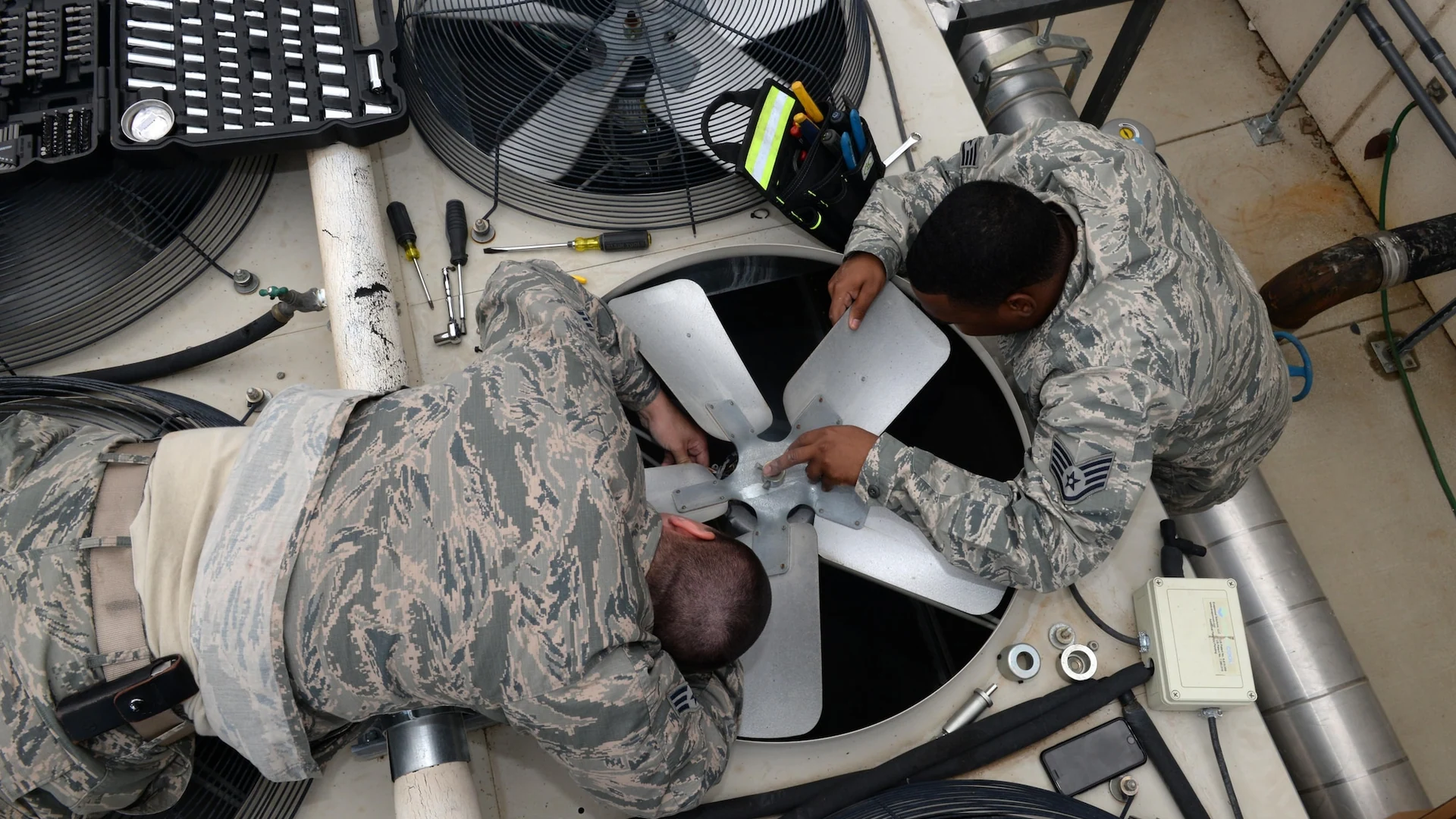
Reported from National Weather Service advisories reviewed October 4, 2026 and current California workplace heat standards. Warning pages are live and will change; the article records the dated windows reviewed for this report. Forecasts are not observed temperature records. Contractor recommendations are Dispatch analysis, not findings from interviews or a call-volume survey. The photograph is an archival U.S. Air Force employee image used for news context, with no generative editing. The appearance of U.S. Department of War (DoW) visual information does not imply or constitute DoW endorsement.
Sources
- Southern California extreme-heat warnings, October 4 — National Weather Service
- Bay Area and Central Coast heat advisories — National Weather Service
- Title 8, Section 3395: Heat Illness Prevention in Outdoor Places of Employment — California Department of Industrial Relations
- Title 8, Section 3396: Heat Illness Prevention in Indoor Places of Employment — California Department of Industrial Relations
- Cal/OSHA Heat Illness Prevention — California Department of Industrial Relations
- Here comes the heat: original Beale HVAC photograph and credit — U.S. Air Force / Beale Air Force Base
- Federal visual-information copyright and editorial-use conditions — Defense Visual Information Distribution Service