
Disclosure
TradeVulcan develops and sells software to home-service contractors and publishes TradeVulcan Dispatch. TradeVulcan has no reported financial relationship with General Motors, Fortune, the U.S. Bureau of Labor Statistics or the White House. GM apprenticeship pay is company-specific and location- and role-dependent; national BLS wage data are not a direct apples-to-apples comparison with GM manufacturing jobs. Contractor implications and recommended recruiting practices are Dispatch analysis.
Why this matters now — Sept. 20, 2026
Mary Barra's September comments have pushed General Motors' skilled-trades strategy back into the national business conversation. The underlying investment is real and independently verifiable: GM said in May that it had invested nearly $200 million over the prior year to grow and modernize skilled-trades careers across the country. The contractor story is not whether GM will hire every electrician. It is that residential service companies now compete for technical talent against manufacturers, utilities, data centers and other employers offering structured training, benefits and visible wage progression.
For years, home-service owners have described the labor shortage as though the main problem were awareness: not enough young people know the trades can provide a good living. General Motors is showing why that diagnosis is incomplete.
GM Chair and CEO Mary Barra told Fortune that the United States has a broader cultural problem undervaluing people who build, make and service things. She argued that skilled technical careers may be "a little more AI-proof" than some office jobs and pointed specifically to strong electrician demand as data centers and other infrastructure expand.
GM is not just making the argument. In May, the company said it had invested nearly $200 million in the prior year to grow and modernize skilled-trades careers nationwide. It placed approximately 90 new skilled-trades apprentices across its U.S. manufacturing footprint into four-year programs, committed $50 million to STEAM-related funding and tripled workforce-development grantmaking to $15 million.
That matters to a residential HVAC, plumbing or electrical contractor because the labor pool is shared. The apprentice deciding between a service truck and a factory floor is not comparing two recruiting slogans. They are comparing pay, training, benefits, tools, schedule, advancement, technology, culture and whether the employer can show them what year three of the career looks like.
The skilled-trades shortage is becoming a competition problem as much as a pipeline problem.
What contractors should know
- GM says it invested nearly $200 million over the prior year to grow and modernize skilled-trades careers across the United States.
- The company placed about 90 new skilled-trades apprentices into four-year programs across its U.S. manufacturing footprint in spring 2026.
- GM's current apprenticeship page lists pay of $37.42 to $41.35 per hour, depending on location and role, plus paid instruction, benefits and up to $1,800 for tools and books.
- A current GM electrician posting in Parma, Ohio lists a $44.96 hourly journeyperson rate; that is one manufacturing job in one market, not a national electrician wage benchmark.
- BLS projects about 72,700 electrician openings, 40,600 HVAC technician openings and 42,000 plumber/pipefitter/steamfitter openings per year on average through 2035.
- The contractor response is not simply to raise hourly pay. Owners need a visible apprenticeship path, milestone raises, paid training, better onboarding and a credible story about technology and advancement.
The labor-market signal in four numbers
- GM skilled-trades investment
- Nearly $200M
- New GM apprentices
- ~90
- GM apprentice pay
- $37.42–$41.35/hr
- Electrician openings
- 72,700/yr
Company-reported investment over the prior year to grow and modernize skilled-trades careers.
Placed across the U.S. manufacturing footprint into four-year programs in spring 2026.
Current company range; exact rate depends on location and role.
BLS projected average annual openings from 2025 through 2035.
Your next apprentice is shopping employers, not industries
A homeowner-facing service company often thinks its recruiting competition is the contractor across town. That is too narrow.
GM's apprenticeship program lists electrician and pipefitter among the roles apprentices may enter. It combines paid on-the-job work with classroom instruction, a defined path to journeyperson status, benefits, a tool-and-book allowance and training on modern manufacturing systems such as robotics, programmable logic controls, diagnostics and computerized equipment.
The current posted apprentice compensation range is $37.42 to $41.35 an hour. At 2,080 straight-time hours, that annualizes to roughly $77,800 to $86,000 before overtime, although actual hours, location, role and eligibility affect earnings. GM also currently advertises a Parma, Ohio electrician journeyperson rate of $44.96 an hour, or roughly $93,500 at 2,080 straight-time hours before overtime or other compensation.
That does not mean a residential contractor must match a global automaker dollar for dollar. Manufacturing work, service work, geography, union representation, overtime, benefits and required experience differ substantially. But it does reset the recruit's reference point. A vague promise that an apprentice can "make good money someday" is competing against an employer that publishes the wage range, program length, training hours, available trades and what happens after completion.
For an owner, the lesson is uncomfortable but useful: the labor market is reading your job ad like a proposal. If the scope is vague, the price is weak and the deliverables are unclear, better offers win.
What a recruit can see in the market right now
| Reference point | Published pay | Context |
|---|---|---|
| GM-UAW apprentice | $37.42–$41.35/hr | Current GM range; paid training, benefits and up to $1,800 tool/book allowance; location and role dependent. |
| GM electrician journeyperson — Parma, OH | $44.96/hr | Current GM posting for one manufacturing location; overtime and schedule requirements may apply. |
| Electricians — U.S. median | $63,190/yr | BLS May 2025 national median; electrical contractors and wiring-installation median was $61,570. |
| HVAC mechanics/installers — U.S. median | $61,010/yr | BLS May 2025 national median; plumbing/heating/air-conditioning contractor median was $60,030. |
| Plumbers/pipefitters/steamfitters — U.S. median | $63,800/yr | BLS May 2025 national median; plumbing/heating/air-conditioning contractor median was $63,010. |
The demand side is not easing
The recruiting pressure is not just a GM story. The latest Bureau of Labor Statistics projections point in the same direction across the service trades.
Electrician employment is projected to grow 9% from 2025 to 2035, with about 72,700 openings each year on average. HVAC mechanic and installer employment is projected to grow 11%, with about 40,600 openings annually. Plumbers, pipefitters and steamfitters are projected to grow 7%, with about 42,000 openings a year. All three growth rates are faster than the 3% projection for total U.S. employment.
BLS specifically says commercial construction, including data centers, and residential construction are expected to help drive HVAC employment growth. That detail matters because the same investment boom creating electrical and mechanical opportunity can pull experienced people away from local residential service shops.
A contractor therefore faces two simultaneous labor problems. The first is replacement: experienced workers retire, change careers or move to another employer. The second is expansion: electrification, data centers, manufacturing, infrastructure and increasingly sophisticated building systems are creating additional demand for the same technical abilities.
When demand expands while the supply of qualified labor takes years to develop, recruiting becomes an operating system, not an HR task.
Annual openings in three core service trades
| Occupation | Projected growth | Average annual openings | May 2025 median wage |
|---|---|---|---|
| Electricians | 9% | 72,700 | $63,190 |
| HVAC mechanics and installers | 11% | 40,600 | $61,010 |
| Plumbers, pipefitters and steamfitters | 7% | 42,000 | $63,800 |
‘AI-proof’ is useful recruiting language — if the job itself keeps evolving
Barra's phrase works because it captures something young workers can understand quickly: physical systems still need to be installed, diagnosed, repaired and maintained in the real world. But contractors should be careful not to turn that idea into a promise that the work will not change.
It already is changing. AI can help dispatch work, summarize calls, draft follow-up, identify patterns in equipment history and reduce administrative effort. Connected equipment can generate more diagnostic data. Smart panels, heat pumps, batteries, EV charging and advanced controls are blending electrical, mechanical and software knowledge.
The strongest recruiting message is therefore not "AI cannot touch this job." It is "technology makes this trade more valuable, and we will teach you how to use it." GM's own apprenticeship language emphasizes robots, PLCs, vision systems, CNC equipment and diagnostic tools. A residential contractor can make the same point with load calculations, connected HVAC systems, digital combustion tools, smart-home devices, EV charging, backup power, field-service software and AI-assisted workflows.
The company that gives an apprentice both a wrench and a technology career path has a stronger story than the company selling nostalgia about working with your hands.
What a home-service owner should change now
- Publish the first three years of the career path. Show starting pay, milestone raises, expected skills, certifications and the next role instead of advertising only an entry wage.
- Pay for learning that creates company value. Tie paid training to competencies such as diagnostics, code knowledge, sales communication, controls, electrical troubleshooting or refrigeration skills.
- Build a real tool program. A transparent allowance, company-owned specialty tools or a milestone-based tool benefit is easier to value than a generic promise of opportunity.
- Create structured mentorship. Name who trains the apprentice, what the weekly learning rhythm is and how progress is documented so new hires do not spend a year only carrying material.
- Benchmark total compensation, not just hourly wage. Compare benefits, PTO, overtime rules, incentives, take-home vehicle policies, tool costs and schedule stability against industrial employers in your market.
- Sell the upside unique to residential service. Customer communication, sales skills, field autonomy, leadership, management and eventual ownership can create earning paths a factory job may not offer — but only if the company makes those paths real.
- Recruit before the opening exists. Maintain relationships with trade schools, high schools, community colleges, veterans groups and employee referrals so hiring is not a cold start every time a truck needs a technician.
Awareness programs help. Employers still have to close the candidate.
The broader industry is spending more money at the top of the funnel. Dispatch recently reported that The Home Depot is targeting 15 million skilled-trade career introductions by 2032 through its Path to Pro effort, while Lowe's has backed a national skilled-trades coalition focused on expanding the workforce. Those programs can make more young people aware of the trades.
GM's strategy exposes the next bottleneck: once interest exists, the candidate still chooses an employer.
A contractor that waits for industry awareness campaigns to solve staffing may end up creating candidates for someone else. The better move is to connect awareness directly to a local pathway: school visit, ride-along, pre-apprenticeship, paid helper role, formal apprenticeship, documented milestones and a supervisor who knows how to develop people.
The recruiting funnel should be measured the same way a company measures leads. Track applicants by source, interview rate, offer rate, acceptance rate, 90-day survival, one-year retention and time to productive field capacity. If referrals create technicians who stay twice as long as job-board hires, invest accordingly. If apprentices consistently leave at month eight, the problem is probably not awareness.
The owner takeaway
Mary Barra's comments are good news for the trades because they put a globally recognizable executive behind the argument that skilled work is economically important and technologically durable. But the nearly $200 million behind GM's own workforce strategy carries a second message for contractors: respected trades create competition for tradespeople.
Residential service businesses do not need GM's budget. They do need GM's clarity. Define the pathway. Publish the economics. Train intentionally. Use technology as a recruiting advantage. Show how an apprentice becomes a technician, a lead, a manager or an owner.
The labor shortage will not be won by the company with the loudest 'we're hiring' post. It will be won by the employer that makes the best career offer and then delivers it after day one.
Methodology
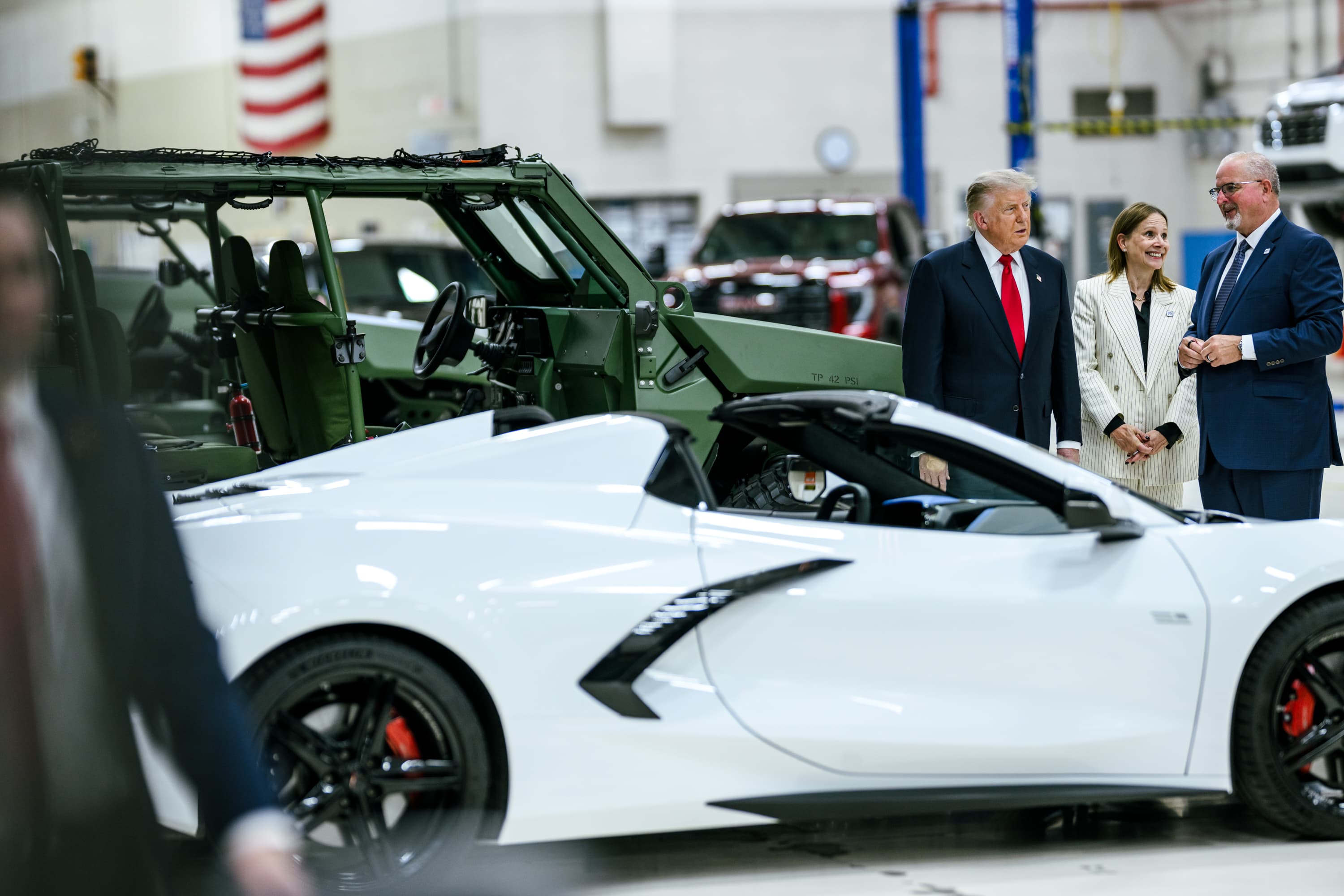
Dispatch reviewed Fortune's September 17 interview coverage, GM's May 6 skilled-trades announcement, GM's current apprenticeship and electrician recruiting pages, and the latest Bureau of Labor Statistics occupational outlook data available September 20, 2026. Annualized hourly-pay examples use 2,080 straight-time hours solely to make hourly ranges easier to compare; they are not forecasts of actual earnings and exclude overtime, incentives, benefits, taxes, unpaid time and location-specific rules. GM pay is not treated as a national contractor wage benchmark. The hero photograph is an archival image from July 2026 and is explicitly not presented as depicting the skilled-trades investment announcement or the Fortune interview.
Sources
- GM CEO Mary Barra says America has a 'societal problem' with failing to embrace skilled trades — Fortune
- Building what's next: How GM is growing skilled trades careers nationwide — General Motors
- GM Apprenticeship Program — General Motors Careers
- Electrician Journeyperson — Parma Metal Center — General Motors Careers
- Electricians — Occupational Outlook Handbook — U.S. Bureau of Labor Statistics
- Heating, Air Conditioning, and Refrigeration Mechanics and Installers — Occupational Outlook Handbook — U.S. Bureau of Labor Statistics
- Plumbers, Pipefitters, and Steamfitters — Occupational Outlook Handbook — U.S. Bureau of Labor Statistics
- Official White House photograph at General Motors Proving Ground — July 27, 2026 — The White House / Wikimedia Commons