
Disclosure
TradeVulcan Dispatch is published by TradeVulcan, which sells software to home-service contractors, including electrical contractors. TradeVulcan has no reported financial interest in General Motors, PG&E, WeaveGrid or Qmerit. Program benefits and product specifications are attributed to the companies that publish them; contractor implications are Dispatch analysis. This article is not electrical-design, permitting, utility-tariff or investment advice.
What changed - Sept. 23, 2026
PG&E and GM Energy launched the Smart Charge Bundle for eligible customers buying or leasing a new Chevrolet, GMC or Cadillac EV through participating dealers in Northern and Central California. The bundle lets customers select a GM Energy PowerShift or PowerUp 2 home charger at no additional hardware cost, with a stated value of up to $1,999, and enroll in PG&E's EV Charge Manager for a $15 monthly bill credit. PG&E says managed charging may create up to another $50 per month in savings by shifting charging to lower-cost periods.
The home EV charger is moving upstream in the sale.
PG&E and General Motors are no longer asking an eligible EV buyer to purchase the car, go home, research a charger, find a utility program and then figure out installation as separate projects. Their new Smart Charge Bundle brings the charger and managed-charging enrollment into the Chevrolet, GMC or Cadillac dealership conversation.
For electrical contractors, that is bigger than a consumer incentive story. It changes where the lead can begin.
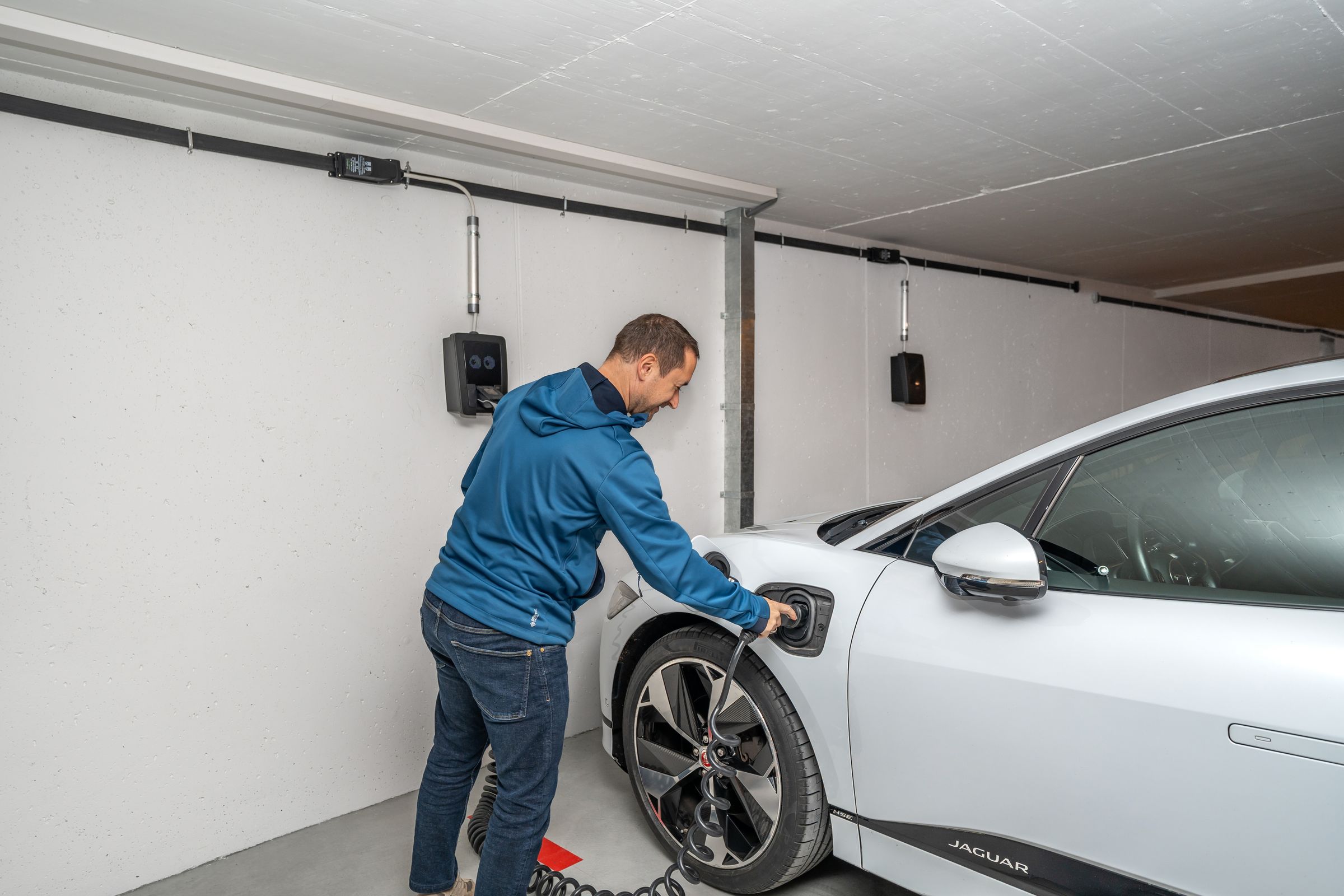
The hardware can now arrive as part of the vehicle transaction. The utility can enroll the customer into an ongoing charging program. GM Energy can define the equipment ecosystem. But the residence still has to support the equipment. GM Energy says its products require professional installation, and its own product disclosures warn that some installations may require upgrades to the electrical service, panel or wiring.
That makes the electrician the physical last mile of a sales funnel increasingly controlled by an automaker, a utility and software. The opportunity remains real. The question is whether contractors position themselves to capture it or only see the customer after the buying path has already been decided.
What contractors should know
- Eligible new Chevrolet, GMC and Cadillac EV buyers or lessees in PG&E territory can choose a GM Energy PowerShift or PowerUp 2 charger at no additional hardware cost, valued at up to $1,999.
- PG&E's EV Charge Manager pays participating customers a $15 monthly bill credit when program requirements are met; PG&E says managed charging may save up to another $50 per month by shifting charging to lower-cost periods.
- The hardware benefit is not the same thing as a free installed charging project. GM Energy says professional installation is required and that service, panel or wiring upgrades may be necessary depending on the home and equipment.
- PowerUp 2 is an 11.5 kW Level 2 charger. PowerShift supports up to 19.2 kW charging and can support V2H backup when paired with additional GM Energy equipment and a compatible vehicle.
- The managed-charging software layer is supplied by WeaveGrid; the customer can override a managed charging session when needed.
- PG&E's public eligibility page currently requires residential electric service, a single-family or detached residence, an eligible GM EV and active qualifying OnStar service with location enabled.
- The strategic change is distribution: charger selection and utility enrollment are happening at the dealership, before many customers would traditionally call an electrician.
The bundle in six numbers
- Charger value
- Up to $1,999
- Monthly bill credit
- $15
- Potential added savings
- Up to $50/mo
- PowerShift output
- Up to 19.2 kW
- PowerUp 2 output
- Up to 11.5 kW
- PG&E service territory
- 16M+ people
Stated maximum hardware value in the Smart Charge Bundle.
PG&E EV Charge Manager credit when program requirements are met.
PG&E estimate for additional savings from shifting charging to lower-cost periods; actual savings will vary.
GM Energy specification for Level 2 charging; V2H requires additional compatible equipment and vehicle.
GM Energy specification for the PowerUp 2 Level 2 charger.
PG&E says it serves more than 16 million people across 70,000 square miles.
The important change is not the discount. It is where the charging decision gets made.
A $1,999 equipment incentive is easy to market. The structural change is subtler: charger selection is becoming part of the vehicle-sale workflow.
PG&E's announcement says customers can discuss charging needs, select a PowerShift or PowerUp 2 charger and complete EV Charge Manager enrollment through the participating dealer process. That compresses several decisions that used to happen after the car came home.
For consumers, that can remove friction. For contractors, it can reduce the period in which a homeowner is independently searching for "EV charger electrician near me" before the equipment choice is made.
That does not eliminate the local contractor. It changes the moment at which the local contractor is inserted. A homeowner may still need a new branch circuit, load calculation, panel work, service changes, permitting, commissioning and - for V2H - materially more equipment and integration than a basic wall charger. But the contractor can enter the conversation with a product already selected and a customer expecting the project to work like an extension of the car purchase.
The companies that adapt will quote that way. Instead of selling "an EV charger," they will sell the home-readiness layer: site assessment, capacity verification, code-compliant installation, utility coordination where required, commissioning and a clean path to future backup power.
What is included - and where contractor work begins
| Layer | What the customer gets | Contractor implication |
|---|---|---|
| Charger hardware | Eligible PowerShift or PowerUp 2 hardware at no additional hardware cost, up to $1,999 stated value | Do not compete by marking up hardware the customer may receive through the vehicle purchase; compete on assessment, workmanship, permitting and integration. |
| Basic Level 2 installation | Not described by PG&E as part of the no-cost hardware benefit | Qualified installation remains necessary; branch-circuit routing, overcurrent protection, load calculation and local permit requirements still matter. |
| Panel / service readiness | No blanket promise that the existing home electrical system can support the selected charger | GM Energy warns that service, panel or wiring upgrades may be required. This can turn a charger job into a larger electrical project. |
| V2H backup | PowerShift can support bidirectional operation when paired with additional GM Energy equipment and a compatible EV | This is not a charger-only install. Backup operation adds equipment, transfer/microgrid functions, commissioning and a more complex home power design. |
| Managed charging | $15 monthly bill credit and potential additional savings | The utility and WeaveGrid influence when charging occurs. Contractors should understand the program well enough to explain what electrical work they control versus what the software controls. |
Free charger does not mean free project
This distinction is where contractors need to be precise.
The PG&E release repeatedly describes the benefit as a charger at no additional hardware cost. It does not say every home can receive a turnkey installed charger for free. GM Energy's current installation support says all GM Energy products must be installed by a qualified installer. Its product disclosures also state that professional installation is required and that a properly equipped home may need upgrades to the electrical service, panel or wiring.
That matters because the equipment can be the simplest part of the job. A straightforward garage with sufficient capacity and a short circuit route is one project. A full panel, a long feeder path, load-management requirements, an older service or a bidirectional backup design can be another entirely.
Contractors should resist two bad sales reactions. The first is assuming a "free charger" customer has no budget. The equipment subsidy can actually preserve budget for installation and home upgrades. The second is using the free hardware as a reason to inflate unrelated scope. The long-term opportunity is trust: show the load calculation, identify exactly what is required, separate optional resilience upgrades from mandatory charging work and document the permit/utility path.
PowerShift turns an EV-charger lead into a backup-power conversation
The PowerShift option is especially important for electricians because it changes the category from charging to home energy.
GM Energy lists the PowerShift Charger at up to 19.2 kW charging and says it can provide up to 9.6 kW of discharge power during an outage when paired with the V2H Enablement Kit and a compatible GM EV. The enablement kit includes the additional hardware needed to manage bidirectional home backup.
That makes the homeowner's first charger installation a design decision with future consequences. Conduit size, panel space, service capacity, equipment location and the way loads are organized can affect how painful a later V2H upgrade becomes.
The sales opportunity is not to push every EV buyer into whole-home backup. It is to identify intent. Ask whether the customer sees the vehicle only as transportation or also as future outage resilience. Ask which loads matter during an outage. Ask whether solar, batteries, a generator or a major electrification project is already planned.
Dispatch has already documented how backup power is broadening beyond storm-only selling as grids face heat, demand growth and other reliability pressures. An EV with bidirectional capability adds another tool to that resilience stack - but only when the home is properly designed for it.
The utility is becoming part of the charging product
The second structural change is software.
PG&E's EV Charge Manager uses WeaveGrid to schedule charging when electricity demand and costs are lower. Eligible participants who remain connected and satisfy the program rules receive a $15 monthly bill credit. PG&E says customers may save up to an additional $50 per month from shifting charging, and the customer can override a managed session when necessary.
This is not vehicle-to-grid export. It is load timing: move a flexible residential load away from expensive or constrained periods while preserving the driver's target readiness. For a utility, thousands of EVs become a controllable demand resource rather than a purely unmanaged new load.
For contractors, managed charging makes customer education part of commissioning. A customer may blame the charger or electrician when the vehicle does not begin charging immediately after being plugged in, even though the delayed start is intentional software behavior. The installer does not need to become the utility's program administrator, but the handoff should clearly distinguish hardware operation, vehicle settings, managed-charging schedules and whom to call for each issue.
The program is broad, but it is not universal
PG&E's public eligibility page currently limits participation to residential electric customers living in a single-family home or detached residence, with an eligible GM EV and an active qualifying OnStar plan with location services enabled. The listed vehicle set spans recent and upcoming Chevrolet, GMC and Cadillac EVs, including Silverado EV, Equinox EV, Blazer EV, LYRIQ, Escalade IQ/IQL, OPTIQ, VISTIQ, HUMMER EV, Sierra EV and the 2027-and-later Bolt EV.
The monthly credit also has continuing requirements, including active PG&E service, qualifying OnStar connectivity and at least one home-charging session during the month. PG&E says customers already enrolled in another PG&E demand-response or EV managed-charging program cannot also enroll in this one.
That means contractors should not advertise the $15 credit as universal. Verify the homeowner's utility and program eligibility before building the incentive into a proposal. Programs offered through Community Choice Aggregators may differ even within the broader PG&E geography.
The next fight is lead ownership: dealer, utility, installer network or local electrician
Once equipment selection moves into the dealership, contractors should pay attention to referral routing.
Electrek reported on Sept. 23 that Smart Charge Bundle installations are being directed through GM's selected installation partner, Qmerit. Dispatch found corroborating secondary coverage describing a GM-preferred installer network, but the PG&E announcement and public EV Smart Charge Bundle eligibility page reviewed for this article do not name Qmerit or publish the installer-routing terms. Dispatch therefore is not treating a Qmerit-only requirement as independently established from the primary public program materials. Contractors should verify the current enrollment and installer rules before representing that they can or cannot perform a bundle-linked installation.
The broader competitive lesson does not depend on that one detail. Automakers and utilities have powerful reasons to standardize the home side of EV ownership. They want predictable equipment, fewer failed installs, cleaner customer support and a controllable grid connection. That naturally favors defined installer networks and repeatable processes.
A local electrical company that wants this work should be ready for both channels: direct-to-homeowner demand and partner-network demand. That means documented licensing, clean closeout, commissioning discipline, fast scheduling, photo documentation, strong customer reviews and crews trained on the equipment ecosystems they want to install.
What electrical contractors should do now
- Build an EV-charger site-assessment template that captures service size, panel capacity, available breaker space, charger location, route length, parking position, Wi-Fi/connectivity needs and future V2H intent.
- Train estimators to separate hardware, installation, permit fees, panel/service upgrades and optional V2H or backup-power work so a 'free charger' does not create scope confusion.
- Review GM Energy's current installation manuals and commissioning resources before marketing PowerShift or V2H work; product familiarity is part of winning ecosystem-driven referrals.
- Verify current Smart Charge Bundle installer-routing rules directly through the enrollment path rather than relying on social posts or assuming any licensed electrician automatically qualifies.
- Add PG&E EV Charge Manager eligibility to sales scripts for customers in the service territory, but never promise the $15 credit or savings before confirming the customer's actual eligibility.
- Create a V2H discovery question in every compatible EV-charger estimate: 'Do you want this vehicle to be able to support the home during an outage later?'
- Track EV leads by source - organic search, dealer referral, utility program, installer network and existing customer - because the channel mix may change as bundles like this grow.
- Cross-train the EV team on panel upgrades, load management, solar/storage interfaces and backup-power design so the company captures the larger electrification project when it is actually needed.
The bigger picture: electrification products are becoming ecosystems
For years, the residential EV-charger sale was fragmented: automaker, electrician and utility each entered at a different point. GM and PG&E are compressing those steps into one customer journey.
That is good news for adoption and a warning for contractors who depend on being the first source of product advice. As equipment is bundled, the value of simply sourcing the box declines. The value of making the home safely, cleanly and intelligently ready for the box rises.
The same pattern is already visible elsewhere in home services. Manufacturers increasingly sell connected ecosystems rather than isolated products. Utilities increasingly attach incentives to controllable loads. Software increasingly sits between the equipment and the customer. And financing or referral partners increasingly shape the transaction before a local contractor ever sees the lead.
Electrical contractors still have one durable advantage: the physical home is not standardized. Every panel, service, route, permit jurisdiction, load profile and homeowner goal is different. The company that can translate a standardized program into a correct site-specific installation remains essential.
The Smart Charge Bundle is a California pilot today. The industry signal is bigger. If automaker-utility bundles reduce friction and prove customers will opt into managed charging at the point of vehicle sale, expect more EV-charging demand to arrive pre-packaged with hardware, software and incentive rules. The contractor's product becomes less 'sell a charger' and more 'make this energy ecosystem work in this house.'
Methodology
Dispatch selected the GM Energy and PG&E Smart Charge Bundle as the strongest un-covered development in the Sept. 23 midmorning cycle after checking same-day home-service, electrification, M&A, software and contractor-economics news and confirming that Dispatch had already published separate Angi and Jobber stories earlier in the day. Core program economics, eligibility, managed-charging rules and PG&E service-area figures were checked against PG&E primary materials on Sept. 23, 2026. Charger output, professional-installation requirements and V2H configuration were checked against current GM Energy product pages, installation support and the PowerShift specification sheet. Electrek was used only for the secondary report about installer-network routing; because the public PG&E program materials reviewed do not name Qmerit, that detail is explicitly qualified rather than stated as a primary-source fact. Hero-image provenance, dimensions and Pexels licensing were rechecked Sept. 23, 2026.
Sources
- New PG&E and GM Energy Bundle Makes Home EV Charging Easier and More Affordable — Pacific Gas and Electric Company
- EV Smart Charge Bundle - Program Details and Eligibility — PG&E
- GM Energy Products - PowerShift and PowerUp 2 specifications — GM Energy
- Installation Support - Professional Installation Resources — GM Energy
- GM Energy PowerShift Charger Specifications — GM Energy
- Get paid to charge, a free charger, and save the grid with a new GM EV in CA — Electrek
- Man Charging Electric Vehicle in Indoor Garage - photo and license record — Pexels