
Your website team.
Your next step.
From the first brief to the next approved release. Learn the Studio, give your agents useful direction, and launch with a clear plan.
15 practical guides · Setup, design, launch and support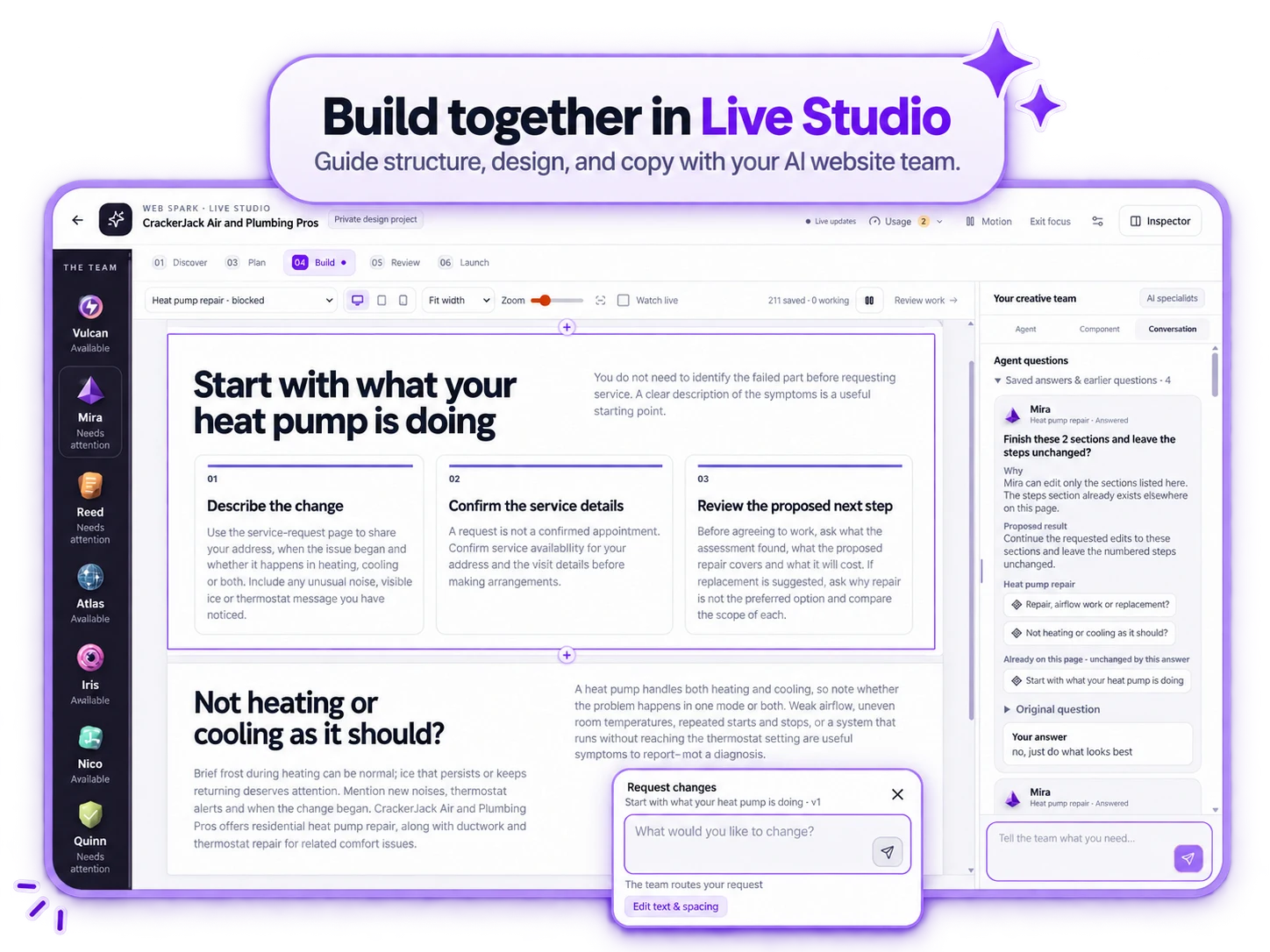
Start here
Introduction to Web Spark: your AI website team
Understand Web Spark, its seven agents, the Studio workflow, and how website creation differs from hosting, booking and the public broadcast.
Read guideWeb Spark setup guide: create your first website
Prepare your business information, create the correct website project, review the setup and purchase flow, and move into Discover, Plan and Design.
Read guideMeet the Web Spark agents and navigate Live Studio
Learn each agent’s role, use the canvas and inspector, understand activity states, and distinguish saved progress from a live website.
Read guidePlan and design
Prepare your business brief, brand assets and approved facts
Give Web Spark the services, locations, brand direction, media and factual evidence it needs to build a credible contractor website.
Read guidePlan service pages, location pages and website navigation
Review the Web Spark site plan, fit useful pages to your package, and build a service-and-location structure without thin duplicate content.
Read guideChoose and refine your Web Spark design direction
Inspect the design proposal, compare visual decisions, give specific feedback, and approve a direction with a clear understanding of what starts next.
Read guideBuild and review
Edit website pages and build custom sections with Web Spark
Select a page or section, request a scoped change, use Add to your page, and review the result without restarting the whole website.
Read guideAnswer agent questions and review website changes
Resolve the right question, inspect independent review findings, and distinguish answered, saved, reviewed and published work.
Read guideConnect forms, booking paths and proof to a Web Spark website
Use supported Site Spark and Proof Pulse connections, understand workspace and domain requirements, and test the real visitor journey.
Read guideLaunch and manage
Launch checklist: review and publish your Web Spark website
Select reviewed pages, prepare a release candidate, confirm hosting and domain readiness, and verify the real website after approval.
Read guideWeb Spark hosting: plans, HTTPS, usage and availability
Understand managed AWS website hosting, separate recurring charges, plan limits, monitoring, and what happens before republication.
Read guideConnect a domain, set up HTTPS and plan a website cutover
Connect an existing domain or review a new registration, preserve email DNS, understand renewal quotes, and verify the final HTTPS website.
Read guideWeb Spark billing, page generations, AI credits and Expert Assist
Separate one-time build capacity from hosting, domains and AI usage; review upgrades, pending payments and the optional human-assistance scope.
Read guideUpdate a live website, inspect history and restore a release
Keep private edits separate from the live site, review selected-page updates, and understand history, rollback, pause and republication.
Read guideTroubleshoot Web Spark: blocked work, previews, payments and launch
Find the next safe action for missing access, blocked agents, stale edits, usage limits, preview issues, domain delays and incomplete publication.
Read guideStuck on the next step?
Start with the exact status in your project. Find the relevant check before repeating a request, payment or DNS change.
Open troubleshootingSee the work in context.
Explore selected saved previews in the broadcast, or see the actual desktop and mobile captures in the Live Wire Electric case study.
Watch the broadcast Explore the case studyGuides describe the current supported workflow. Use your project’s saved status, permissions and accepted quote for the decisions that apply to your website. Never share credentials or private customer data in a support screenshot.